


Τhe Power of Questions: Igniting Curiosity in Learning Environments
We equip them with the most powerful tool for navigating change: curiosity.
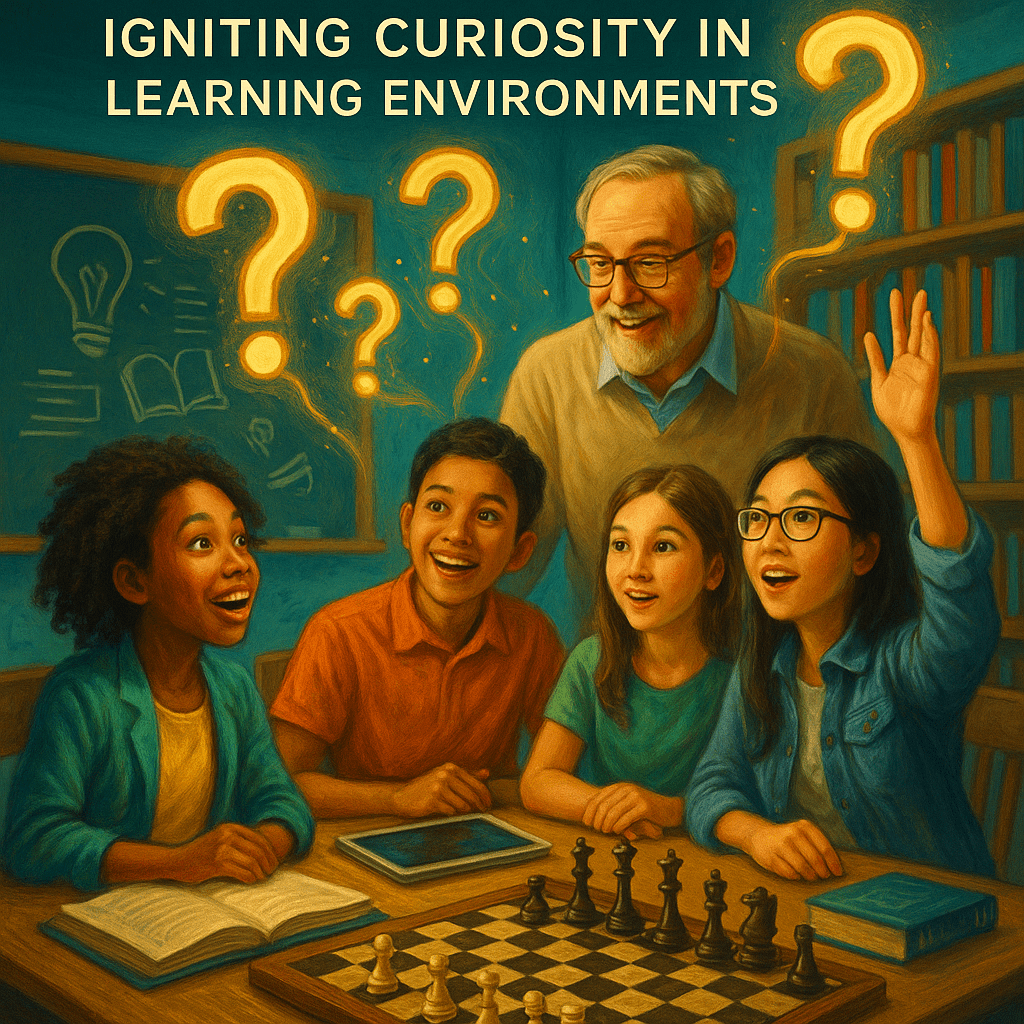
Questions are the spark that ignites the flame of knowledge. They are not merely tools for assessment but powerful catalysts for curiosity, engagement, and deep learning. By creating environments where questions flourish, we transform education from passive consumption into active discovery.
In educational environments, questions are not just assessment tools—they are “an integral part of meaningful learning” and scientific inquiry. Formulating a good question is a creative act that lies at the heart of critical thinking, creative thinking, and problem-solving. When we embrace questions, we unlock significant learning potential that benefits everyone in the educational ecosystem.
Empowering Learners Through Questions
Highlights of several key benefits of questions. They help teachers find areas of confusion. Questions build interest and curiosity. They support direct learning. Additionally, they empower students to take ownership of their knowledge. Nonetheless, the power of questions goes even deeper.
Questions, by their very nature, compel learners to pay attention. While a lecture might allow minds to wander, questions prompt immediate engagement with the material. Without this attention, there is no learning. When students formulate questions, they actively join in constructing their understanding rather than passively receiving information.
Questions also reveal the gaps in our knowledge. When a student asks, “Why does this happen?” or “How does this connect to what we learned last week?”, they’re identifying the boundaries of their current understanding. This metacognitive awareness—knowing what you don’t know—is essential for authentic learning.
Creating Curious Classrooms
For educators, creating environments where questions flourish requires intention. Research confirms that classrooms using active learning strategies produce better educational outcomes. In these classrooms, students engage actively rather than listen passively. This improvement is seen at virtually all levels. Questions form the backbone of such environments.
When teachers model curiosity by asking thought-provoking questions, they show that not knowing is the beginning of wisdom. This is not a failure. By valuing student questions equally with their own, they create safe spaces for intellectual exploration.
Parents, too, can foster a culture of questioning at home. When children ask, “Why is the sky blue?” or “How do birds fly?”, these are golden moments for connection and learning. Rather than providing immediate answers, parents can respond with, “What do you think?” or “How do we find out together?”—extending the questioning process and modelling lifelong learning.
Questions as Bridges to Understanding
Questions serve as bridges between isolated facts and integrated understanding. They prompt students to connect new information with existing knowledge, creating neural pathways that enhance retention and recall. When students ask, “How does this relate to what we learned before?” they’re actively constructing meaning.
The act of questioning encourages learners to engage in critical reasoning, a key feature of scientific discourse. Questions elicit explanations, postulate theories, evaluate evidence, justify reasoning, and clarify doubts. In this way, questions transform education from mere fact accumulation. They foster the development of thinking skills that will serve students throughout their lives.
Questions for a Changing World
In our rapidly evolving world, the ability to ask good questions is more valuable than having ready answers. Technological advances mean that information is increasingly accessible. Yet, the wisdom to critically evaluate that information remains a uniquely human skill. Evaluating involves understanding its source, assessing its reliability, and considering its implications.
When we teach students to ask thoughtful questions, we prepare them not just for today’s challenges but for tomorrow’s unknowns. We equip them with the most powerful tool for navigating change: curiosity.
The next time a student raises their hand with a question, remember: this is not an interruption to teaching. It is teaching in its purest form. In that moment of questioning, learning is already happening. By honouring and nurturing questions in our classrooms, homes, and communities, we cultivate the curious minds our future needs.
 Nicos Paschali, International Author, Designer & Facilitator of Learning Workshops. Mental Discipline Coach.
Reply