Polarity Management skills will make you a more effective leader and manager by:
1) Increasing your ability to distinguish between problems you can solve and those you cannot.
2) Increasing your ability to manage those unsolvable problems, which I call workplace dilemmas or polarities.
You will be more effective because:
1) You will save time and energy by not trying to solve unsolvable difficulties.
2) You will better understand resistance to organisational changes you want to make.
3) You will be more effective in negotiating with those opposing your changes.
4) You will more effectively negotiate with those proposing changes you do not want.
5) You will be more effective as a third-party mediator. This is especially true in conflicts where two groups are stuck in a polarity and treat the polarity as if it is a problem to solve.
6) You will be able to anticipate and minimize problems that occur when workplace dilemmas, or polarities, are not managed well.
The opposite of “Leading in Chaos” would be “Succeeding in Order” or “Conforming to Stability.”
When someone leads in chaos, they navigate uncertainty, make decisions without full information, and help others find direction amid disorder. They are comfortable with ambiguity and can create a structure where none exists.
In contrast, succeeding in order means operating within clear, established structures, adhering to well-defined protocols, and implementing predetermined plans. The environment is predictable and stable, with clear hierarchies and procedures already in place.
Both approaches have their place depending on the context.
Leading in chaos is essential during crises, rapid change, or innovation.
Next in order is valuable for consistency, efficiency, and maintaining proven systems.
Would you like me to explore this contrast in a specific context, like organisational leadership or personal development?
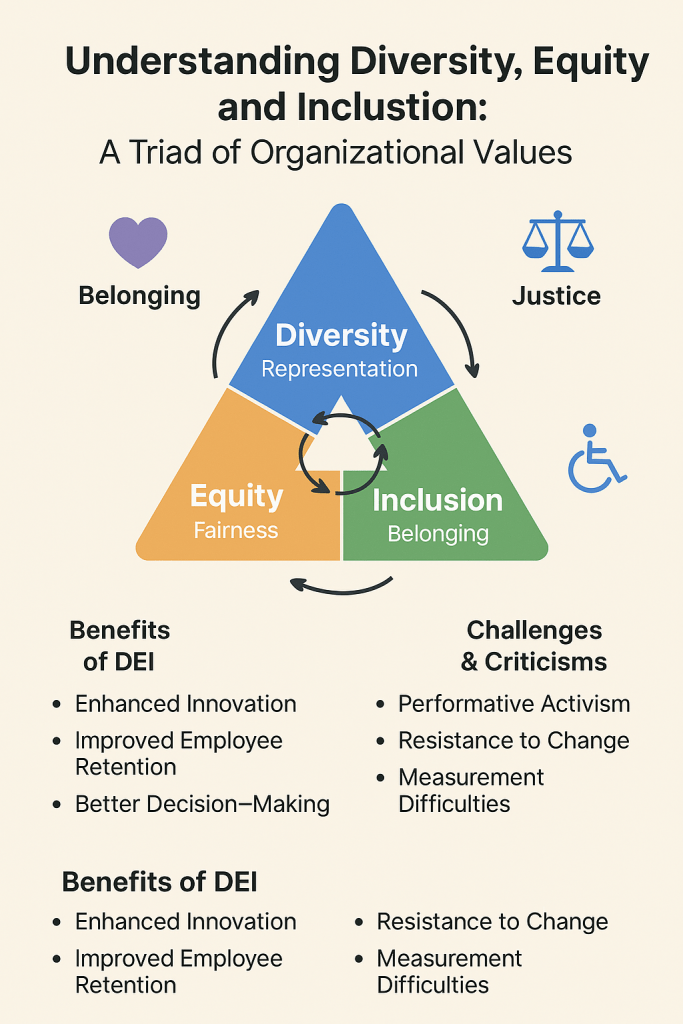
Diversity, Equity, and Inclusion (DEI) have become central pillars in modern organisational frameworks, shaping workplace cultures, policies, and societal norms. Though distinct, these three notions are deeply interconnected, representing values organisations strive to institutionalise to foster fairness, representation, and belonging. While the terminology of DEI is relatively recent, the concepts have long existed, evolving alongside social justice movements. Variations of these frameworks sometimes incorporate extra terms like belonging, justice, and accessibility, further expanding their scope. This essay examines the meanings of diversity, equity, and inclusion. It discusses their interdependence. The essay also covers their broader implications in organisational and societal contexts.
Defining Diversity, Equity, and Inclusion
1. Diversity: Representation and Varied Perspectives
Diversity refers to the presence of differences within a given setting. These differences may include race, ethnicity, gender, age, religion, disability, sexual orientation, socioeconomic background, etc. In an organisational context, diversity ensures that a wide range of identities, experiences, and perspectives are represented.
However, diversity alone is not enough. Simply having a varied workforce does not guarantee that all voices are heard or valued. This is where equity and inclusion come into play, ensuring that diversity is not merely superficial but meaningful and impactful.
2. Equity: Fairness in Opportunity and Access
Equity goes beyond equality, assuming everyone benefits from the same resources. Instead, equity recognises that individuals start from different positions and may require different levels of support to achieve the same outcomes.
An equitable workplace might provide additional mentorship programs for underrepresented employees or adjust hiring practices to reduce bias. Equity seeks to dismantle systemic barriers preventing marginalised groups from thriving, ensuring that policies and practices are impartial.
3. Inclusion: Creating a Culture of Belonging
Inclusion is the active effort to make all individuals feel welcomed, respected, and valued within an organisation. Diverse representation is not enough if certain groups feel excluded or tokenised. Inclusion involves fostering an environment where everyone can contribute fully without fear of discrimination or marginalisation.
Inclusive practices may include:
– Encouraging open dialogue and feedback
– Implementing bias training
– Creating employee resource groups (ERGs)
– Ensuring leadership reflects the diversity of the workforce
The Interconnected Nature of DEI
Diversity, equity, and inclusion are distinct concepts but interdependent. A genuinely inclusive environment cannot exist without equity; diversity efforts are hollow if they do not lead to inclusion. Consider the following relationships:
– Diversity without Inclusion → A diverse workforce where minority groups feel marginalised or silenced.
– Inclusion without Equity → A welcoming environment that fails to address systemic disadvantages.
– Equity without Diversity → Fair policies that do not necessarily result in varied representation.
Thus, organisations must address all three components holistically to create meaningful change.
Expanding the Framework: Belonging, Justice, and Accessibility
Some DEI models extend beyond the core triad, incorporating additional elements such as:
Belonging
Belonging refers to the emotional and psychological experience of feeling accepted and valued within a group. While inclusion focuses on organisational efforts, belonging is about individual perception. A workplace may have inclusive policies, but the DEI efforts are incomplete if employees still feel like outsiders.
Justice
Justice emphasises addressing historical and systemic inequities. It goes beyond individual fairness to examine broader societal structures that perpetuate discrimination. For example, justice-oriented DEI initiatives advocate for reparative policies or challenge institutional racism in hiring practices.
Accessibility
Accessibility ensures that environments, products, and services are usable by people with disabilities. This includes physical accommodations (e.g., wheelchair ramps) and digital accessibility (e.g., screen-reader-friendly websites). True inclusion can’t exist without accessibility.
The Business Case for DEI
Beyond moral and ethical imperatives, DEI has tangible benefits for organisations:
1. Enhanced Innovation – Diverse teams bring varied perspectives, leading to more creative solutions.
3. Better Decision-Making – Equity ensures all voices are heard, preventing groupthink.
4. Stronger Reputation – Companies committed to DEI attract top talent and consumer support.
Challenges and Criticisms
Despite its importance, DEI faces challenges:
– Performative Activism – Some organisations adopt DEI as a checkbox exercise rather than a genuine commitment.
– Resistance to Change – Employees or leaders may push back against DEI initiatives, viewing them as unnecessary or unfair.
– Measurement Difficulties – Quantifying the success of DEI efforts can be complex, requiring long-term tracking.
Conclusion
Diversity, equity, and inclusion are essential values and buzzwords for building fair and thriving organisations. The terminology evolves by incorporating concepts like belonging, justice, and accessibility. Still, the core goal remains the same: creating environments where all individuals have the opportunity to succeed. True DEI requires ongoing effort, systemic change, and a challenge to ingrained biases. Organisations can move toward a more just and inclusive future by institutionalising these principles.
Transform Your Meeting Culture: Less Time, More Impact
Why this matters: Have you ever felt that familiar energy drain as a meeting stretches on unnecessarily? Those extra minutes aren’t just lost time—they represent missed opportunities for meaningful work and personal recharge. When we reclaim this time, we honour our collective purpose and individual well-being.
What’s happening: Meetings follow a predictable pattern known as Parkinson’s Law—expanding to fill whatever time we allocate, regardless of the required work. This phenomenon creates a systematic inefficiency that compounds across organisations, affecting everything from project timelines to team morale.
How to implement shorter meetings:
Cut standard meeting times by 25% (60→45 min, 30→20 min)
Establish clear agendas with timeboxed sections
Start exactly on time, regardless of attendance
Designate a timekeeper to maintain focus
End with specific action items and owners
What if we re-imagined meetings entirely? Consider how this simple shift might transform your workplace culture. Teams could experience newfound creativity in the reclaimed time. Innovative formats like walking meetings or asynchronous collaboration might emerge. Most importantly, this practice signals that you value everyone’s time and energy as precious resources worthy of protection.
Your team deserves more efficient meetings. Take this small step toward a more purposeful, energised workplace today.
Unlock Your Potential: Transform Your Life and Leadership with Proven Strategies
Empowering You to Achieve Excellence, Balance, and Success in Every Aspect of Life
Imagine harnessing the same strategies that top leaders use. These strategies help high achievers create a life of purpose, impact, and fulfilment. The key to unlocking your most significant potential is closer than you think.
This journey will empower you by combining actionable insights, data-driven strategies, and empathetic guidance. It will help you break through barriers and elevate your leadership. You will create a lasting legacy—both personally and professionally.
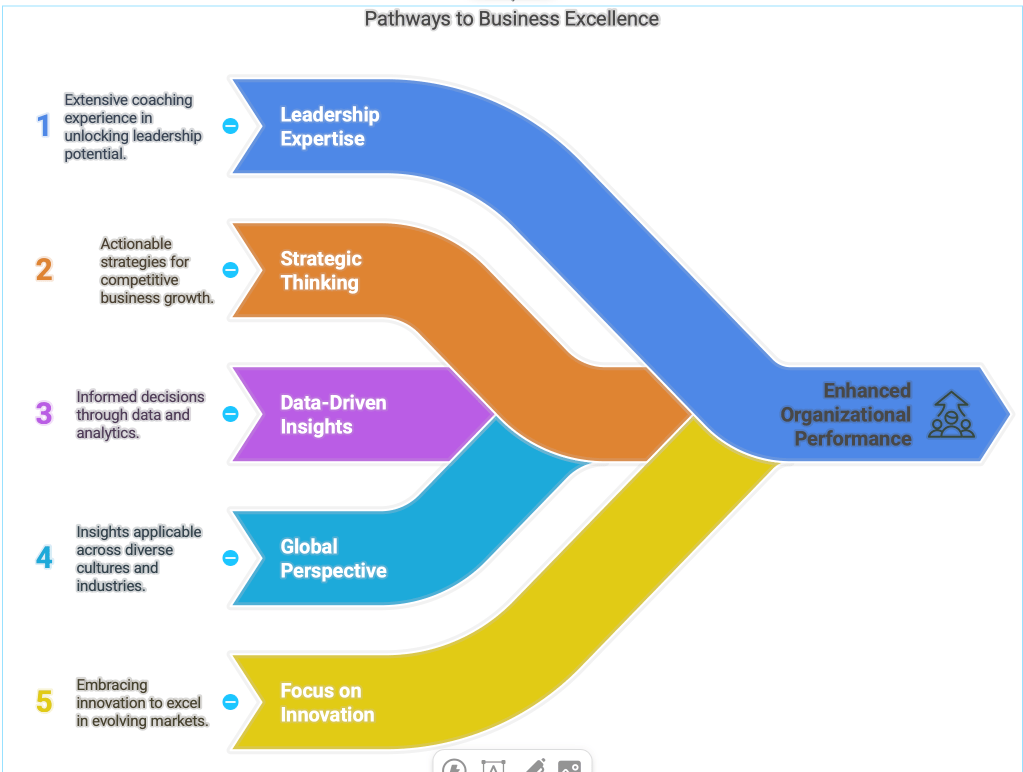
Nicos Paschali is a professional in leadership, personal development, and business strategy. His “information advantage” refers to his ability to leverage knowledge. He uses insights and strategies to help individuals and organizations achieve their goals. This includes:
Skill in Leadership and Development: Paschali has extensive experience coaching and training leaders. He helps them unlock their potential and focuses on improving organizational performance.
Strategic Thinking: He provides actionable strategies for businesses to gain a competitive edge, improve processes, and drive growth.
Data-Driven Insights: Paschali emphasizes the importance of using data and analytics. These tools help make informed decisions. This approach can create a significant advantage in business and personal development.
Global Perspective: With a diverse background and international experience, he offers insights applicable across cultures and industries.
Focus on Innovation: He encourages embracing change and innovation to stay ahead in rapidly evolving markets.
Nicos Paschali’s information advantage is his ability to combine practical experience, strategic thinking, and data-driven approaches to deliver impactful results.
Regular polarity mapping exercises in policy development are a strategic approach to address complex policy challenges by identifying and working with interdependent values that may appear tense.
Here’s an elaboration on how to implement these exercises:
What is Polarity Mapping?
Polarity mapping is a tool that helps policymakers identify and manage tensions between complementary but seemingly opposing values or objectives (such as centralization vs. decentralization, innovation vs. stability, or efficiency vs. equity). Unlike problems that can be “solved,” polarities are ongoing tensions that must be managed.
Implementation Process
Identify Key Polarities: Identify the major tensions relevant to your policy area. For example, healthcare policy might include cost control vs. quality of care, or standardization vs. personalization.
Map the Polarities: Create a visual representation (typically a quadrant diagram) that shows:
The upsides and downsides of each pole
The natural oscillation pattern between the poles
Warning signs that indicate when you’re overemphasizing one pole
Stakeholder Engagement: Include diverse stakeholders in the mapping exercise to capture different perspectives on each pole’s benefits and drawbacks.
Develop Balanced Strategies: Create policy approaches that capitalize on the upsides of both poles while minimizing their respective downsides.
Establish Monitoring Mechanisms: Implement systems to track when policy drifts too far toward one pole, creating negative consequences.
Regular Review Sessions: Schedule periodic reviews to assess whether the policy balances the polarities appropriately.
Benefits of Polarity Mapping in Policy Development
Prevents “either/or” thinking that can lead to pendulum swings in policy
Creates more sustainable policies by acknowledging inherent tensions
Fosters collaboration among stakeholders with different priorities
Helps anticipate unintended consequences
Provides a framework for ongoing policy adjustments
Would you like me to provide a specific example of how this might work for a particular policy domain?
Are You Feeling Stuck on Your Journey to Growth and Fulfillment?
Discover How Nicos Paschali Can Transform Your Life and Business
Why This Matters to You
Have you ever felt that disconnect between where you are and where you aspire to be? That frustration when your personal growth appears stalled, your team lacks cohesion, or your organisation fails to reach its potential? These challenges aren’t merely professional hurdles—they are at the core of our well-being, satisfaction, and sense of purpose.
The journey to a fulfilling and prosperous life isn’t discovered through quick fixes or superficial solutions. It demands transformation from within—a guide who truly sees you, understands your unique challenges, and knows how to unlock your most significant potential.
What Makes Nicos Paschali’s Approach Different
As a sensory-aware leader with over forty years of experience, I have developed a profound understanding of what drives human potential. My Transformative Actionable Learning programme is not merely another development methodology but a revolutionary approach founded on emotional intelligence, precise communication, and deep human connection.
My expertise spans:
Building trust-centered leadership that inspires loyalty and performance
Enhancing communication skills that strengthen all relationships
Leveraging technology and AI to create sustainable innovation
Developing customised learning strategies that produce measurable results
Creating environments where growth and fulfillment naturally emerge
This multifaceted background in engineering, technology, leadership, and human development gives me a unique ability to address complex challenges from multiple perspectives.
How We’ll Work Together to Create Transformation
My approach begins with truly seeing you—understanding your challenges, aspirations, and untapped potential. Together, we’ll create a tailored pathway to growth through:
Personalised Assessment: Identifying your unique strengths, growth opportunities, and core motivations
Customised Learning Strategies: Developing bespoke solutions that address your specific challenges
Skill Enhancement: Building essential capabilities in communication, leadership, and adaptability
Implementation Support: Ensuring new knowledge translates into tangible results
Ongoing Growth: Sustaining momentum through coaching, learning nuggets, and strategic guidance
Whether through individual mentoring, team workshops, or organisational transformation programmes, my adaptable solutions cater to your specific needs while ensuring consistent, impactful results.
What If You Could Experience True Transformation?
Imagine leading with complete confidence and clarity. Envision a life where your fulfilment aligns seamlessly with your professional success. Consider the possibilities when your organisation operates with smooth communication, innovation, and purpose.
This isn’t merely possible—it’s the natural result of genuine transformation. My clients across Europe, the UAE, and Australasia have experienced this shift—transitioning from incremental improvement to profound, lasting change.
The journey to a healthy, wealthy, and fulfilling life begins with a conversation. Are you prepared to transform challenges into opportunities and potential into reality?
Begin Your Transformation Journey: Get in touch with me,📧 nicospas@gmail.com
The Symphony of Leadership in the Age of AI: How Humans and Machines Will Harmonize the Future
As artificial intelligence reshapes industries, leadership is evolving into a dynamic duet between human intuition and machine precision—will you be the conductor or just another instrument?
Imagine standing on the edge of a vast ocean at dawn, watching waves crash against the shore. Each wave carries untold power, capable of reshaping landscapes over time. Artificial intelligence (AI) feels like that ocean—an awe-inspiring and humbling force that potentially transforms how we live, work, and lead. But here’s the question every leader must ask themselves: Are you ready to ride these waves, or will they wash you away?
In the age of AI, leadership isn’t about choosing between humans and machines; it’s about orchestrating their collaboration to create something greater than either could achieve alone. This new era demands leaders who can blend emotional intelligence with data-driven insights, ethical foresight with adaptability, and vision with action.
Augmented Decision-Making: Turning Data Into Wisdom
In today’s fast-paced world, making decisions is like navigating foggy waters without a compass. Enter AI—the lighthouse cutting through the haze. By processing colossal amounts of data faster than any human brain could, AI provides clarity where there was once uncertainty. It doesn’t replace human judgment but amplifies it, offering predictive analytics, real-time feedback, and scenario simulations.
Think of AI as your co-pilot in a high-stakes flight. You’re still the captain, responsible for making the final call, but having an expert navigator by your side ensures smoother journeys. For instance, imagine a CEO using AI to analyse global market trends before launching a product. The AI might reveal hidden opportunities or risks that would otherwise go unnoticed. However, the ultimate decision rests with the leader, who brings context, experience, and gut instinct.
This partnership between human wisdom and machine efficiency marks the beginning of a new chapter in leadership—one where decisions are more intelligent, faster, and more informed.
Emotional Intelligence: The Heartbeat of Human Leadership
While AI excels at crunching numbers, it struggles to understand the nuances of human emotion. That’s why emotional intelligence (EQ) will become the cornerstone of effective leadership in the AI era. EQ is like the heartbeat of an organisation—the steady rhythm that keeps everything alive and thriving. Without it, even the most advanced technologies risk falling flat.
Leaders must build trust, foster connection, and nurture resilience among their teams. Imagine entering a workplace where employees feel seen, heard, and valued—not because an algorithm told them so but because their leader took the time to listen. AI can help monitor team sentiment through communication patterns, but only a human leader can address underlying issues like burnout or disengagement with genuine empathy.
In this symphony of leadership, EQ is the melody that ties everything together, ensuring harmony amidst technological change.
Ethical Leadership: Steering Clear of the Moral Abyss
With great power comes great responsibility, and few tools wield as much power as AI. Ethical leadership will be non-negotiable in guiding organisations through the moral complexities of AI deployment. Ethics are considered the rudder of a ship—they may not always be visible, but without them, the vessel risks veering off course.
From addressing biases in algorithms to safeguarding data privacy, leaders must ensure that AI serves humanity rather than exploits it. Take, for example, a healthcare provider leveraging AI to diagnose diseases. While the technology promises unparalleled accuracy, its implementation must prioritise patient consent and fairness. A leader committed to ethical governance would establish an AI ethics board to oversee such initiatives, ensuring alignment with organisational values.
By championing transparency and accountability, leaders can steer their organisations toward a future where AI enhances lives without compromising integrity.
Adaptability: Dancing with Change
If leadership were a dance, AI would be the partner constantly changing the tempo. To keep up, leaders must embrace agility and adaptability, transforming rigid hierarchies into fluid networks. Think of adaptability as surfing—you don’t fight the waves; you flow with them, adjusting your stance as needed.
Consider a retail executive responding to shifting consumer preferences. With AI providing real-time insights, they can swiftly pivot strategies and reallocate resources to meet demand. This nimbleness requires leaders to let go of outdated practices and embrace experimentation. After all, in a world where change is the only constant, those who resist it risk being left behind.
Continuous Learning: Fueling the Engine of Progress
AI evolves rapidly, and so must the leaders who harness it. Continuous learning becomes the fuel that powers this engine of progress. Just as musicians practice scales daily to perfect their craft, leaders must cultivate a mindset of lifelong learning to stay ahead.
Encouraging this culture within organisations is equally vital. Imagine a tech company where employees regularly attend workshops on AI literacy, turning what was once a daunting topic into a shared language. By fostering curiosity and innovation, leaders future-proof their teams and inspire them to reach new heights.
Human-Centric Leadership: The Soul of Success
At its core, leadership is about people. No matter how advanced AI becomes, it cannot replicate the soulful connection that defines truly impactful leadership. Leaders must remember that technology exists to serve humanity, not vice versa.
Picture a workplace where AI handles mundane tasks, freeing up time for meaningful interactions. Employees engage in creative problem-solving while feeling supported by their leader’s unwavering commitment to their well-being. This human-centric approach transforms workplaces into vibrant ecosystems where everyone thrives.
Conclusion: Conducting the Orchestra of Tomorrow
As we stand on the brink of this transformative era, one truth shines brightly: The future belongs to those who can harmonise the strengths of humans and machines. Like a skilled conductor leading an orchestra, leaders must balance the technical prowess of AI with the emotional depth of human connection.
Will you rise to the challenge? Will you learn to navigate the tides of change, wielding AI as a tool for empowerment rather than disruption? The choice is yours. But remember, in this symphony of leadership, the music only resonates when every note—human and machine—is played in perfect harmony.
The potential role of AI in community and political administration could include:
Enhancing democratic participation and transparency through better information access and processing. For instance, AI could help analyse public feedback on proposed policies or identify patterns in community needs across different neighbourhoods.
Improving public service delivery by optimising resource allocation and predicting where services will be most needed. This could range from better traffic management to more responsive emergency services.
However, there are critical considerations we must address today:
Democratic oversight and human agency should remain central. While AI can inform decision-making, final policy choices should rest with elected officials and citizens. We need governance frameworks that maintain this balance.
Equity and fairness must be built into AI systems from the ground up. This means ensuring AI tools don’t perpetuate existing biases and that their benefits reach all community members, not just those with easy access to technology.
As for concrete actions, we should consider taking today:
1. Developing clear ethical guidelines and accountability mechanisms for AI use in public administration
2. Investing in digital literacy programs so citizens can meaningfully participate in discussions about AI governance
3. Creating pilot programs to test AI applications in low-risk areas while carefully studying their impacts
What are your thoughts on leveraging AI’s capabilities and maintaining democratic control?





 Nicos Paschali, International Author, Designer & Facilitator of Learning Workshops. Mental Discipline Coach.
Reply