Recent Updates Page 2 Toggle Comment Threads | Keyboard Shortcuts

  • Unknown's avatar

    Nicos Paschali 5:34 am on May 29, 2025 Permalink | Reply  

    The Art of Asking Why Question Formulation is… 

    The Art of Asking: Why Question Formulation is Education’s Missing Foundation

    In classrooms around the world, students sit quietly, waiting for teachers to pose questions they’re expected to answer. But what if we’ve gotten learning backwards? What if the real power lies not in having the right answers, but in asking the right questions?

    The ability to formulate meaningful questions is the most essential skill for learning. It is a foundational competency that deserves a central place in every curriculum. Yet remarkably, most educational systems focus almost exclusively on answer-giving while neglecting the art of question-asking entirely.

    Consider how authentic learning actually occurs. When toddlers endlessly ask “why,” they’re not seeking to fill predetermined knowledge gaps—they’re actively constructing their understanding of the world. Scientists don’t start with answers; they start with questions that drive years of investigation. Entrepreneurs don’t start with solutions; they start by identifying problems worth solving. The pattern is clear: meaningful learning begins with curiosity, and curiosity expresses itself through questions.

    Research in cognitive science supports this intuitive understanding. When students generate their own questions about the material, they show deeper comprehension. They also achieve better retention than those who simply answer teacher-generated questions. The act of formulating questions requires students to recognise what they don’t understand. They must also recognize patterns and connections. Additionally, they engage in metacognitive reflection about their own learning process.

    Yet our educational systems consistently undervalue this skill. Students spend years memorizing answers to other people’s questions while rarely learning how to develop their own. They become adept at filling in blanks and selecting multiple-choice options. Nonetheless, they struggle to recognize what questions might be worth pursuing. We’ve created a generation of answer-givers in a world that desperately needs question-askers.

    The consequences extend far beyond the classroom. In rapidly changing careers, the ability to ask probing questions becomes more valuable than any specific knowledge set. When facing complex social problems, the quality of our questions determines the quality of our solutions. In an age of information overload, knowing what to ask matters more than knowing what to memorize.

    Teaching question formulation isn’t merely about adding another skill to the curriculum—it transforms the entire learning experience. When students learn to generate their own questions, they become active participants rather than passive recipients. They develop ownership over their learning journey and build the intellectual confidence to tackle unfamiliar challenges.

    The process begins with creating safe spaces for curiosity, where no question is considered too basic or too ambitious. Students need explicit instruction in different types of questions. These include questions that clarify and those that challenge assumptions. They should also learn those that explore connections and those that imagine possibilities. They need practice distinguishing between questions that lead to deeper understanding and those that merely seek factual recall.

    Most importantly, students need to experience the joy of pursuing their own intellectual curiosity wherever it leads. When they discover that their questions can unlock new worlds of understanding, learning transforms into an activity they actively pursue. It is no longer something done to them.

    The time has come to revolutionise education by placing question formulation at its heart. When we teach students to ask better questions, we prepare them not just for tests. We also prepare them for lives of continued learning. They will be ready for innovation and meaningful contribution to society.
     
  • Unknown's avatar

    Nicos Paschali 12:15 pm on May 24, 2025 Permalink | Reply  

    The Pattern Hunters: How Analytical Thinking Became the Ultimate Survival Skill in a World Drowning in Data 

    The Pattern Hunters: How Analytical Thinking Became the Ultimate Survival Skill in a World Drowning in Data

    Why the ability to dissect complexity and spot hidden connections is now more valuable than any degree, certification, or technical skill—and how anyone can master it

    In a boardroom in Silicon Valley, two candidates sit across from the same hiring manager. One has an MBA from Harvard and fifteen years of experience. The other dropped out of college and worked at a coffee shop until last year. Guess who gets the job? It’s the candidate who can handle a messy spreadsheet of customer complaints. They spot the pattern everyone else missed and solve a million-dollar problem in twenty minutes. Welcome to the age where thinking beats qualifications every single time.

    THESIS SENTENCES

    Primary Thesis: Analytical thinking has emerged as the most critical skill in the modern economy. It enables individuals to navigate information overload. It helps solve increasingly complex problems. It allows individuals to make evidence-based decisions that reduce risk and drive innovation.

    Supporting Thesis: Unlike technical skills that become obsolete or degrees that lose relevance, analytical thinking is a meta-skill. It can be deliberately developed through practice. This skill remains transferable across all industries and life situations.

    Action Thesis: Cultivate curiosity. Practice problem decomposition. Engage with data. Maintain an open mindset. By doing so, anyone can develop the analytical thinking abilities that employers now value above all other qualifications.

    SUMMARY

    This isn’t another self-help manual promising to change your life in seven easy steps. This is a field guide to the cognitive revolution. It is happening right under your nose. The people who can see patterns are eating the lunch of those who can’t.

    The world shifted while we weren’t paying attention. Somewhere between the explosion of big data and the collapse of traditional career paths, a new hierarchy emerged. At the top aren’t the people with the fanciest degrees or the most technical certifications. They’re the pattern hunters—the ones who can take chaos and find the thread that connects everything.

    I’ve watched brilliant engineers get passed over for promotions. This happened in favour of junior analysts who could spot trends in customer behaviour. I’ve seen startup founders with no business background destroy established companies. They understood something their competitors missed. In today’s world, everyone has access to the same information. Those who can make sense of it quickly win. The fastest thinkers win.

    The dirty secret of the modern workplace is this: most people are drowning in data but starving for insight. They can run complex algorithms, but they can’t explain what the results mean. They can build sophisticated models but miss the obvious pattern staring them in the face.

    But here’s what gives me hope: analytical thinking isn’t a genetic gift or an exclusive club. It’s a learnable skill that anyone can develop—if they’re willing to confront complexity instead of running from it.

    The people who master this skill don’t just survive the information age—they dominate it. They become the ones everyone turns to when things get complicated. They become indispensable not because of what they know, but because of how they think.

    The question isn’t whether you need this skill. The question is whether you’ll develop it before everyone else catches on, or wait until you’re already behind.

    What Is Analytical Thinking?

    Analytical thinking is the cognitive ability to break down complex information, problems, or systems into smaller, manageable parts. It involves examining those components. It also involves understanding how they relate to each other and to the whole. This process consists of gathering information. It includes evaluating its significance. Analytical thinking means identifying patterns or trends. It helps in making informed decisions based on evidence rather than assumptions. Analytical thinkers utilise skills like data analysis. They apply logical reasoning. They also use pattern recognition to solve problems. These skills enable individuals to make sense of information in both professional and everyday contexts.

    Why Is Analytical Thinking a Critical Skill Today?

    Analytical thinking is considered the #1 skill in the modern workplace for several reasons:

    • Information Overload: With the vast amount of data and information available, individuals and organisations need analytical skills. These skills are essential for filtering, interpreting, and utilising information effectively.
    • Complex Problem-Solving: Today’s challenges—whether in business, technology, or society—are increasingly complex. Analytical thinking enables people to dissect these problems, find root causes, and develop practical solutions.
    • Decision-Making: Analytical thinkers make better decisions because they rely on evidence. They consider multiple perspectives and predict consequences. This approach reduces risks and improves outcomes.
    • Workplace Versatility: This skill is highly transferable. It is valued across industries, from business and finance to healthcare, law, and creative fields. It is especially sought after by employers because it leads to better planning, innovation, and productivity.
    • Adaptability: Analytical thinking fosters adaptability. It enables individuals to learn from new situations. They can recognise emerging trends and adjust their strategies suitably.

    How Can Analytical Thinking Be Developed?

    Analytical thinking is not an innate talent but a skill that can be cultivated through intentional practice and learning. Here are effective ways to develop and strengthen analytical thinking:

    • Ask Questions and Seek Clarity: Cultivate curiosity by questioning assumptions and probing for deeper understanding. Use the five Whys to clarify details: who, what, when, where, and why.
    • Break Down Problems: Practice decomposing complex issues into smaller parts to analyse each part and understand their interconnections.
    • Engage with Data: Regularly analyse data, look for patterns, and interpret results. Involving analytical tools, reviewing reports, or even working with spreadsheets.
    • Play Mind Games and Puzzles: Activities like Sudoku, chess, logic puzzles, and strategic games help train the brain. They allow the brain to recognise patterns. These activities encourage thinking several steps ahead.
    • Practice Regularly: Integrate analytical thinking into your daily life. Analyze news stories regularly. Evaluate arguments thoughtfully. Reflect on the decisions you make and their outcomes.
    • Take Courses and Learn New Skills: Enrol in online or in-person courses. Focus on logic, data analysis, or even philosophy. These courses will strengthen your reasoning abilities.
    • Seek Feedback and Collaborate: Work on group projects. Present your analysis. Invite feedback to refine your thinking. Learn from others’ perspectives.
    • Observe and Reflect: Pay attention to details in your environment. Observe how things work. Reflect on why specific outcomes occur.
    • Teach Others: Explaining concepts or processes to others requires you to process and organise information logically, reinforcing your analytical skills.
    • Stay Curious and Open-Minded: Embrace lifelong learning and remain receptive to new information, diverse viewpoints, and innovative methods.

    Summary Table: Analytical Thinking at a Glance

    AspectDescription
    DefinitionBreaking down complex information, identifying patterns, making informed decisions
    ImportanceEssential for problem-solving, decision-making, and adapting to change
    How to DevelopPractice questioning, problem decomposition, data analysis, puzzles, feedback, and continuous learning

    Analytical thinking is the foundation for making sense of patterns and information in today’s data-driven world. By developing this skill, individuals can navigate complexity, drive innovation, and make better decisions in any field.

     
  • Unknown's avatar

    Nicos Paschali 2:37 pm on May 22, 2025 Permalink | Reply  

    Challenges facing Europe, America and the world in this time of confusion and rapid change. 

    What are the challenges facing Europe, America and the world in this time of confusion and rapid change? How can we address these challenges effectively? Can we secure a more peaceful, healthy, just, and prosperous future if possible?

    The world, including Europe and America, faces a tangle of challenges in 2025, driven by rapid change and systemic tensions. These can be grouped into key areas. There are actionable strategies to address them. These strategies aim for a more peaceful, healthy, just, and prosperous future. Below, I outline the primary challenges and propose effective responses, grounded in reason and a broad view of current dynamics.

    Key Challenges

    1. Geopolitical Tensions and Conflict
      • Europe: The ongoing war in Ukraine, with Russia’s aggression and NATO’s involvement, risks escalation. Energy dependence and economic ripple effects from sanctions strain European unity. Rising nationalism and populism (e.g., far-right gains in Germany, France, and Hungary) threaten EU cohesion.
      • America: Polarization fuels domestic instability, with political violence risks (e.g., post-2024 election tensions). U.S.-China rivalry, particularly over Taiwan and trade, heightens global friction. Proxy conflicts (e.g., Middle East) drain resources and focus.
      • Global: Great power competition (U.S., China, Russia) and regional conflicts (e.g., Israel-Palestinian tensions, Sudan) destabilize trade and security. Nuclear proliferation risks (e.g., Iran, North Korea) loom large.
    2. Economic Inequality and Instability
      • Europe: Inflation, energy costs, and post-COVID recovery disparities hit lower-income groups hardest. Aging populations strain pension and healthcare systems (e.g., Germany, Italy).
      • America: Wealth gaps widen, with 1% owning disproportionate assets. Housing affordability crises and stagnant wages for the middle class fuel discontent. Supply chain vulnerabilities persist.
      • Global: Developing nations face debt crises (e.g., Sri Lanka, Argentina), exacerbated by global financial tightening. Trade disruptions and food insecurity (e.g., due to Ukraine grain export issues) hit vulnerable regions hardest.
    3. Climate Crisis and Environmental Degradation
      • Extreme weather (e.g., 2024 European floods, U.S. hurricanes) disrupts economies and displaces millions. Global warming nears 1.5°C, with insufficient emissions cuts.
      • Resource scarcity (e.g., water, rare earths) fuels conflict and migration. Deforestation and biodiversity loss (e.g., Amazon, Congo) accelerate.
    4. Technological Disruption and Misinformation
      • AI and automation displace jobs while creating new ones, widening skill gaps. Misinformation, amplified by social media and deepfakes, erodes trust (e.g., X platform debates on election integrity).
      • Cybersecurity threats (e.g., ransomware, state-sponsored hacks) target critical infrastructure. Data privacy concerns grow with tech monopolies.
    5. Social and Cultural Fragmentation
      • Identity politics and cultural divides fuel unrest (e.g., U.S. protests over social justice, Europe’s immigration debates). Mental health crises rise, tied to economic stress and social media.
      • Migration surges (e.g., from Africa, Middle East to Europe; Central America to U.S.) strain systems and spark backlash, often exploited by populists.
    6. Global Health and Pandemic Risks
      • Post-COVID vulnerabilities expose weak health systems. Antimicrobial resistance and emerging diseases (e.g., H5N1 concerns in 2025) threaten outbreaks.
      • Vaccine hesitancy and healthcare inequities persist, especially in low-income nations.

    Strategies for a Better Future

    To tackle these challenges effectively, a mix of pragmatic, cooperative, and forward-thinking approaches is needed. Here’s how:

    1. Strengthen Global Cooperation
      • Diplomacy First: Revive multilateral forums (e.g., UN, G20) to de-escalate tensions. Mediate U.S.-China talks to avoid Taiwan flashpoints. Support ceasefires in Ukraine and Gaza via neutral brokers (e.g., Türkiye, Qatar).
      • Regional Alliances: Bolster EU-NATO coordination for security; deepen ASEAN and African Union roles to manage regional conflicts. Encourage U.S.-EU alignment on trade and climate goals.
      • Action: Fund peace-building NGOs and track-II diplomacy to reduce mistrust. Utilise AI-driven predictive models to spot potential conflict zones and deploy preemptive aid.
    2. Tackle Economic Inequality
      • Progressive Policies: Implement wealth taxes (e.g., 2% on billionaires, as proposed in EU debates) to fund social safety nets. Subsidize retraining for AI-displaced workers.
      • Global Debt Relief: Expand IMF and World Bank programs. These programs should forgive or restructure debt for low-income nations. The restructuring should be tied to governance reforms.
      • Action: Invest in affordable housing (e.g., U.S. zoning reform, Europe’s social housing expansion). Promote cooperative models for food and energy security (e.g., community solar, urban farming).
    3. Combat Climate Change Aggressively
      • Decarbonization: Accelerate renewable energy adoption (e.g., EU’s REPowerEU plan; U.S. Inflation Reduction Act). Subsidize green tech for developing nations.
      • Adaptation: Build resilient infrastructure (e.g., Netherlands’ flood defenses as a model). Create global funds for climate migration and disaster recovery.
      • Action: Enforce corporate emissions accountability via carbon tariffs. Reforest at scale (e.g., Great Green Wall in Africa) and protect biodiversity hotspots.
    4. Harness Technology Responsibly
      • Regulation: Enact global AI ethics standards (e.g., UNESCO’s AI principles) to curb misuse. Strengthen data privacy laws (e.g., GDPR expansion, U.S. federal privacy act).
      • Education: Scale STEM training and digital literacy to bridge skill gaps. Fund public media to counter misinformation.
      • Action: Develop open-source AI tools for public good (e.g., disaster response, healthcare diagnostics). Secure critical infrastructure via public-private cyber alliances.
    5. Bridge Social Divides
      • Dialogue: Promote community-level forums to reduce polarization (e.g., U.S. “listening sessions,” Europe’s integration programs). Counter hate speech with education campaigns.
      • Migration Management: Create legal migration pathways and invest in source countries to reduce push factors. Reform asylum systems for fairness and efficiency.
      • Action: Expand mental health access (e.g., teletherapy, school programs). Celebrate cultural diversity through arts and education to build cohesion.
    6. Bolster Global Health
      • Preparedness: Fund WHO and regional health bodies for rapid-response systems. Stockpile vaccines and antimicrobials globally.
      • Equity: Subsidize healthcare access in low-income regions. Combat misinformation with transparent public health campaigns.
      • Action: Develop AI-driven disease surveillance (e.g., BlueDot model). Partner with NGOs to distribute generics in underserved areas.

    Guiding Principles for Effectiveness

    • Pragmatism Over Ideology: Focus on evidence-based solutions, avoiding partisan traps. For example, blend market incentives with regulation to drive green innovation.
    • Inclusivity: Engage marginalized groups in policy design to ensure equity. Amplify voices from the Global South in climate and trade talks.
    • Long-Term Thinking: Prioritize systemic fixes (e.g., education, infrastructure) over short-term populism. Use scenario planning to anticipate future risks.
    • Resilience: Build adaptive systems—economic, social, environmental—that can withstand shocks. Stress-test policies via simulations.

    Why This Can Work

    These strategies leverage existing momentum (e.g., EU’s green transition, U.S. tech innovation) while addressing gaps in cooperation and equity. By combining local action (e.g., community programs) with global coordination (e.g., debt relief, climate funds), we can create feedback loops that reinforce stability and prosperity. The key is execution: governments, NGOs, and citizens must align on shared goals, using technology and data to scale impact.

     
  • Unknown's avatar

    Nicos Paschali 5:57 am on May 19, 2025 Permalink | Reply  

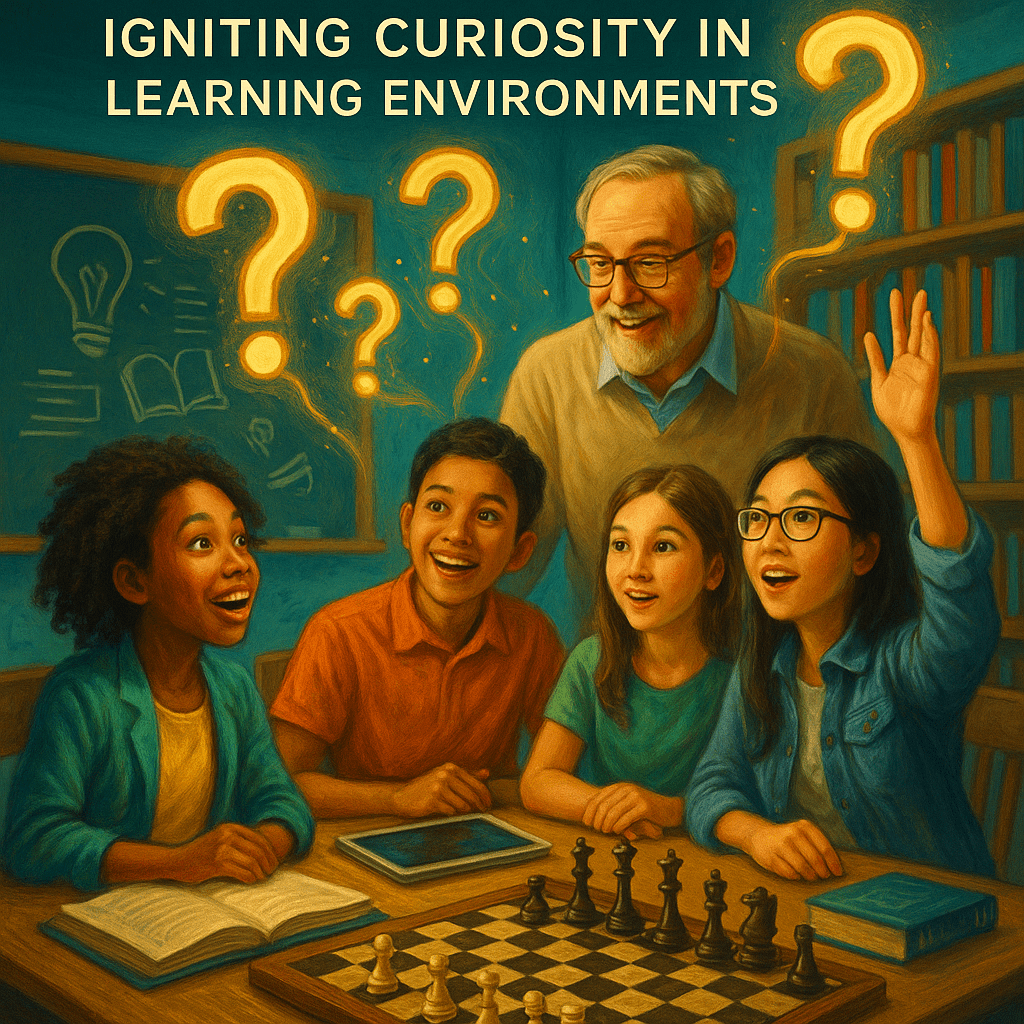
    Τhe Power of Questions: Igniting Curiosity in Learning Environments 

    We equip them with the most powerful tool for navigating change: curiosity.

    Questions are the spark that ignites the flame of knowledge. They are not merely tools for assessment but powerful catalysts for curiosity, engagement, and deep learning. By creating environments where questions flourish, we transform education from passive consumption into active discovery.

    In educational environments, questions are not just assessment tools—they are “an integral part of meaningful learning” and scientific inquiry. Formulating a good question is a creative act that lies at the heart of critical thinking, creative thinking, and problem-solving. When we embrace questions, we unlock significant learning potential that benefits everyone in the educational ecosystem.

    Empowering Learners Through Questions

    Highlights of several key benefits of questions. They help teachers find areas of confusion. Questions build interest and curiosity. They support direct learning. Additionally, they empower students to take ownership of their knowledge. Nonetheless, the power of questions goes even deeper.

    Questions, by their very nature, compel learners to pay attention. While a lecture might allow minds to wander, questions prompt immediate engagement with the material. Without this attention, there is no learning. When students formulate questions, they actively join in constructing their understanding rather than passively receiving information.

    Questions also reveal the gaps in our knowledge. When a student asks, “Why does this happen?” or “How does this connect to what we learned last week?”, they’re identifying the boundaries of their current understanding. This metacognitive awareness—knowing what you don’t know—is essential for authentic learning.

    Creating Curious Classrooms

    For educators, creating environments where questions flourish requires intention. Research confirms that classrooms using active learning strategies produce better educational outcomes. In these classrooms, students engage actively rather than listen passively. This improvement is seen at virtually all levels. Questions form the backbone of such environments.

    When teachers model curiosity by asking thought-provoking questions, they show that not knowing is the beginning of wisdom. This is not a failure. By valuing student questions equally with their own, they create safe spaces for intellectual exploration.

    Parents, too, can foster a culture of questioning at home. When children ask, “Why is the sky blue?” or “How do birds fly?”, these are golden moments for connection and learning. Rather than providing immediate answers, parents can respond with, “What do you think?” or “How do we find out together?”—extending the questioning process and modelling lifelong learning.

    Questions as Bridges to Understanding

    Questions serve as bridges between isolated facts and integrated understanding. They prompt students to connect new information with existing knowledge, creating neural pathways that enhance retention and recall. When students ask, “How does this relate to what we learned before?” they’re actively constructing meaning.

    The act of questioning encourages learners to engage in critical reasoning, a key feature of scientific discourse. Questions elicit explanations, postulate theories, evaluate evidence, justify reasoning, and clarify doubts. In this way, questions transform education from mere fact accumulation. They foster the development of thinking skills that will serve students throughout their lives.

    Questions for a Changing World

    In our rapidly evolving world, the ability to ask good questions is more valuable than having ready answers. Technological advances mean that information is increasingly accessible. Yet, the wisdom to critically evaluate that information remains a uniquely human skill. Evaluating involves understanding its source, assessing its reliability, and considering its implications.

    When we teach students to ask thoughtful questions, we prepare them not just for today’s challenges but for tomorrow’s unknowns. We equip them with the most powerful tool for navigating change: curiosity.

    The next time a student raises their hand with a question, remember: this is not an interruption to teaching. It is teaching in its purest form. In that moment of questioning, learning is already happening. By honouring and nurturing questions in our classrooms, homes, and communities, we cultivate the curious minds our future needs.

     
  • Unknown's avatar

    Nicos Paschali 4:49 am on May 18, 2025 Permalink | Reply  

    The Quiet Revolution: How AI is Reshaping Our Daily Lives. 

    Artificial intelligence is now a part of our everyday existence. It transforms how we work, communicate, and experience the world around us. What once seemed like science fiction is now an intimate companion in our daily routines. It often operates invisibly. Yet, it profoundly reshapes our lived experience.

    In our homes, AI-powered voice assistants respond to our queries. They control our thermostats. They also manage our security systems with increasing sophistication. These systems learn our preferences and habits, creating personalized environments that predict our needs before we articulate them. The smart home revolution shows not just convenience but a fundamental shift in how we interact with our living spaces.

    The transformation extends beyond our doorsteps. Our commutes are optimized by AI algorithms that predict traffic patterns and suggest the most efficient routes. Public transportation systems in progressive cities increasingly rely on AI to reduce congestion. They use it to improve sustainability. This shows how technology can tackle pressing environmental challenges.

    In our professional lives, AI has become an indispensable collaborator. Knowledge workers now delegate routine tasks to AI assistants, allowing them to focus on complex problem-solving and creative endeavors. This shift signifies not job replacement but job enhancement—augmenting human capabilities rather than diminishing them. The most progressive organizations have embraced this collaborative potential. They create workplaces where human creativity and AI efficiency combine. This combination produces unprecedented innovation.

    Healthcare has seen the most promising applications. AI systems now detect patterns in medical images that might escape even experienced practitioners. This leads to earlier diagnosis of serious conditions. Personalized treatment plans based on individual genetic profiles and medical histories are becoming increasingly commonplace. These advances aren’t replacing healthcare professionals but empowering them with tools that expand the boundaries of what medicine can achieve.

    Our social interactions have been equally transformed. AI-powered translation services break down language barriers, enabling meaningful connections across cultural divides. Social media platforms use sophisticated algorithms to connect us with communities that share our interests and values. Nonetheless, there is a responsibility to guarantee these systems don’t simply reinforce existing beliefs.

    The democratization of AI tools signifies one of the most powerful aspects of this revolution. What was once the exclusive domain of large corporations and specialized researchers is increasingly accessible to everyday users. People with no technical background can now use AI to write more effectively. They can also create digital art, compose music, and analyze data. This unleashes waves of creativity and productivity across society.

    Of course, this transformation comes with important considerations. Privacy concerns, algorithmic bias, and questions about digital equality demand our thoughtful attention. The societies that will thrive in this new era will harness AI’s benefits. They will implement thoughtful regulations and ethical frameworks to guide AI’s development.

    As we navigate this transition, one thing becomes clear. Artificial intelligence is no longer just a technological advancement. It is a social and cultural force reshaping how we experience being human. We should approach this evolution with enthusiasm for its possibilities. At the same time, we must keep vigilance about its challenges. This way, we can guarantee that AI truly serves human flourishing in all its dimensions.

     
  • Unknown's avatar

    Nicos Paschali 1:56 pm on May 12, 2025 Permalink | Reply  

    “Feeling stuck at life’s crossroads, In just three… 

    “Feeling stuck at life’s crossroads? In just three hours, you will discover the hidden gaps holding you back. Walk away with a crystal-clear, step-by-step action plan to finally move forward confidently. Limited seats available for our live Zoom complimentary preview webinar—secure your spot now and transform overwhelm into unstoppable momentum!”

    Register here for free to attend the 15-minute workshop preview: 

    https://forms.gle/jvePvKLjrHXhpbUb7

     
  • Unknown's avatar

    Nicos Paschali 5:06 am on May 7, 2025 Permalink | Reply  

    Investment in Self: The Compound Effect of Timeless Principles 

    Investment in Self: The Compound Effect of Timeless Principles

    Success isn’t built overnight but through consistent application of fundamental principles that withstand the test of time. Like compound interest in finance, small daily investments in personal development yield extraordinary returns over time. Wealthy minds understand that sustainable growth comes from patient cultivation of habits, relationships, and decision-making frameworks.

    Warren Buffett, one of history’s most successful investors, reads over 500 pages daily—not because of innate talent, but because of disciplined habit formation. This knowledge compounds like interest, building a mental equity portfolio that appreciates with time. Quality inputs matter: choosing books over social media and deep work over multitasking creates exponential cognitive advantages.

    Success requires understanding your circle of competence. Rather than spreading yourself thin across multiple domains, focus your mental energy where your natural strengths lie. Double down on what you do well, delegate weaknesses, and practice the difficult art of saying “no” to distractions. Your attention is your most valuable asset—guard it vigilantly by eliminating interruptions, blocking time for deep work, and regularly auditing where your cognitive resources are spent.

    Emotional intelligence often outweighs raw intellectual horsepower. When markets crash, most investors panic and sell; the disciplined mind sees opportunity and buys. Building this temperament requires proper sleep, nutrition, and deliberate practice of calm decision-making under pressure. Your reputation—built through consistent integrity, swift admission of mistakes, and alignment between values and actions—can take decades but moments to destroy.

    Cultivating patient thinking provides a significant competitive advantage in a world optimised for instant gratification. Train yourself to make decisions based on five-year outcomes rather than immediate rewards. Let ideas marinate before acting on them. Resist the cognitive pull of reactionary choices driven by fear or excitement.

    Your environment inevitably shapes your behaviour. Create systems that make good decisions automatically rather than effortfully—keep healthy options visible, eliminate distractions at work, and prioritise sufficient sleep. These environmental tweaks create positive feedback loops that reinforce beneficial habits.

    The five people closest to you significantly influence your thinking patterns, aspirations, and standards. Your brain naturally mirrors those you spend time with, gradually adopting their habits and perspectives. Strategically upgrade your circle by seeking challenging mentors, joining high-standard communities, and distancing yourself from relationships that consistently drain your energy.

    Before making significant purchases, calculate the actual cost beyond the price tag. Every transaction represents an exchange of life energy. Consider not just the monetary value but the freedom cost, mental bandwidth required, and alignment with long-term goals. Status symbols often extract a higher price than their sticker suggests.

    By applying these principles consistently, you transform ordinary days into extraordinary results. The true magic lies not in radical changes but in the compound effect of small, intelligent choices made daily. Your future self is being built by the seemingly inconsequential decisions you make today.

     
  • Unknown's avatar

    Nicos Paschali 6:54 am on May 6, 2025 Permalink | Reply  

    Investment in Self: The Compound Effect of Timeless Principles 

    Investment in Self: The Compound Effect of Timeless Principles

    Success isn’t built overnight but through consistent application of fundamental principles that withstand the test of time. Like compound interest in finance, small daily investments in personal development yield extraordinary returns over time. Wealthy minds understand that sustainable growth comes from patient cultivation of habits, relationships, and decision-making frameworks.

    Warren Buffett, one of history’s most successful investors, reads over 500 pages daily—not because of innate talent, but because of disciplined habit formation. This knowledge compounds like interest, building a mental equity portfolio that appreciates with time. Quality inputs matter: choosing books over social media and deep work over multitasking creates exponential cognitive advantages.

    Success requires understanding your circle of competence. Rather than spreading yourself thin across multiple domains, focus your mental energy where your natural strengths lie. Double down on what you do well, delegate weaknesses, and practice the difficult art of saying “no” to distractions. Your attention is your most valuable asset—guard it vigilantly by eliminating interruptions, blocking time for deep work, and regularly auditing where your cognitive resources are spent.

    Emotional intelligence often outweighs raw intellectual horsepower. When markets crash, most investors panic and sell; the disciplined mind sees opportunity and buys. Building this temperament requires proper sleep, nutrition, and deliberate practice of calm decision-making under pressure. Your reputation—built through consistent integrity, swift admission of mistakes, and alignment between values and actions—can take decades but moments to destroy.

    Cultivating patient thinking provides a significant competitive advantage in a world optimised for instant gratification. Train yourself to make decisions based on five-year outcomes rather than immediate rewards. Let ideas marinate before acting on them. Resist the cognitive pull of reactionary choices driven by fear or excitement.

    Your environment inevitably shapes your behaviour. Create systems that make good decisions automatically rather than effortfully—keep healthy options visible, eliminate distractions at work, and prioritise sufficient sleep. These environmental tweaks create positive feedback loops that reinforce beneficial habits.

    The five people closest to you significantly influence your thinking patterns, aspirations, and standards. Your brain naturally mirrors those you spend time with, gradually adopting their habits and perspectives. Strategically upgrade your circle by seeking challenging mentors, joining high-standard communities, and distancing yourself from relationships that consistently drain your energy.

    Before making significant purchases, calculate the actual cost beyond the price tag. Every transaction represents an exchange of life energy. Consider not just the monetary value but the freedom cost, mental bandwidth required, and alignment with long-term goals. Status symbols often extract a higher price than their sticker suggests.

    By applying these principles consistently, you transform ordinary days into extraordinary results. The true magic lies not in radical changes but in the compound effect of small, intelligent choices made daily. Your future self is being built by the seemingly inconsequential decisions you make today.

     
  • Unknown's avatar

    Nicos Paschali 7:58 am on May 5, 2025 Permalink | Reply  

    Get to know me 

    Nicos Paschali

    Nicos Paschali: Transforming Leadership Through Innovation and Technology  

    In today’s rapidly evolving business landscape, technology is not just a tool—it’s a catalyst for visionary leadership and sustainable success. Nicos Paschali integrates cutting-edge AI, engineering, and communication advancements. He combines these with transformational adaptive leadership strategies, empowering businesses and individuals to thrive in uncertain times. His ability to bridge technology with human-centric leadership ensures that innovation drives meaningful results. This includes fostering deeper connections and enhancing performance. It also enhances strategic foresight.  

    With over 40 years of experience in global markets, Nicos has mentored leaders. He has advised organisations and pioneered learning methodologies. These methodologies redefine communication, talent development, and strategic growth. His Connoisseur archetype—a blend of wisdom, warmth, and impactful engagement—makes learning an immersive experience, strengthening leadership capabilities at every level.  

    Nicos is a certified Microsoft Trainer, holds an Australian Certificate IV in Training and Assessment, and is an Neurolinguistic Programming (NLP) Practitioner. He is also a PhotoReading Certified Instructor and DISC Personality Assessor. Nicos leverages deep technical knowledge alongside behavioural insights. He crafts innovative solutions tailored to dynamic business environments. His Maximiser, Achiever, and Ideation strengths ensure he delivers strategic excellence that fosters lasting success.  

    Nicos is a transformative leader who equips individuals and organisations with the mindset, strategies, and technology to remain indispensable. Connect with him to accelerate leadership success. 

     
  • Unknown's avatar

    Nicos Paschali 3:12 am on May 3, 2025 Permalink | Reply  

    The Practice of Adaptive Leadership. 

    Summary of “The Practice of Adaptive Leadership” by Ronald Heifetz

    “The Practice of Adaptive Leadership” by Ronald Heifetz, Marty Linsky, and Alexander Grashow provides a comprehensive framework for leadership in complex, challenging environments. The book distinguishes between technical problems (which can be solved with existing expertise) and adaptive challenges (which require new learning, behaviors, and values).

    Main Points and Takeaways

    1. Adaptive vs. Technical Challenges
      • Technical challenges can be solved with current knowledge and established procedures
      • Adaptive challenges require new learning, innovation, and changes in values or behaviors
      • Most significant organizational problems are adaptive, not technical
    2. The Dangers of Leadership
      • Leadership involves risk and resistance
      • People often resist change because it threatens their identity and sense of competence
      • Leaders must anticipate and prepare for the backlash that comes with challenging the status quo
    3. Getting on the Balcony
      • Leaders need to alternate between being “on the dance floor” (in the action) and “on the balcony” (observing patterns)
      • This perspective allows for better diagnosis of adaptive challenges
      • Leaders must see the whole system to understand complex dynamics
    4. Diagnosing Adaptive Challenges
      • Distinguish between technical and adaptive elements of problems
      • Identify the gap between aspirations and current reality
      • Recognize competing commitments that prevent progress
    5. Regulating Distress
      • Change creates discomfort and distress
      • Effective leaders create a “holding environment” to contain and regulate this distress
      • The goal is to maintain productive levels of tension without overwhelming people
    6. Giving Work Back to People
      • Avoid the trap of solving problems for others
      • Mobilize people to tackle their own adaptive challenges
      • Create structures that encourage responsibility and engagement
    7. Protecting Voices of Leadership
      • Support people who raise difficult issues
      • Resist the pressure to silence dissent
      • Create spaces for diverse perspectives to be heard
    8. Managing Self
      • Understand your own vulnerabilities and triggers
      • Develop practices for reflection and renewal
      • Build a support network to sustain yourself during challenging times
    9. Deploying Yourself
      • Be strategic about when and how to intervene
      • Choose your battles wisely
      • Understand the difference between your role and yourself
    10. Building Adaptive Cultures
      • Foster environments that promote continuous learning
      • Develop structures that distribute leadership throughout the organization
      • Create systems that can adapt to changing circumstances

    The core message of the book is that leadership is not about having answers, but about helping groups navigate complex challenges by facilitating collective learning and adaptation. This approach requires courage, resilience, and the ability to work with resistance as a natural part of the change process.

    Nicos Paschali, May 2025

    #AdaptiveLeadership #ChangeManagement #LeadershipDevelopment #OrganizationalChange #SystemsThinking #ResilienceBuilding #TechnicalVsAdaptive #LeadershipChallenges #OrganizationalLearning #ChangeReadiness

     
c
Compose new post
j
Next post/Next comment
k
Previous post/Previous comment
r
Reply
e
Edit
o
Show/Hide comments
t
Go to top
l
Go to login
h
Show/Hide help
shift + esc
Cancel