


The AI Revolution: Transforming the Modern Workplace into a Hub of Innovation and Efficiency
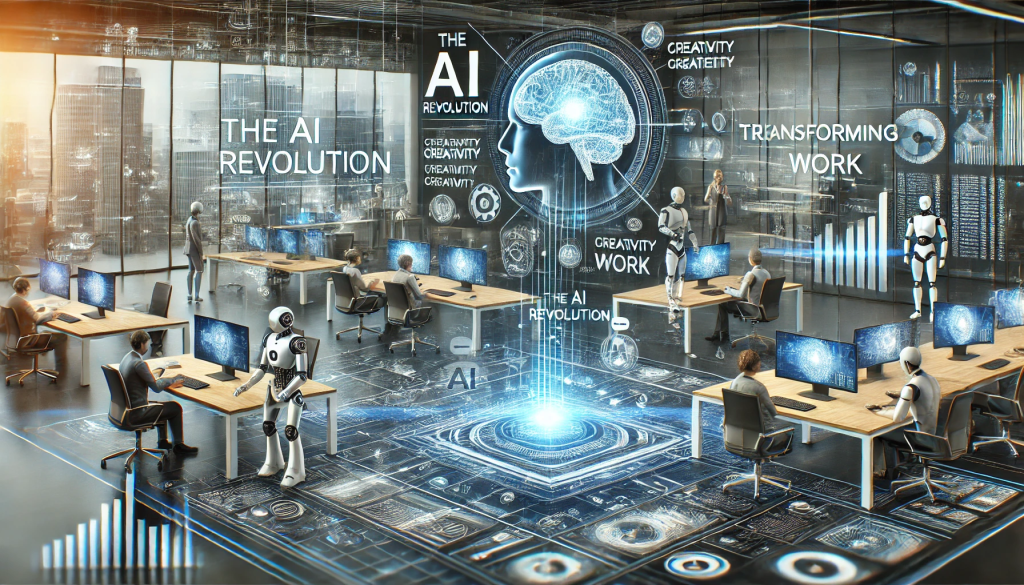
The AI Revolution: Transforming the Modern Workplace into a Hub of Innovation and Efficiency
From Assembly Lines to Algorithms: How AI is Redefining Work
Imagine a workplace where mundane tasks are handled by machines, data flows seamlessly to inform decisions, and employees are free to focus on creativity, strategy, and innovation. This is not a distant utopia—it’s the reality of the modern workplace, transformed by artificial intelligence (AI). Like a master conductor orchestrating a symphony, AI harmonises the cacophony of tasks, data, and human potential into a cohesive, high-performing ensemble.
AI is not just a tool but a transformative force reshaping the workplace, driving efficiency, fostering skill development, and enabling strategic excellence—all while demanding a commitment to ethical practices and continuous learning.
The AI Advantage: Efficiency at Scale
Automating the Mundane
AI’s most immediate impact on the workplace is its ability to automate repetitive tasks. Think of AI as the ultimate assistant, tirelessly handling the tedious work that once consumed hours of human effort. From data entry to inventory management, AI-powered systems are freeing employees from the drudgery of routine tasks.
For example, Amazon’s warehouses are a testament to AI-driven automation. Robots navigate vast storage spaces, retrieving items with precision and speed, while human workers focus on higher-value tasks like quality control and process optimisation. This synergy between humans and machines is not just about efficiency—it’s about elevating the role of human workers.
Data-Driven Decision Making
In the information age, data is the new oil, and AI is the refinery. AI systems can analyse vast datasets in seconds, uncovering patterns and insights that would take humans months to identify. This capability is transforming decision-making processes across industries.
Take Coca-Cola, for instance. The beverage giant uses AI to analyse consumer data, predict market trends, and optimise its supply chain. By leveraging AI-driven insights, Coca-Cola can make informed decisions that enhance customer satisfaction and drive profitability.
Optimising Workflows
AI also streamlines workflows, ensuring that resources are allocated efficiently and processes are executed seamlessly. UPS, for example, uses AI-powered route optimisation software to reduce fuel consumption and delivery times. This not only boosts efficiency but also reduces the company’s environmental footprint.
Upskilling for the Future: The Human Element in an AI-Driven World
The Rise of New Skill Sets
As AI assumes control of routine tasks, the demand for new skill sets surges. Employees are now expected to develop competencies in data science, machine learning, and AI interaction. This shift is not a threat but an opportunity—a chance to evolve and thrive in a rapidly changing landscape.
Consider JPMorgan Chase, which has invested heavily in employee AI training programs. By equipping its workforce with AI literacy, the company is enhancing productivity and fostering a culture of continuous learning.
Generative AI: A Catalyst for Creativity
Generative AI tools like ChatGPT and DALL-E are opening new frontiers of creativity. These tools enable employees to generate content, design visuals, and even write code quickly and precisely. Far from replacing human creativity, generative AI is amplifying it, allowing workers to focus on higher-level strategic thinking.
Strategic Excellence: Navigating the AI Frontier
The Power of Execution
In the words of the ancient strategist Sun Tzu, “Strategy without tactics is the slowest route to victory.” This timeless wisdom holds in the age of AI. While having a brilliant AI strategy is essential, flawless execution separates the winners from the also-rans.
IBM Watson Health exemplifies this principle. By executing its AI strategy with precision, the company has revolutionised healthcare, enabling personalised treatment plans and improving patient outcomes.
Future-Proofing Through Innovation
Organisations must embrace a culture of innovation to remain competitive in an AI-driven world. This involves staying abreast of technological advancements, adapting strategies, and fostering an environment where experimentation is encouraged.
Ethical Imperatives: Security, Privacy, and Trust
Building Robust Security Measures
With great power comes great responsibility. As AI systems handle sensitive data, ensuring robust security measures is paramount. Privacy-by-design principles must be integrated into AI systems from the ground up, safeguarding employee and customer information.
Fostering Trust Through Transparency
Trust is the cornerstone of successful AI adoption. Organisations must prioritise transparency, providing employees with clear explanations of how AI tools work and how they impact workflows. Feedback mechanisms should be established to address concerns and refine AI systems.
The Competitive Edge: Leveraging AI for Success
Enhancing Customer Experience
AI is not just transforming internal processes—it’s also revolutionising customer interactions. Chatbots, personalised recommendations, and predictive analytics enhance customer experiences across industries.
Driving Strategic Decision-Making
AI’s analysis of complex datasets empowers leaders to make strategic decisions confidently. By leveraging AI-driven insights, organisations can identify opportunities, mitigate risks, and stay ahead of the competition.
Conclusion: Embracing the AI Revolution
The AI revolution is not a distant future—it’s here, and it’s profoundly reshaping the workplace. By automating tasks, making data-driven decisions, and fostering skill development, AI is unlocking new levels of efficiency and innovation.
However, the true power of AI lies not in the technology itself but in how organisations harness it. To thrive in this new era, businesses must:
1. **Develop a Clear AI Strategy**: Align AI initiatives with business objectives and establish measurable KPIs.
2. **Invest in Skills Development**: Equip employees with the tools and knowledge they need to succeed in an AI-driven world.
3. **Prioritise Ethics and Security**: Build trust through transparency, robust security measures, and ethical AI governance.
4. **Foster a Culture of Innovation**: Encourage continuous learning, experimentation, and adaptability.
The future belongs to those who embrace AI not as a threat but as an opportunity—a catalyst for growth, innovation, and human potential. The question is not whether AI will transform the workplace but how you will leverage it to shape your organisation’s destiny.
By taking these actionable steps, organisations can confidently navigate the AI revolution, transforming challenges into opportunities and paving the way for a thriving, future-proof workplace. The symphony of AI and human ingenuity is just beginning—let’s make it a masterpiece.
 Nicos Paschali, International Author, Designer & Facilitator of Learning Workshops. Mental Discipline Coach.
Reply