Tagged: ai Toggle Comment Threads | Keyboard Shortcuts

  • Unknown's avatar

    Nicos Paschali 6:16 am on February 12, 2025 Permalink | Reply
    Tags: ai, , , ,   

    The Future of AI That We Envision in Governance and Society 

    The Future of AI That We Envision

    Nicos Paschali, February 2025
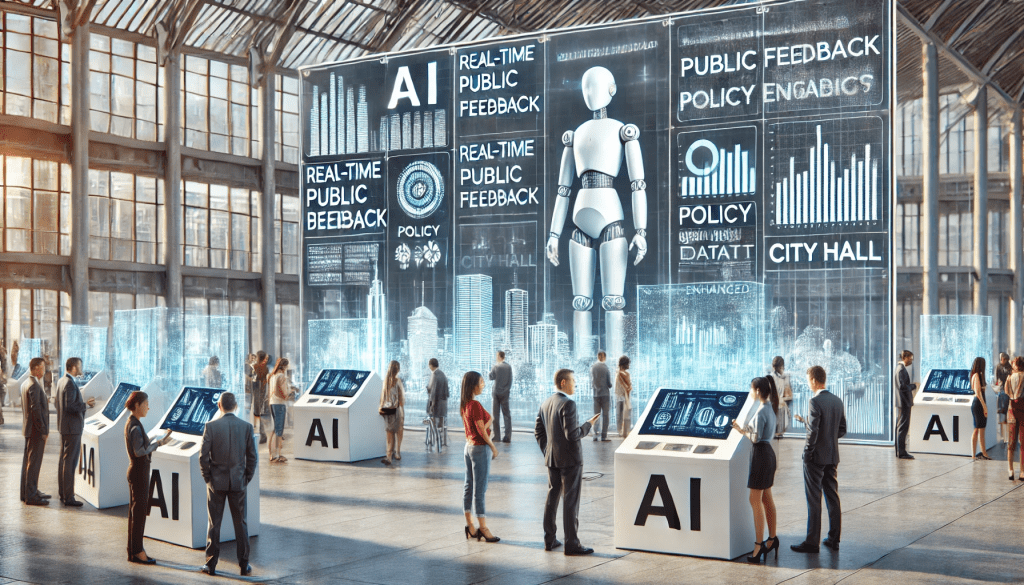
    Let’s envision a future where AI is a powerful ally in shaping a more responsive, transparent, and equitable community and political landscape. Here’s how we might define that vision—and the steps we can take today to realise it:

    The Future We Envision

    1. Empowered Citizenry & Transparent Governance:

    Imagine AI tools facilitating open dialogue between governments and citizens—providing real-time insights into community needs, streamlining public services, and ensuring that policy decisions are backed by robust, data-driven analysis. This means moving toward a model where decision-making is collaborative, transparent, and accountable.

    2. Efficient, Equitable Public Administration:

    AI can help optimise resource allocation, predict societal challenges (like traffic congestion or public health concerns), and ultimately improve the efficiency of public services. The goal is not to replace human judgment but to support it with precision and clarity, ensuring every citizen benefits relatively from technological advancements.

    3. Resilient, Future-Ready Communities:

    By thoughtfully integrating AI, communities can become more adaptable and ready to tackle issues ranging from climate change to urban planning. The vision is for an administration that anticipates challenges and crafts innovative and sustainable policies.

    Actions to Take Today

    1. Establish Ethical & Regulatory Frameworks:

    Set Clear Guidelines: Develop transparent ethical standards that ensure AI systems are designed and deployed with fairness, accountability, and respect for privacy.

    Legislative Oversight: Work with policymakers to create adaptive regulations that keep pace with technological advances while protecting individual rights.

    2. Foster Inclusive Collaboration:

    Engage Stakeholders: Create forums for dialogue among technologists, community leaders, civil society, and policymakers. This collaborative approach ensures that AI tools reflect the values and needs of diverse communities.

    Public Participation: Leverage digital platforms to solicit input from citizens, turning public feedback into actionable insights for policy design and service improvements.

    3. Invest in Education & Capacity Building:

    Skill Development: Equip public servants and community members with the knowledge to understand and effectively use AI technologies.

    Research & Innovation: Fund pilot projects and research initiatives that explore AI applications in public administration, enabling continuous learning and innovation.

    4. Implement Pilot Programs:

    Test & Learn: Start with targeted initiatives—such as AI-driven traffic management or real-time public health monitoring—to demonstrate the potential of AI.

    Iterative Improvement: Use these pilots as learning laboratories where outcomes are rigorously evaluated and lessons are integrated into broader strategies.

    5. Ensure Continuous Monitoring & Adaptation:

    Feedback Loops: Develop systems to regularly assess the impact of AI implementations, ensuring they remain aligned with community values and evolving societal needs.

    Responsive Governance: Establish oversight bodies that can quickly adjust policies and practices in response to both successes and unforeseen challenges.

    In Summary

    The journey towards an AI-enhanced community and political administration (governance) is as much about establishing a clear ethical and collaborative framework as it is about technological innovation. By taking deliberate, inclusive actions today—such as establishing guidelines, engaging citizens, investing in education, and piloting targeted projects—we can steer AI in a direction that strengthens democratic values, fosters community resilience, and ultimately creates a more just and efficient society.

    Let us work together to ensure that AI becomes a tool for empowerment, transparency, and progress, shaping a future where every voice is heard and every citizen benefits.

    #AIForGood

    #FutureOfGovernance

    #DigitalDemocracy

    #EthicalAI

    #TechTransparency

    #InclusiveInnovation

    #SmartCommunities

    #CivicTech

    #PolicyInnovation

    #ResilientFuture
     
  • Unknown's avatar

    Nicos Paschali 8:30 am on February 10, 2025 Permalink | Reply
    Tags: ai, , , ,   

    The Imperative of AI in Modern Business: A Call to Action for CEOs 

    The Imperative of AI in Modern Business: A Call to Action for CEOs

    February, 2025

    Dear CEO,

    In the dynamic landscape of 2025, integrating Artificial Intelligence (AI) into your company’s workflow is not just an advantage; it’s necessary for survival and growth. The era of AI as a luxury or a distant tech dream has ended. It’s the cornerstone of innovation, efficiency, and competitive edge. Here’s why you, as a leader, must act decisively to incorporate AI into your strategy today:

    1. Unmatched Efficiency:

    AI automates mundane tasks, from data analysis to customer service interactions, freeing your human talent to focus on creativity and strategic decision-making. This translates into higher productivity and a more motivated workforce.

    – Example: AI has reduced stock management time by over 70% in retail, allowing staff to focus on customer engagement.

    2. Data-Driven Decisions:

    AI turns raw data into insights quickly and accurately, enabling decisions based on real-time analysis rather than gut feeling.

    – Insight: AI can predict market trends, helping in strategic planning with unprecedented precision.

    3. Customer Experience Revolution:

    Personalisation is key in today’s market, and AI delivers personalised experiences at scale, enhancing customer loyalty and satisfaction.

    – Impact: Companies like Amazon leverage AI to tailor recommendations, increasing sales and customer retention.

    4. Innovation at Scale:

    AI isn’t just about efficiency; it’s about pioneering new products, services, or even business models that were previously unimaginable.

    – Case Study: Tesla uses AI for autonomous driving and designing more efficient manufacturing processes.

    5. Cost Reduction:

    AI significantly reduces waste and operational costs by optimising operations and predicting maintenance needs.

    – Financial Benefit: AI can lead to up to 30% savings in operational costs through better resource management.

    6. Enhanced Security:

    AI provides a proactive defense against cyber threats, continuously learning and adapting to new forms of attack.

    – Security: AI systems like those developed by IBM can detect anomalies in network traffic, safeguarding data integrity.

    7. Scalability:

    As your business grows, AI scales with it, managing increased complexity without the proportional increase in human effort or error.

    The Call to Action:

    The time to integrate AI into your workflow is now. Lead your company into the future, not just by keeping pace but by setting the pace. Start small if necessary, but start today.

    – Invest in AI Talent: Whether by training or hiring, ensure you have the expertise to leverage AI effectively.

    – Educate Your Team: AI should augment, not replace, human capabilities. Foster an AI-friendly culture.

    – Ethical AI: Commit to ethical practices in AI deployment, focusing on transparency and fairness.

    In conclusion, AI is not a luxury but a strategic imperative. By embracing AI now, you’re not just preparing for the future but actively shaping it. Let’s make AI part of your workflow and the core of your vision for a brighter, more efficient, and innovative company.

    Best regards,

    Nicos Paschali

    #LeadershipExcellence #InnovateOrDie #EfficiencyNow #AIForBusiness #FutureOfWork #TransformativeLeadership #TechDrivenGrowth #StrategicVision #EmpowermentEra #SuccessThroughInnovation 

     
  • Unknown's avatar

    Nicos Paschali 1:53 pm on February 4, 2025 Permalink | Reply
    Tags: ai, , chatgpt, ,   

    What is Augmented Intelligence? 

    Augmented Intelligence refers to using artificial intelligence (AI) technologies to enhance, rather than replace, human intelligence. The key idea behind augmented intelligence is to amplify human cognitive abilities, decision-making, and productivity by integrating AI tools that assist in tasks requiring analysis, pattern recognition, prediction, and other complex mental processes.

    Here are some core aspects of augmented intelligence:

    1. Enhancement Over Replacement: Unlike traditional AI, where systems might aim to perform tasks autonomously, augmented intelligence focuses on systems that work collaboratively with humans. AI supports or augments human decision-making and problem-solving capabilities.
    2. Data Analysis and Insights: AI can process vast amounts of data at a speed unattainable by humans, providing insights, identifying patterns, or suggesting solutions that humans might overlook. This is particularly useful in medicine, finance, and research, where data-driven decisions are crucial.
    3. Decision Support Systems: In scenarios where complex decisions need to be made, AI can offer alternatives, predict outcomes, or highlight risks, thereby aiding professionals in making more informed decisions. Examples include medical diagnosis support, legal case analysis, or strategic business decisions.
    4. User Experience and Interface: Technologies like augmented reality (AR) can visually enhance the real world with digital information, making complex data more accessible or operations in manufacturing or maintenance more straightforward to perform with step-by-step visual guides.
    5. Learning and Adaptation: AI systems in augmented intelligence often learn from interactions, adapting to serve the user’s needs over time better. This could mean personalisation in software applications, better prediction models in analytics, or more intuitive interfaces in interactive systems.
    6. Ethical and Human-Centric Approach: Augmented intelligence emphasises the ethical use of AI, where human oversight is paramount to ensure that AI applications do not inadvertently cause harm or bias. It seeks to maintain human control over automation, ensuring transparency and accountability.

    In practice, examples of augmented intelligence might include:

    • Healthcare: AI tools that help diagnose diseases by analysing imaging data, leaving the doctor the final diagnostic decision.
    • Education: AI-driven platforms that adapt teaching methods to each student’s learning pace and style.
    • Business: Systems that provide real-time analytics to help managers make better strategic decisions based on current market conditions or internal performance metrics.

    By focusing on augmentation, these technologies aim to create a synergy in which humans and machines work together for better outcomes rather than one side automating the other out of relevance.

    #AI, #Technology, #innovation, #AugmentedIntelligence, #Future, #DigitalTransformation, #Science, #DataAnalytics, #MachineLearning, #Humanity

    Send your wishes to nicospas@gmail.com

     
  • Unknown's avatar

    Nicos Paschali 8:27 am on January 28, 2025 Permalink | Reply
    Tags: ai, , , , , nicospaschali, npx,   

    The AI Revolution: Transforming the Modern Workplace into a Hub of Innovation and Efficiency   

    The AI Revolution: Transforming the Modern Workplace into a Hub of Innovation and Efficiency  

     From Assembly Lines to Algorithms: How AI is Redefining Work  

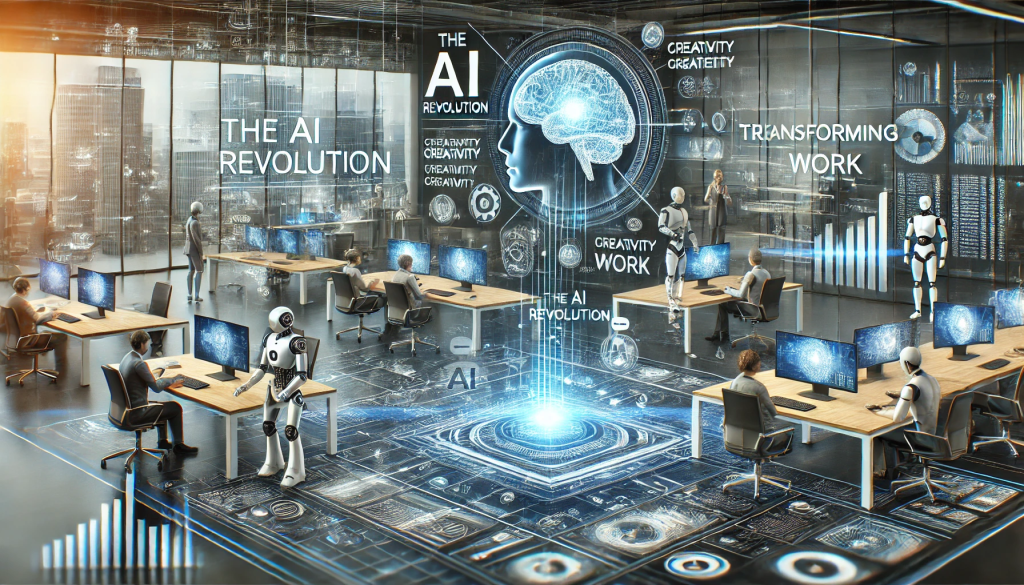
    Imagine a workplace where mundane tasks are handled by machines, data flows seamlessly to inform decisions, and employees are free to focus on creativity, strategy, and innovation. This is not a distant utopia—it’s the reality of the modern workplace, transformed by artificial intelligence (AI). Like a master conductor orchestrating a symphony, AI harmonises the cacophony of tasks, data, and human potential into a cohesive, high-performing ensemble.  

    AI is not just a tool but a transformative force reshaping the workplace, driving efficiency, fostering skill development, and enabling strategic excellence—all while demanding a commitment to ethical practices and continuous learning.  

     The AI Advantage: Efficiency at Scale  

     Automating the Mundane  

    AI’s most immediate impact on the workplace is its ability to automate repetitive tasks. Think of AI as the ultimate assistant, tirelessly handling the tedious work that once consumed hours of human effort. From data entry to inventory management, AI-powered systems are freeing employees from the drudgery of routine tasks.  

    For example, Amazon’s warehouses are a testament to AI-driven automation. Robots navigate vast storage spaces, retrieving items with precision and speed, while human workers focus on higher-value tasks like quality control and process optimisation. This synergy between humans and machines is not just about efficiency—it’s about elevating the role of human workers.  

     Data-Driven Decision Making  

    In the information age, data is the new oil, and AI is the refinery. AI systems can analyse vast datasets in seconds, uncovering patterns and insights that would take humans months to identify. This capability is transforming decision-making processes across industries.  

    Take Coca-Cola, for instance. The beverage giant uses AI to analyse consumer data, predict market trends, and optimise its supply chain. By leveraging AI-driven insights, Coca-Cola can make informed decisions that enhance customer satisfaction and drive profitability.  

     Optimising Workflows  

    AI also streamlines workflows, ensuring that resources are allocated efficiently and processes are executed seamlessly. UPS, for example, uses AI-powered route optimisation software to reduce fuel consumption and delivery times. This not only boosts efficiency but also reduces the company’s environmental footprint.  

     Upskilling for the Future: The Human Element in an AI-Driven World  

     The Rise of New Skill Sets  

    As AI assumes control of routine tasks, the demand for new skill sets surges. Employees are now expected to develop competencies in data science, machine learning, and AI interaction. This shift is not a threat but an opportunity—a chance to evolve and thrive in a rapidly changing landscape.  

    Consider JPMorgan Chase, which has invested heavily in employee AI training programs. By equipping its workforce with AI literacy, the company is enhancing productivity and fostering a culture of continuous learning.  

     Generative AI: A Catalyst for Creativity  

    Generative AI tools like ChatGPT and DALL-E are opening new frontiers of creativity. These tools enable employees to generate content, design visuals, and even write code quickly and precisely. Far from replacing human creativity, generative AI is amplifying it, allowing workers to focus on higher-level strategic thinking.  

     Strategic Excellence: Navigating the AI Frontier  

     The Power of Execution  

    In the words of the ancient strategist Sun Tzu, “Strategy without tactics is the slowest route to victory.” This timeless wisdom holds in the age of AI. While having a brilliant AI strategy is essential, flawless execution separates the winners from the also-rans.  

    IBM Watson Health exemplifies this principle. By executing its AI strategy with precision, the company has revolutionised healthcare, enabling personalised treatment plans and improving patient outcomes.  

     Future-Proofing Through Innovation  

    Organisations must embrace a culture of innovation to remain competitive in an AI-driven world. This involves staying abreast of technological advancements, adapting strategies, and fostering an environment where experimentation is encouraged.  

     Ethical Imperatives: Security, Privacy, and Trust  

     Building Robust Security Measures  

    With great power comes great responsibility. As AI systems handle sensitive data, ensuring robust security measures is paramount. Privacy-by-design principles must be integrated into AI systems from the ground up, safeguarding employee and customer information.  

     Fostering Trust Through Transparency  

    Trust is the cornerstone of successful AI adoption. Organisations must prioritise transparency, providing employees with clear explanations of how AI tools work and how they impact workflows. Feedback mechanisms should be established to address concerns and refine AI systems.  

     The Competitive Edge: Leveraging AI for Success  

     Enhancing Customer Experience  

    AI is not just transforming internal processes—it’s also revolutionising customer interactions. Chatbots, personalised recommendations, and predictive analytics enhance customer experiences across industries.  

     Driving Strategic Decision-Making  

    AI’s analysis of complex datasets empowers leaders to make strategic decisions confidently. By leveraging AI-driven insights, organisations can identify opportunities, mitigate risks, and stay ahead of the competition.  

     Conclusion: Embracing the AI Revolution  

    The AI revolution is not a distant future—it’s here, and it’s profoundly reshaping the workplace. By automating tasks, making data-driven decisions, and fostering skill development, AI is unlocking new levels of efficiency and innovation.  

    However, the true power of AI lies not in the technology itself but in how organisations harness it. To thrive in this new era, businesses must:  

    1. **Develop a Clear AI Strategy**: Align AI initiatives with business objectives and establish measurable KPIs.  

    2. **Invest in Skills Development**: Equip employees with the tools and knowledge they need to succeed in an AI-driven world.  

    3. **Prioritise Ethics and Security**: Build trust through transparency, robust security measures, and ethical AI governance.  

    4. **Foster a Culture of Innovation**: Encourage continuous learning, experimentation, and adaptability.  

    The future belongs to those who embrace AI not as a threat but as an opportunity—a catalyst for growth, innovation, and human potential. The question is not whether AI will transform the workplace but how you will leverage it to shape your organisation’s destiny.  

    By taking these actionable steps, organisations can confidently navigate the AI revolution, transforming challenges into opportunities and paving the way for a thriving, future-proof workplace. The symphony of AI and human ingenuity is just beginning—let’s make it a masterpiece.

     
c
Compose new post
j
Next post/Next comment
k
Previous post/Previous comment
r
Reply
e
Edit
o
Show/Hide comments
t
Go to top
l
Go to login
h
Show/Hide help
shift + esc
Cancel