


Study Guide: Communicating and Building Trust
Study Guide: Communicating and Building Trust
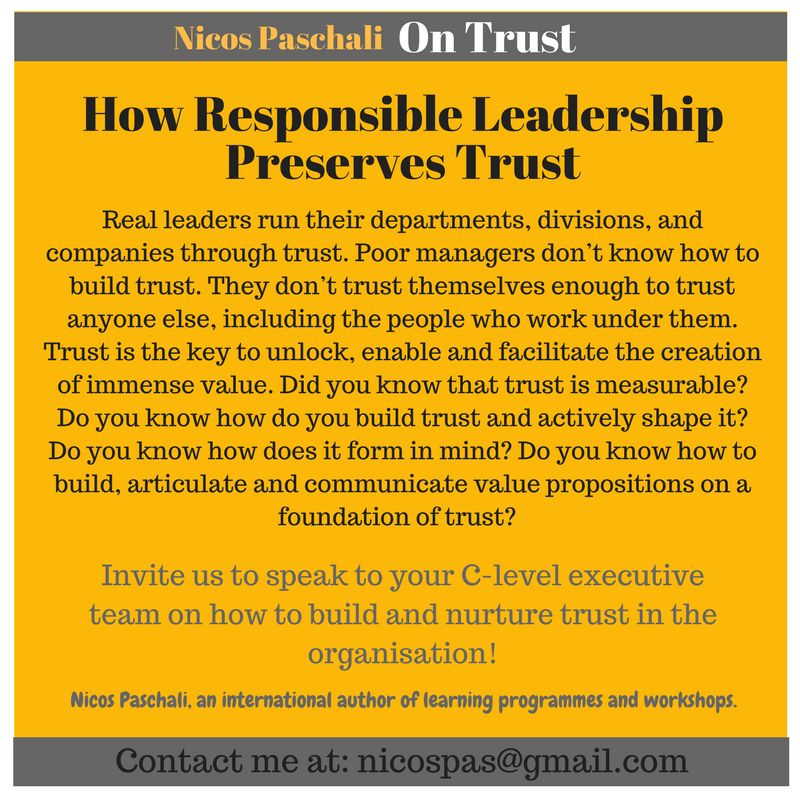
This study guide is based on the provided text excerpts, which focus on the importance of trust in leadership and organisational success.
Central Questions to Review:
- Why is trust crucial for effective leadership? What are the specific benefits of trust in a leadership context? What are the consequences of a lack of confidence?
- How can leaders build trust within their organisations? What specific actions and behaviours contribute to building trust? Consider the role of self-trust, understanding trust formation, and communication.
- How can trust be measured within an organisation? What are some potential methods and metrics for assessing trust levels? Why is measuring trust important?
- How can leaders maintain and preserve trust once it has been established? What potential threats to trust, and how can they be mitigated?
- What is the relationship between responsible leadership and trust? How do self-awareness, communication, and continuous learning concepts relate to responsible leadership and trust-building?
- How can external expertise be leveraged to enhance trust-building initiatives within an organisation? What specific benefits can experts like Nicos Paschali offer?
Glossary of Key Terms and Ideas:
- Trust: A firm belief in the reliability, truth, ability, or strength of someone or something. In a leadership context, trust refers to employees’ confidence in their leaders and the organisation as a whole.
- Self-Trust: Trust in one’s abilities, judgment, and instincts. The text emphasises that self-trust is a prerequisite for trusting others.
- Value Propositions: The benefits an organisation promises its customers or stakeholders. In the context of trust, leaders must communicate their value propositions in a way that reinforces trust and integrity.
- Transparency and Openness: Clear, honest, and accessible communication that promotes understanding and reduces uncertainty.
- Active Listening and Empathy: Communication skills involve paying close attention to what others are saying, seeking to understand their perspectives, and responding with empathy and respect.
- Consistency in Messaging and Actions: Aligning one’s words with one’s actions. Consistency builds credibility and reinforces trust.
- Trust Measurement: The process of assessing and quantifying an organisation’s trust level. This can involve surveys, interviews, and analysis of organisational data.
- Responsible Leadership: A leadership style characterised by ethical behaviour, accountability, and a commitment to the well-being of stakeholders. The text strongly links responsible leadership with the ability to build and maintain trust.
- Nicos Paschali: An expert (as mentioned in the text) who offers learning programs and workshops on building and nurturing trust within organizations.
Additional Notes:
- The text emphasizes the practical and measurable aspects of trust.
- Continuous learning and development are essential for leaders who want to cultivate trust within their organisations.
- Consider exploring resources and methodologies for measuring trust, such as the Trust Index© developed by Great Place to Work®.
 Nicos Paschali, International Author, Designer & Facilitator of Learning Workshops. Mental Discipline Coach.
Reply