Tagged: technology Toggle Comment Threads | Keyboard Shortcuts

  • Unknown's avatar

    Nicos Paschali 6:16 am on February 12, 2025 Permalink | Reply
    Tags: , , , , technology   

    The Future of AI That We Envision in Governance and Society 

    The Future of AI That We Envision

    Nicos Paschali, February 2025
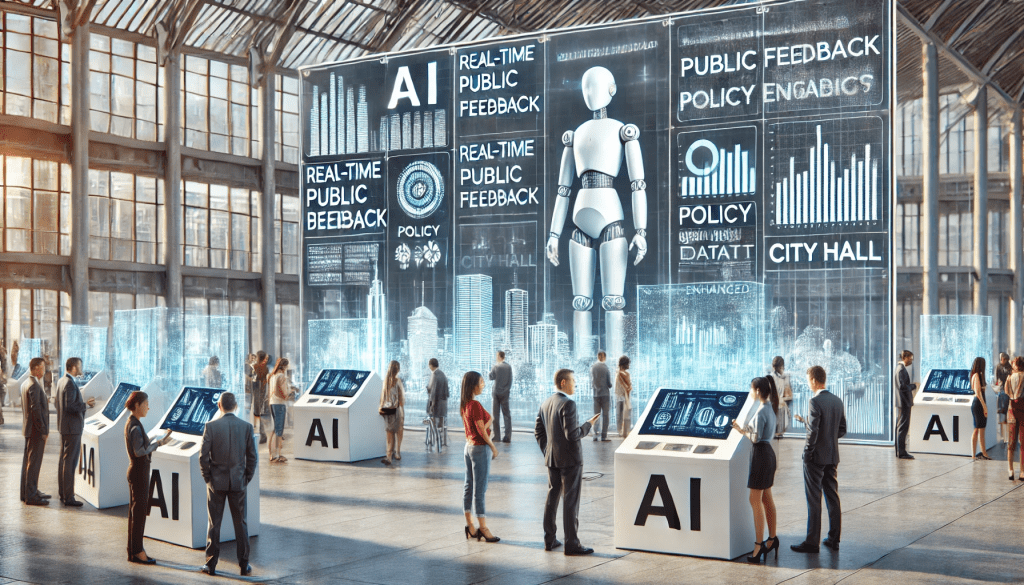
    Let’s envision a future where AI is a powerful ally in shaping a more responsive, transparent, and equitable community and political landscape. Here’s how we might define that vision—and the steps we can take today to realise it:

    The Future We Envision

    1. Empowered Citizenry & Transparent Governance:

    Imagine AI tools facilitating open dialogue between governments and citizens—providing real-time insights into community needs, streamlining public services, and ensuring that policy decisions are backed by robust, data-driven analysis. This means moving toward a model where decision-making is collaborative, transparent, and accountable.

    2. Efficient, Equitable Public Administration:

    AI can help optimise resource allocation, predict societal challenges (like traffic congestion or public health concerns), and ultimately improve the efficiency of public services. The goal is not to replace human judgment but to support it with precision and clarity, ensuring every citizen benefits relatively from technological advancements.

    3. Resilient, Future-Ready Communities:

    By thoughtfully integrating AI, communities can become more adaptable and ready to tackle issues ranging from climate change to urban planning. The vision is for an administration that anticipates challenges and crafts innovative and sustainable policies.

    Actions to Take Today

    1. Establish Ethical & Regulatory Frameworks:

    Set Clear Guidelines: Develop transparent ethical standards that ensure AI systems are designed and deployed with fairness, accountability, and respect for privacy.

    Legislative Oversight: Work with policymakers to create adaptive regulations that keep pace with technological advances while protecting individual rights.

    2. Foster Inclusive Collaboration:

    Engage Stakeholders: Create forums for dialogue among technologists, community leaders, civil society, and policymakers. This collaborative approach ensures that AI tools reflect the values and needs of diverse communities.

    Public Participation: Leverage digital platforms to solicit input from citizens, turning public feedback into actionable insights for policy design and service improvements.

    3. Invest in Education & Capacity Building:

    Skill Development: Equip public servants and community members with the knowledge to understand and effectively use AI technologies.

    Research & Innovation: Fund pilot projects and research initiatives that explore AI applications in public administration, enabling continuous learning and innovation.

    4. Implement Pilot Programs:

    Test & Learn: Start with targeted initiatives—such as AI-driven traffic management or real-time public health monitoring—to demonstrate the potential of AI.

    Iterative Improvement: Use these pilots as learning laboratories where outcomes are rigorously evaluated and lessons are integrated into broader strategies.

    5. Ensure Continuous Monitoring & Adaptation:

    Feedback Loops: Develop systems to regularly assess the impact of AI implementations, ensuring they remain aligned with community values and evolving societal needs.

    Responsive Governance: Establish oversight bodies that can quickly adjust policies and practices in response to both successes and unforeseen challenges.

    In Summary

    The journey towards an AI-enhanced community and political administration (governance) is as much about establishing a clear ethical and collaborative framework as it is about technological innovation. By taking deliberate, inclusive actions today—such as establishing guidelines, engaging citizens, investing in education, and piloting targeted projects—we can steer AI in a direction that strengthens democratic values, fosters community resilience, and ultimately creates a more just and efficient society.

    Let us work together to ensure that AI becomes a tool for empowerment, transparency, and progress, shaping a future where every voice is heard and every citizen benefits.

    #AIForGood

    #FutureOfGovernance

    #DigitalDemocracy

    #EthicalAI

    #TechTransparency

    #InclusiveInnovation

    #SmartCommunities

    #CivicTech

    #PolicyInnovation

    #ResilientFuture

     
  • Unknown's avatar

    Nicos Paschali 8:30 am on February 10, 2025 Permalink | Reply
    Tags: , , , , technology   

    The Imperative of AI in Modern Business: A Call to Action for CEOs 

    The Imperative of AI in Modern Business: A Call to Action for CEOs

    February, 2025

    Dear CEO,

    In the dynamic landscape of 2025, integrating Artificial Intelligence (AI) into your company’s workflow is not just an advantage; it’s necessary for survival and growth. The era of AI as a luxury or a distant tech dream has ended. It’s the cornerstone of innovation, efficiency, and competitive edge. Here’s why you, as a leader, must act decisively to incorporate AI into your strategy today:

    1. Unmatched Efficiency:

    AI automates mundane tasks, from data analysis to customer service interactions, freeing your human talent to focus on creativity and strategic decision-making. This translates into higher productivity and a more motivated workforce.

    – Example: AI has reduced stock management time by over 70% in retail, allowing staff to focus on customer engagement.

    2. Data-Driven Decisions:

    AI turns raw data into insights quickly and accurately, enabling decisions based on real-time analysis rather than gut feeling.

    – Insight: AI can predict market trends, helping in strategic planning with unprecedented precision.

    3. Customer Experience Revolution:

    Personalisation is key in today’s market, and AI delivers personalised experiences at scale, enhancing customer loyalty and satisfaction.

    – Impact: Companies like Amazon leverage AI to tailor recommendations, increasing sales and customer retention.

    4. Innovation at Scale:

    AI isn’t just about efficiency; it’s about pioneering new products, services, or even business models that were previously unimaginable.

    – Case Study: Tesla uses AI for autonomous driving and designing more efficient manufacturing processes.

    5. Cost Reduction:

    AI significantly reduces waste and operational costs by optimising operations and predicting maintenance needs.

    – Financial Benefit: AI can lead to up to 30% savings in operational costs through better resource management.

    6. Enhanced Security:

    AI provides a proactive defense against cyber threats, continuously learning and adapting to new forms of attack.

    – Security: AI systems like those developed by IBM can detect anomalies in network traffic, safeguarding data integrity.

    7. Scalability:

    As your business grows, AI scales with it, managing increased complexity without the proportional increase in human effort or error.

    The Call to Action:

    The time to integrate AI into your workflow is now. Lead your company into the future, not just by keeping pace but by setting the pace. Start small if necessary, but start today.

    – Invest in AI Talent: Whether by training or hiring, ensure you have the expertise to leverage AI effectively.

    – Educate Your Team: AI should augment, not replace, human capabilities. Foster an AI-friendly culture.

    – Ethical AI: Commit to ethical practices in AI deployment, focusing on transparency and fairness.

    In conclusion, AI is not a luxury but a strategic imperative. By embracing AI now, you’re not just preparing for the future but actively shaping it. Let’s make AI part of your workflow and the core of your vision for a brighter, more efficient, and innovative company.

    Best regards,

    Nicos Paschali

    #LeadershipExcellence #InnovateOrDie #EfficiencyNow #AIForBusiness #FutureOfWork #TransformativeLeadership #TechDrivenGrowth #StrategicVision #EmpowermentEra #SuccessThroughInnovation 

     
  • Unknown's avatar

    Nicos Paschali 1:53 pm on February 4, 2025 Permalink | Reply
    Tags: , , chatgpt, , technology   

    What is Augmented Intelligence? 

    Augmented Intelligence refers to using artificial intelligence (AI) technologies to enhance, rather than replace, human intelligence. The key idea behind augmented intelligence is to amplify human cognitive abilities, decision-making, and productivity by integrating AI tools that assist in tasks requiring analysis, pattern recognition, prediction, and other complex mental processes.

    Here are some core aspects of augmented intelligence:

    1. Enhancement Over Replacement: Unlike traditional AI, where systems might aim to perform tasks autonomously, augmented intelligence focuses on systems that work collaboratively with humans. AI supports or augments human decision-making and problem-solving capabilities.
    2. Data Analysis and Insights: AI can process vast amounts of data at a speed unattainable by humans, providing insights, identifying patterns, or suggesting solutions that humans might overlook. This is particularly useful in medicine, finance, and research, where data-driven decisions are crucial.
    3. Decision Support Systems: In scenarios where complex decisions need to be made, AI can offer alternatives, predict outcomes, or highlight risks, thereby aiding professionals in making more informed decisions. Examples include medical diagnosis support, legal case analysis, or strategic business decisions.
    4. User Experience and Interface: Technologies like augmented reality (AR) can visually enhance the real world with digital information, making complex data more accessible or operations in manufacturing or maintenance more straightforward to perform with step-by-step visual guides.
    5. Learning and Adaptation: AI systems in augmented intelligence often learn from interactions, adapting to serve the user’s needs over time better. This could mean personalisation in software applications, better prediction models in analytics, or more intuitive interfaces in interactive systems.
    6. Ethical and Human-Centric Approach: Augmented intelligence emphasises the ethical use of AI, where human oversight is paramount to ensure that AI applications do not inadvertently cause harm or bias. It seeks to maintain human control over automation, ensuring transparency and accountability.

    In practice, examples of augmented intelligence might include:

    • Healthcare: AI tools that help diagnose diseases by analysing imaging data, leaving the doctor the final diagnostic decision.
    • Education: AI-driven platforms that adapt teaching methods to each student’s learning pace and style.
    • Business: Systems that provide real-time analytics to help managers make better strategic decisions based on current market conditions or internal performance metrics.

    By focusing on augmentation, these technologies aim to create a synergy in which humans and machines work together for better outcomes rather than one side automating the other out of relevance.

    #AI, #Technology, #innovation, #AugmentedIntelligence, #Future, #DigitalTransformation, #Science, #DataAnalytics, #MachineLearning, #Humanity

    Send your wishes to nicospas@gmail.com

     
  • Unknown's avatar

    Nicos Paschali 12:53 pm on January 30, 2025 Permalink | Reply
    Tags: , , , , technology   

    Creating New Business Growth. 

    Creating New Business Growth.

    Creating new growth instead of competing for existing market share involves several strategic approaches. Here are some key methods:

    1. Innovation:
      • Product Innovation involves Developing new products or significantly enhancing existing ones to meet unmet needs or create new markets. For example, Apple’s introduction of the iPhone created a new category of smartphones and redefined consumer expectations.
      • Process Innovation involves Improving how products are made, or services are delivered. This can open up new markets or significantly reduce costs (e.g., Tesla’s advancements in battery technology).
    2. Blue Ocean Strategy:
      • Instead of fighting over a shrinking pool of customers in a “red ocean,” seek to create “blue oceans” of uncontested market space. This means looking for or creating new demand where there are no competitors yet. 
      • Examples include Cirque du Soleil, which combined circus arts with theatre, thus creating a new entertainment category.
    3. Market Expansion:
      • Geographic Expansion: Enter new markets where your product or service isn’t yet available. This could mean international expansion or targeting different demographic segments within existing markets.
      • Diversification: Explore different industries or sectors where your company’s core competencies can be leveraged.
    4. Customer-Centric Innovation:
      • Listen to the customer’s voice to identify what they want now and might need in the future. This can lead to creating solutions for problems customers didn’t know they had.
      • Implement a culture of continuous feedback where customer insights directly influence product development.
    5. Disruptive Business Models:
      • Think like a disruptor by changing how business is done in your industry. For instance, Netflix pioneered streaming services and disrupted traditional video rental.
      • Subscription, freemium, or platform-based business models can change the competition dynamics.
    6. Technology Utilization:
      • Leverage cutting-edge technology like AI, IoT, blockchain, etc., to create new business models or to enhance products or services. This can lead to new ways of interacting with customers or managing supply chains.
    7. Partnerships and Ecosystems:
      • Build ecosystems where companies collaborate to create more value than they could alone. This can be done through strategic alliances, co-innovation, or platforms that benefit multiple parties.
    8. Sustainability and Social Impact:
      • Companies focusing on sustainability or social impact can capitalise on growing consumer trends toward ethical consumption, opening up new markets or niches.
    9. Educating the Market:
      • Sometimes, new growth comes from educating consumers about new possibilities or benefits they weren’t aware of, thus creating demand for your product.

    Implementing these strategies requires a culture that values innovation, risk-taking, and long-term vision over short-term gains. Leadership must be committed to exploring new avenues, even if it means diverting resources from current profitable operations. The key is not just reacting to market conditions but shaping them proactively through pioneering efforts.

    #InnovationDriven, #BlueOceanStrategy, #MarketDisruption, #NewGrowth, #CustomerCentric, #TechUtilization, #BusinessEcosystems, #SustainableBusiness, #MarketExpansion

    #ProductInnovation

       
    1. Unknown's avatar

      Nicos Paschali 8:27 am on January 28, 2025 Permalink | Reply
      Tags: , , , , , nicospaschali, npx, technology   

      The AI Revolution: Transforming the Modern Workplace into a Hub of Innovation and Efficiency   

      The AI Revolution: Transforming the Modern Workplace into a Hub of Innovation and Efficiency  

       From Assembly Lines to Algorithms: How AI is Redefining Work  

      Imagine a workplace where mundane tasks are handled by machines, data flows seamlessly to inform decisions, and employees are free to focus on creativity, strategy, and innovation. This is not a distant utopia—it’s the reality of the modern workplace, transformed by artificial intelligence (AI). Like a master conductor orchestrating a symphony, AI harmonises the cacophony of tasks, data, and human potential into a cohesive, high-performing ensemble.  

      AI is not just a tool but a transformative force reshaping the workplace, driving efficiency, fostering skill development, and enabling strategic excellence—all while demanding a commitment to ethical practices and continuous learning.  

       The AI Advantage: Efficiency at Scale  

       Automating the Mundane  

      AI’s most immediate impact on the workplace is its ability to automate repetitive tasks. Think of AI as the ultimate assistant, tirelessly handling the tedious work that once consumed hours of human effort. From data entry to inventory management, AI-powered systems are freeing employees from the drudgery of routine tasks.  

      For example, Amazon’s warehouses are a testament to AI-driven automation. Robots navigate vast storage spaces, retrieving items with precision and speed, while human workers focus on higher-value tasks like quality control and process optimisation. This synergy between humans and machines is not just about efficiency—it’s about elevating the role of human workers.  

       Data-Driven Decision Making  

      In the information age, data is the new oil, and AI is the refinery. AI systems can analyse vast datasets in seconds, uncovering patterns and insights that would take humans months to identify. This capability is transforming decision-making processes across industries.  

      Take Coca-Cola, for instance. The beverage giant uses AI to analyse consumer data, predict market trends, and optimise its supply chain. By leveraging AI-driven insights, Coca-Cola can make informed decisions that enhance customer satisfaction and drive profitability.  

       Optimising Workflows  

      AI also streamlines workflows, ensuring that resources are allocated efficiently and processes are executed seamlessly. UPS, for example, uses AI-powered route optimisation software to reduce fuel consumption and delivery times. This not only boosts efficiency but also reduces the company’s environmental footprint.  

       Upskilling for the Future: The Human Element in an AI-Driven World  

       The Rise of New Skill Sets  

      As AI assumes control of routine tasks, the demand for new skill sets surges. Employees are now expected to develop competencies in data science, machine learning, and AI interaction. This shift is not a threat but an opportunity—a chance to evolve and thrive in a rapidly changing landscape.  

      Consider JPMorgan Chase, which has invested heavily in employee AI training programs. By equipping its workforce with AI literacy, the company is enhancing productivity and fostering a culture of continuous learning.  

       Generative AI: A Catalyst for Creativity  

      Generative AI tools like ChatGPT and DALL-E are opening new frontiers of creativity. These tools enable employees to generate content, design visuals, and even write code quickly and precisely. Far from replacing human creativity, generative AI is amplifying it, allowing workers to focus on higher-level strategic thinking.  

       Strategic Excellence: Navigating the AI Frontier  

       The Power of Execution  

      In the words of the ancient strategist Sun Tzu, “Strategy without tactics is the slowest route to victory.” This timeless wisdom holds in the age of AI. While having a brilliant AI strategy is essential, flawless execution separates the winners from the also-rans.  

      IBM Watson Health exemplifies this principle. By executing its AI strategy with precision, the company has revolutionised healthcare, enabling personalised treatment plans and improving patient outcomes.  

       Future-Proofing Through Innovation  

      Organisations must embrace a culture of innovation to remain competitive in an AI-driven world. This involves staying abreast of technological advancements, adapting strategies, and fostering an environment where experimentation is encouraged.  

       Ethical Imperatives: Security, Privacy, and Trust  

       Building Robust Security Measures  

      With great power comes great responsibility. As AI systems handle sensitive data, ensuring robust security measures is paramount. Privacy-by-design principles must be integrated into AI systems from the ground up, safeguarding employee and customer information.  

       Fostering Trust Through Transparency  

      Trust is the cornerstone of successful AI adoption. Organisations must prioritise transparency, providing employees with clear explanations of how AI tools work and how they impact workflows. Feedback mechanisms should be established to address concerns and refine AI systems.  

       The Competitive Edge: Leveraging AI for Success  

       Enhancing Customer Experience  

      AI is not just transforming internal processes—it’s also revolutionising customer interactions. Chatbots, personalised recommendations, and predictive analytics enhance customer experiences across industries.  

       Driving Strategic Decision-Making  

      AI’s analysis of complex datasets empowers leaders to make strategic decisions confidently. By leveraging AI-driven insights, organisations can identify opportunities, mitigate risks, and stay ahead of the competition.  

       Conclusion: Embracing the AI Revolution  

      The AI revolution is not a distant future—it’s here, and it’s profoundly reshaping the workplace. By automating tasks, making data-driven decisions, and fostering skill development, AI is unlocking new levels of efficiency and innovation.  

      However, the true power of AI lies not in the technology itself but in how organisations harness it. To thrive in this new era, businesses must:  

      1. **Develop a Clear AI Strategy**: Align AI initiatives with business objectives and establish measurable KPIs.  

      2. **Invest in Skills Development**: Equip employees with the tools and knowledge they need to succeed in an AI-driven world.  

      3. **Prioritise Ethics and Security**: Build trust through transparency, robust security measures, and ethical AI governance.  

      4. **Foster a Culture of Innovation**: Encourage continuous learning, experimentation, and adaptability.  

      The future belongs to those who embrace AI not as a threat but as an opportunity—a catalyst for growth, innovation, and human potential. The question is not whether AI will transform the workplace but how you will leverage it to shape your organisation’s destiny.  

      By taking these actionable steps, organisations can confidently navigate the AI revolution, transforming challenges into opportunities and paving the way for a thriving, future-proof workplace. The symphony of AI and human ingenuity is just beginning—let’s make it a masterpiece.

       
    2. Unknown's avatar

      Nicos Paschali 7:25 am on December 28, 2024 Permalink | Reply
      Tags: , , , , , , personal-improvement, technology,   

      Nicos Paschali: A Transformative Force in Leadership and Development 

      Nicos Paschali: A Transformative Force in Leadership and Development

      Nicos Paschali is a distinguished leader in transformative leadership, communication excellence, and talent development, backed by over 40 years of experience. His impact extends across Europe, the UAE, and Australasia, working with diverse clients from government ministries to tech companies.

      Core Strengths:

      1. Transformative Learning
      • Revolutionary program focusing on communication enhancement
      • Proven track record in redefining learning and development strategies
      • Specialises in sustainable personal and professional growth
      1. Communication and Emotional Intelligence
      • Expert in precision communication with empathetic delivery
      • Masterful storyteller with an engaging presentation style
      • The “Connoisseur” archetype reflects warmth and knowledge
      1. Technical Expertise
      • Deep understanding of cutting-edge technologies, including AI and engineering
      • Strategic vision combining innovation with practical implementation
      • Results-oriented approach ensuring sustainable solutions

      Professional Background:

      • BSc in Communication & Electronic Engineering (Westminster University, UK)
      • Marketing & Management studies (Caulfield Institute of Management, Australia)
      • Extensive certifications including:
        • Microsoft Certified Engineer and Trainer
        • CISCO Certified Engineer
        • NLP Practitioner
        • PhotoReading Certified Instructor
        • DISC Personality Assessor

      Key Achievements:

      • Delivered over 85 seminar titles and coaching deliverables
      • Conducted 15,000+ in-class and ZOOM training hours
      • Multilingual proficiency in Greek (native) and English
      • Successful track record with global organisations and cultures

      Distinctive Personality Traits:

      1. Maximiser
      • Focus on transforming potential into excellence
      • Commitment to continuous improvement
      • Emphasis on authentic personal development
      1. Achiever
      • Strong work ethic with a results-driven approach
      • Proven track record of successful engagements
      • Thrives in demanding situations
      1. Learner
      • Passionate about continuous education
      • Extensive certification portfolio
      • Adapts to dynamic environments
      1. Ideation
      • Innovative problem-solving approach
      • Connects disparate concepts
      • Creates novel solutions
      1. Command
      • Natural leadership abilities
      • Confident decision-making
      • Adaptable communication style

      The “Must-Have Solution” Approach:

      Nicos’s methodology focuses on:

      • Empowering businesses and individuals in uncertain environments
      • Developing indispensable skills for sustainable success
      • Creating recurring revenue streams
      • Leveraging authentic strengths
      • Providing cost-effective, high-ROI solutions

      His approach combines practical expertise with innovative thinking, making him particularly valuable for organisations seeking transformative growth and sustainable development. His programs offer a unique blend of technical knowledge, emotional intelligence, and practical implementation strategies.

      Impact and Value:

      • Transforms communication and leadership capabilities
      • Develops sustainable growth strategies
      • Creates lasting organisational change
      • Builds strong, resilient teams
      • Delivers measurable business results

      Nicos Paschali offers more than traditional coaching or training. He embodies a comprehensive solution for organisations or individuals seeking transformative change and sustainable growth. His unique technical expertise, emotional intelligence, and proven methodologies make him an invaluable partner in organisational and personal improvement.

       
    3. Unknown's avatar

      Nicos Paschali 6:24 am on December 25, 2024 Permalink | Reply
      Tags: , ceo, coaching-mentoring, , , , , , technology   

      Calling All CEOs and Executives: Are You Ready to Elevate Your Leadership? 

      🚀 Calling All CEOs and Executives: Are You Ready to Elevate Your Leadership?

      The business world is evolving faster than ever, and as a leader, you know the stakes are higher. Strategic vision, innovation, and resilience aren’t just buzzwords; they’re your competitive edge. But how do you master them while driving growth and inspiring your team?

      Introducing The One-On-One Legacy Leadership Blueprint, a 12-week intensive coaching and mentoring programme designed for CEOs and high-level executives ready to take their leadership to the next level.

      🌟 What You’ll Gain:

      ✅ Clarity on your leadership style and how to leverage it.

      ✅ Practical strategies for aligning your vision with actionable goals.

      ✅ Tools to make smarter, faster decisions under pressure.

      ✅ Communication mastery to influence and inspire at every level.

      ✅ The skills to drive innovation and adapt to industry changes.

      🌍 Why Now?

      In today’s landscape, standing still is falling behind. This programme will equip you to thrive amid complexity, lead purposefully, and leave a lasting legacy in your organization and industry.

      💡 What Past Participants Say:

      “This programme helped me bridge the gap between ambition and action. The tools and insights transformed how I lead my team and drive results.”

      💬 Ready to Join the Conversation?

      👉 If you’re ready to lead confidently, drive growth, and set the standard for leadership excellence, comment below or message me directly.

      👉 Know a fellow leader who could benefit? Tag them—it might be the best thing you do for their career today!

      Spots are limited to eight people, so don’t wait. Let’s shape the future of leadership together!

      #Leadership #ExecutiveCoaching #CEOs #Innovation #Growth

       
    4. Unknown's avatar

      Nicos Paschali 2:00 pm on December 6, 2024 Permalink | Reply
      Tags: , , , , mentoring, , technology   

      How can I frame better questions? 

      Framing better questions is a crucial skill that can significantly enhance your communication, decision-making, and problem-solving abilities. Here are several strategies to help you frame more practical questions:

       Clarity and Conciseness

      When formulating questions, aim for clarity and brevity. Keep your questions short, avoiding unnecessary context or explanations. This approach helps prevent confusion and allows the respondent to focus on providing a meaningful answer.

       Open-Ended Approach

      Utilise open-ended questions that encourage detailed responses. These types of questions typically begin with “how,” “what,” or “why” and prompt the respondent to share more in-depth information. For example, instead of asking, “Did you enjoy the project?” try “What aspects of the project did you find most engaging?”

       Context and Relevance

      Ensure your questions are relevant and demonstrate that you’ve done your homework. This shows respect for the other person’s time and expertise. For instance, in a business setting, you might ask, “Considering the recent market trends, how do you think our new product will perform?”

       Encourage Critical Thinking

      Frame questions that challenge assumptions and promote deeper reflection. This can lead to more insightful discussions and innovative ideas. For example, “What would happen if we approached this problem from an entirely different angle?”

       Avoid Leading Questions

      Be careful not to embed your opinions or desired answers within your questions. Instead, frame them neutrally for honest and unbiased responses.

       Use the Funnel Technique

      Start with broader questions and gradually narrow down to more specific ones. This technique helps gather comprehensive information while focusing on crucial details.

       Practice Active Listening

      Good question framing often comes from attentive listening. Please pay close attention to the responses you receive and use them to formulate follow-up questions that delve deeper into the topic.

       Embrace Silence

      After asking a question, be comfortable with moments of silence. This gives the respondent time to think and answer thoughtfully.

      By implementing these strategies, you can significantly improve your ability to frame questions that elicit meaningful responses, foster engaging discussions, and lead to more productive outcomes in various personal and professional situations.

       
    5. Unknown's avatar

      Nicos Paschali 2:07 pm on October 26, 2024 Permalink | Reply
      Tags: fascination, fiction, , lifestyle, , nicos-profile, , technology   

      Transformative Leadership Strategies with Nicos Paschali 

      Comprehensive Brief for Nicos Paschali: A Must-Have Solution

      Nicos Paschali is not merely a leader but a Must-Have Solution in transformative leadership, communication excellence, and talent development. His 40+ years of experience, unique personality traits and commitment to innovation make him an invaluable asset to individuals and organisations seeking to unlock their full potential.

      Key Strengths and Accomplishments:

      • Transformative Actionable Learning: Nicos’s revolutionary programme enhances communication skills, strengthens connections, and redefines learning and development strategies for sustained growth. This programme, a testament to his innovative thinking and passion for empowering others, transforms careers and lives, profoundly catalysing personal and professional development.
      • Global Reach and Impact: Nicos’s expertise transcends geographical boundaries, spanning Europe, the UAE, and Australasia. He has worked with a diverse clientele, ranging from government ministries to prominent tech companies, consistently delivering exceptional results.
      • Exceptional Communication and Emotional Intelligence: Nicos’s ability to connect with people on a deeper level is a defining characteristic. His communication is precise, passionate, and infused with empathy, commanding respect and trust in every interaction. He leverages storytelling, humour, and a vivid presentation style to engage his audience and drive impactful outcomes. His mastery of communication is further validated by his “Connoisseur” archetype, highlighting his warm, knowledgeable, and engaging personality.
      • Tech Visionary and Innovation Catalyst: Nicos possesses a deep understanding of cutting-edge technologies, including computer science, AI, and engineering. This expertise, combined with his innovative thinking, allows him to identify new opportunities, solve complex problems, and shape the future of businesses and industries. His strategic vision, grounded in a results-oriented approach and an understanding of interconnected systems, ensures sustainable solutions and long-term success.
      • Trusted Advisor and Mentor: Nicos excels at building trust and fostering genuine connections, making him a highly sought-after mentor. He empowers leaders and organisations to develop essential skills through tailored learning strategies, coaching, and workshops. He is not just a mentor but a catalyst for change, a beacon of excellence, and a guide on the pathway to transformative growth. His commitment to delivering amazing value and going the extra mile is evident in all his endeavours.

      Key Personality Traits:

      • Maximizer: Nicos is driven by a passion for excellence. He focuses on strengths as a way to stimulate personal and group excellence, constantly seeking to transform something strong into something superb. This is reflected in his belief that the greatest value one can add is to become more of oneself.
      • Achiever: Nicos possesses an unyielding work ethic and a constant need for achievement, fueled by his “Achiever” strength. This inherent drive is evident in his busy schedule, with 14 speaking engagements leading up to Christmas. He thrives in demanding situations that test his talents and endurance, constantly pushing himself to achieve new heights.
      • Learner: Nicos embodies the spirit of lifelong learning. He is passionate about continuous improvement and is energised by the process of acquiring knowledge and skills. His thirst for knowledge is evident in his wide-ranging certifications and expertise, encompassing areas like NLP, PhotoReading, and Accelerated Learning. He thrives in dynamic work environments where continuous learning is a necessity.
      • Ideation: Nicos’s mind is a wellspring of innovative ideas. He is fascinated by finding connections between seemingly disparate concepts and generating novel solutions. He thrives in environments that encourage brainstorming and out-of-the-box thinking, constantly seeking to challenge the status quo and improve existing processes.
      • Command: Nicos is a natural leader who can take charge and make difficult decisions. He is assertive, self-reliant, and comfortable expressing his views. His “Command” strength enables him to lead confidently and inspire others to act. Combined with his “Connoisseur” archetype, this trait allows him to tailor his communication style to different situations, ensuring maximum impact.

      Background and Education:

      • Extensive Experience: Nicos has over 35 years of experience in training, coaching, and presenting, having delivered over 65 seminar titles and 13,000 in-class training hours. This wealth of knowledge, accumulated over decades of hands-on learning and global engagement, forms the bedrock of his unique and insightful teaching style.
      • Solid Academic Foundation: Nicos holds a BSc in Communication & Electronic Engineering from Westminster University, UK, and studied Marketing & Management at the Caulfield Institute of Management, Australia. This strong academic foundation provides a solid base for his expertise in technology and business.
      • Continuously Expanding Skillset: Nicos possesses numerous certifications, including Microsoft Certified Engineer and Trainer, CISCO Certified Engineer, NLP Practitioner, PhotoReading Certified Instructor, and DISC Personality Assessor. This commitment to continuous learning ensures he remains at the forefront of his field, offering his clients the most up-to-date knowledge and techniques.
      • Multilingual Proficiency: Nicos is fluent in Greek (native) and English (proficient). This multilingual ability allows him to connect with a broader audience and deliver his message effectively across cultures.

      Why Nicos is a Must-Have Solution:

      • Nicos empowers businesses and individuals to succeed in a world of uncertainty and constant change. His “Must-Have Method” equips individuals with the tools and mindset needed to become indispensable in their fields, ensuring a reliable revenue stream that remains resilient against economic fluctuations.
      • He provides a tactical roadmap for improved performance, helping individuals earn compensation for their insights and results. Nicos’s approach goes beyond superficial self-improvement; it emphasises embracing your authentic self and leveraging your unique strengths for success.
      • Additionally, he offers a cost-effective solution that ensures a significant return on investment with minimal financial commitment.

      Understanding Nicos’s “Must-Have Method” is crucial for anyone looking to navigate the complexities of today’s volatile economic landscape. Here are several compelling reasons why people should care about this transformative approach:

      1. Resilience in Uncertainty: In a world where economic conditions can shift dramatically, having the tools to adapt and thrive is invaluable. Nicos’s method equips individuals with strategies to not only survive but excel, regardless of external circumstances. For example, during economic downturns, those armed with the right skills and mindset can pivot their careers, finding new opportunities where others may struggle.
      2. Value of Unique Strengths: Everyone has unique traits that can lead to success, but many people do not recognize or leverage these strengths effectively. Nicos’s approach encourages individuals to embrace their authentic selves, fostering a deeper self-awareness that can enhance personal and professional growth. For instance, someone with a knack for creative problem-solving might discover how to position themselves as a leader in innovation within their organization.
      3. Outstanding Return on Investment: The cost of self-improvement programs can often be prohibitive. Nicos offers a cost-effective solution that minimizes financial risk while maximizing potential returns. Think of it as a small investment that can lead to a substantial boost in income or career advancement—imagine a professional who, after implementing his tactics, secures a promotion or a higher-paying job.
      4. Compensation for Insights: In today’s knowledge-driven economy, those who can provide valuable insights and results are highly sought after. Nicos’s roadmap helps individuals articulate and demonstrate their value effectively, ensuring they receive the compensation they deserve. Picture an employee who successfully leverages their analytics skills to drive a significant increase in sales; that person will undoubtedly be recognized and rewarded.
      5. Long-Term Career Sustainability: The job market is continuously evolving, and the skills that are in demand today may not be relevant tomorrow. By embracing a mindset of continuous improvement and adaptability, individuals can future-proof their careers. Consider how many roles have vanished due to technological advancement; those who consistently upgrade their skills and knowledge are the ones who thrive.

      By engaging with Nicos’s insights and methodologies, individuals can unlock their full potential, ensure their relevance in an ever-evolving job market, and ultimately achieve lasting success in their personal and professional lives.

      Conclusion:

      Nicos Paschali is more than just a trainer or coach; he is a transformative force, a trusted advisor, and a beacon of excellence. His commitment to innovation, exceptional communication skills, and genuine passion for empowering others make him an essential resource in today’s ever-changing world. His programs and services provide a unique blend of practicality, insight, and inspiration, ensuring that every individual and organisation he works with experiences significant and lasting growth.

       
    6. Unknown's avatar

      Nicos Paschali 2:23 pm on June 25, 2024 Permalink | Reply
      Tags: , , , , technology   

      The Necessity for Educational Reform in the 21st… 

      The Necessity for Educational Reform in the 21st Century

      The traditional educational system faces significant challenges in the modern era. The rapid evolution of technology and the changing demands of the global job market make it imperative to revise our educational approaches radically.

      Despite its good intentions, the existing system often needs to adequately equip students with the necessary skills to face the challenges of the 21st century. This gap between education and society’s real needs creates a significant obstacle to young people’s personal and professional development.

      To address this challenge, a holistic approach to education is necessary. Such an approach should combine academic excellence with developing critical thinking and emotional intelligence. This combination will allow students to acquire knowledge and develop the ability to apply it creatively, think critically, and manage their emotions effectively.

      Imagine a generation of students who are not merely repositories of information but active thinkers and problem solvers who can face life’s challenges with confidence and creativity. This is the vision we must pursue for the future of education.

      To achieve this vision, programs that offer more than lessons are needed. These programs must provide students with the tools and strategies to succeed in any challenge. This approach has already begun to bear fruit, with students improving their academic performance and interpersonal relationships.

      Parents of students who have participated in such programs have observed significant changes:

      “My son has gained more confidence and can express his thoughts more clearly.”
      “My daughter has significantly improved her organisational skills and time management.”
      “I see my son approaching problems more creatively.”
      “My daughter has become more empathetic and better at managing her emotions.”
      “My son shows more interest in learning and is more enthusiastic about school.”

      The impact of this educational approach can be exponential. Starting with a small group of students, we can influence families and communities and ultimately transform the future of the entire country.

      The goal is not simply to improve grades. It’s about creating a new generation of leaders, thinkers, and innovators who will shape a better future for all of us. This ambitious vision is worth pursuing.

      Educational reform is not just an option – it’s a necessity for preparing our youth for future challenges. It’s time to embrace this change and work collectively for an educational system that truly serves the needs of the 21st century.

      Nicos Paschali
      Guide, Catalyst

       
    c
    Compose new post
    j
    Next post/Next comment
    k
    Previous post/Previous comment
    r
    Reply
    e
    Edit
    o
    Show/Hide comments
    t
    Go to top
    l
    Go to login
    h
    Show/Hide help
    shift + esc
    Cancel