Updates from November, 2017 Toggle Comment Threads | Keyboard Shortcuts

  • Unknown's avatar

    Nicos Paschali 4:34 am on November 19, 2017 Permalink | Reply  

    Sunday short story … Cultivating the Mental Discipline of not categorising everything into Gain and Loss! 

    Learning to live in such a way that nothing is experienced as either an advantage or a disadvantage, is the source of enormous empowerment and liberation…

    Once upon a time there was a Chinese farmer whose horse ran away. That evening, all of his neighbors came around to commiserate. They said, “We are so sorry to hear your horse has run away. This is most unfortunate.” The farmer said, “Maybe.” The next day the horse came back bringing seven wild horses with it, and in the evening everybody came back and said, “Oh, isn’t that lucky. What a great turn of events. You now have eight horses!” The farmer again said, “Maybe.” The following day his son tried to break one of the horses, and while riding it, he was thrown and broke his leg. The neighbors then said, “Oh dear, that’s too bad,” and the farmer responded, “Maybe.” The next day the conscription officers came around to conscript people into the army, and they rejected his son because he had a broken leg. Again all the neighbors came around and said, “Isn’t that great!” Again, he said, “Maybe.”

    The farmer steadfastly refrained from thinking of things in terms of gain or loss, advantage or disadvantage, because one never knows… In fact we never really know whether an event is fortune or misfortune, we only know our ever-changing reactions to ever-changing events.

     
  • Unknown's avatar

    Nicos Paschali 4:48 pm on November 16, 2017 Permalink | Reply  

    Setting and Achieving Goals 

    “When you set a goal, make sure your goal is SMART, which stands for Specific, Measurable, Attainable, Relevant and Time-bound. Here’s an example:
    Specific: Instead of saying, “My ultimate goal is to lose weight,” say “My goal is to lose 30 pounds/kilos.”
    Measurable: Set milestones to measure your progress. For example, “My goal is to lose two pounds each week.”
    Attainable: Your goal should be realistic to you. It should be a stretch to achieve it, but you should still feel confident in your ability to achieve it.
    Relevant: This is your “why” of weight loss. Why do you want to lose weight? What motivates you? For example, your answer could be: “Achieving this goal will allow me to feel more confident as a person.”
    Time-bound: Set a specific date you want to achieve your goal by, e.g., “I want to lose 30 pounds/kilos by April 2018.”

     
  • Unknown's avatar

    Nicos Paschali 7:54 am on November 16, 2017 Permalink | Reply
    Tags: , facilitation, influenceing, interviewing, , , probing   

    The Art of Discovering the Right Question! 

     “If I had an hour to solve a problem and my life depended on the solution, I would spend the first 55 minutes determining the proper question to ask, for once I know the proper question, I could solve the problem in less than five minutes.”

    The usefulness of the knowledge we acquire and the effectiveness of the actions we take depend on the quality of the questions we ask. Questions open the door to dialogue and discovery. They are an invitation to creativity and breakthrough thinking. Questions can lead to movement and action on key issues; by generating creative insights, they can ignite change.

    A powerful creative  question: • generates curiosity in the listener • stimulates reflective conversation • is thought-provoking • surfaces underlying assumptions • invites creativity and new possibilities • generates energy and forward movement • channels attention and focuses inquiry • stays with participants • touches a deep meaning • evokes more questions.

    A powerful question also has the capacity to “travel well”—to spread beyond the place where it began into larger networks of conversation throughout an organisation or a community.

    Spend 90 mins with us, live online, and we will teach you how to ask powerfull questions!

    Usefull for probing, influencing, closing, teaching, facilitating, coaching and interviwing.

     
  • Unknown's avatar

    Nicos Paschali 10:35 am on November 15, 2017 Permalink | Reply  

    Do you know how to advance your purpose? 

    “Scottish philosopher Thomas Carlyle asserted, “A person with a clear purpose will make progress on even the roughest road. A person with no purpose will make no progress on even the smoothest road.” What a great image. Purpose gives you drive. ”

     
  • Unknown's avatar

    Nicos Paschali 9:35 am on November 15, 2017 Permalink | Reply  

    My daily routine for today it matters! 

    Just for today…
    I choose and display the right attitudes.
    I determine and act upon important priorities.
    I know and follow healthy guidelines.
    I communicate with and care for my family.
    I practice and develop good thinking.
    I make and keep proper commitments.
    I earn and properly manage finances.
    I deepen and live out my faith.
    I accept and show responsibility.
    I initiate and invest in solid relationships.
    I plan for and model generosity.
    I embrace and practice good values.
    I seek and experience improvements.

     
  • Unknown's avatar

    Nicos Paschali 4:06 pm on November 14, 2017 Permalink | Reply  

    Why Warmth Is the Underappreciated Skill Leaders Need. 

    When it comes to success in leadership, there has never been just one playbook. Some leaders are extroverts, natural mentors, and charismatic speakers; others prefer to lead by example and take a more hands-off approach.

    There is, however, one simple fact that leaders ignore at their peril: those who demonstrate high levels of “interpersonal warmth” have a better chance at long-term success.

    Research confirms that a leader’s overall effectiveness is predicted more by warmth than competence! Do you agree?

     
  • Unknown's avatar

    Nicos Paschali 2:08 pm on November 14, 2017 Permalink | Reply  

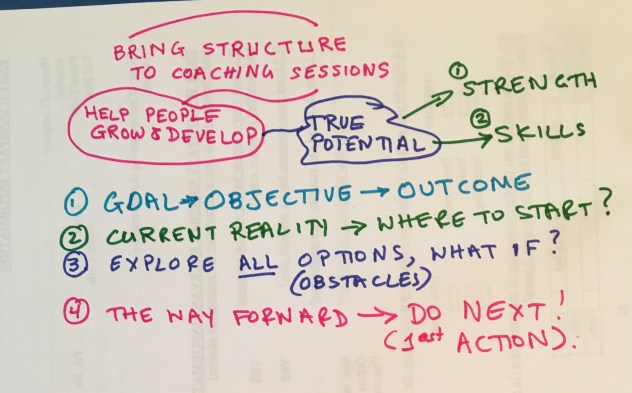
    A Simple Process for Coaching and Mentoring 

    As a leader, one of your most important roles is to coach your people to do their best. By doing this, you’ll help them make better decisions, solve problems that are holding them back, learn new skills, and otherwise progress their careers.


    grow

     
  • Unknown's avatar

    Nicos Paschali 6:59 am on November 14, 2017 Permalink | Reply  

    21st Century Skills for organisations and individuals 


    Why is 1:1 learning more effective and economically sound?

    Because it provides higher levels of interactivity, the program is fully tailored to the individual needs, and it is aligned with the organisation’s strategic plans and outcomes.

    Now you can learn anytime, anywhere, face-to-face or/and live online at a fraction of the traditional cost for attending seminars and workshops.

    Find out how soon you can bring the innovative  and effective learning program in your organisation. Contact us today by sending an email to nicospas@gmail.com.

    CRITICAL THINKING AND PROBLEM SOLVING 

    Reason Effectively 

    • Use various types of reasoning (e.g., inductive, deductive, etc.) as appropriate to the situation

    Use Systems Thinking 

    • Analyze how parts of a whole interact with each other to produce overall outcomes in complex systems

    Make Judgments and Decisions 

    • Effectively analyze and evaluate evidence, arguments, claims and beliefs

    • Analyze and evaluate major alternative points of view

    • Synthesize and make connections between information and arguments

    • Interpret information and draw conclusions based on the best analysis

    • Reflect critically on learning experiences and processes

    Solve Problems 

    • Solve different kinds of non-familiar problems in both conventional and innovative ways

    • Identify and ask significant questions that clarify various points of view and lead to better solutions

    CREATIVITY AND INNOVATION 

    Think Creatively 

    • Use a wide range of idea creation techniques (such as brainstorming)

    • Create new and worthwhile ideas (both incremental and radical concepts)

    • Elaborate, refine, analyze, and evaluate ideas in order to improve and maximize creative efforts

    • Demonstrate imagination and curiosity

    Work Creatively with Others 

    • Develop, implement, and communicate new ideas to others effectively

    • Be open and responsive to new and diverse perspectives; incorporate group input and feedback into the work

    • Demonstrate originality and inventiveness in work and understand the real world limits to adopting new ideas

    • View failure as an opportunity to learn; understand that creativity and innovation is a long-term, cyclical process of small successes and frequent mistakes

    Implement Innovations 

    • Act on creative ideas to make a tangible and useful contribution to the field in which the innovation will occur

    COMMUNICATION AND COLLABORATION 

    Communicate Clearly 

    • Articulate thoughts and ideas effectively using oral, written, and nonverbal communication skills in a variety of forms and contexts

    • Listen effectively to decipher meaning, including knowledge, values, attitudes, and intentions

    • Use communication for a range of purposes (e.g., to inform, instruct, motivate, and persuade) and in diverse environments (including multi-lingual)

    • Utilize multiple media and technologies, and know how to judge their effectiveness a priori as well as assess their impact

    Collaborate with Others 

    • Demonstrate ability to work effectively and respectfully with diverse teams

    • Exercise flexibility and willingness to be helpful in making necessary compromises to accomplish a common goal

    • Assume shared responsibility for collaborative work, and value the individual contributions made by each team member

     
  • Unknown's avatar

    Nicos Paschali 2:28 pm on November 11, 2017 Permalink | Reply  

    Go Read the learning and development flyer now! 

    Nicos Paschali in Action

     
  • Unknown's avatar

    Nicos Paschali 9:54 am on November 9, 2017 Permalink | Reply  

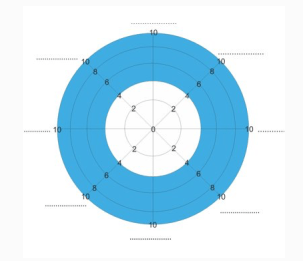
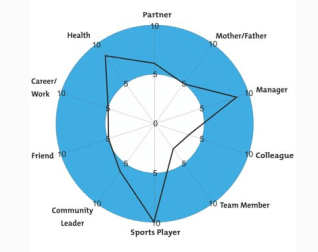
    Finding Balance in Your Life! Get a Feel for. 

    When we live a busy life, or we focus all our energy on a particular project, it’s all too easy to find yourself off balance, not paying enough attention to critical areas of our life.

    We need to have the drive and focus if we’re going to get things done. Taking this too far can lead to frustration and intense stress.

    We use the wheel of life tool to help our coaching clients to balance their life. Have a go-to gain immediate benefit and see for yourself.

    Fill up the wheel topics with the areas of interest and score 1-10. If your score on a specific area lower than 8, then you need to care for and look after to improve it.

    life wheel 1life wheel 2


c
Compose new post
j
Next post/Next comment
k
Previous post/Previous comment
r
Reply
e
Edit
o
Show/Hide comments
t
Go to top
l
Go to login
h
Show/Hide help
shift + esc
Cancel