Tagged: business Toggle Comment Threads | Keyboard Shortcuts

  • Unknown's avatar

    Nicos Paschali 7:20 am on November 1, 2024 Permalink | Reply
    Tags: business, , , , ,   

    Study Guide: Communicating and Building Trust 
    Study Guide: Communicating and Building Trust

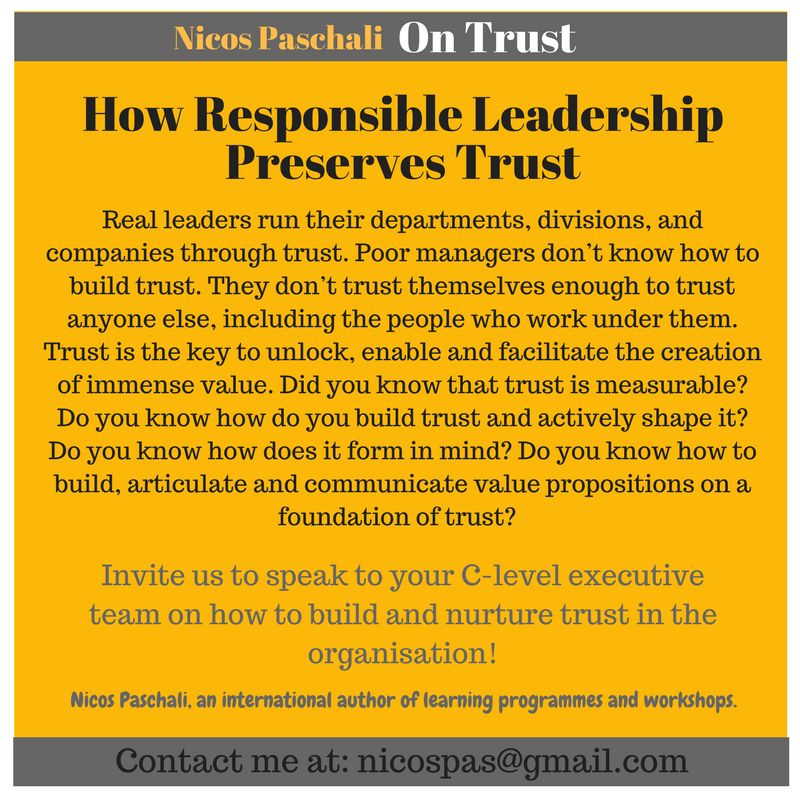
    This study guide is based on the provided text excerpts, which focus on the importance of trust in leadership and organisational success.

    Central Questions to Review:

    1. Why is trust crucial for effective leadership? What are the specific benefits of trust in a leadership context? What are the consequences of a lack of confidence?
    2. How can leaders build trust within their organisations? What specific actions and behaviours contribute to building trust? Consider the role of self-trust, understanding trust formation, and communication.
    3. How can trust be measured within an organisation? What are some potential methods and metrics for assessing trust levels? Why is measuring trust important?
    4. How can leaders maintain and preserve trust once it has been established? What potential threats to trust, and how can they be mitigated?
    5. What is the relationship between responsible leadership and trust? How do self-awareness, communication, and continuous learning concepts relate to responsible leadership and trust-building?
    6. How can external expertise be leveraged to enhance trust-building initiatives within an organisation? What specific benefits can experts like Nicos Paschali offer?

    Glossary of Key Terms and Ideas:

    • Trust: A firm belief in the reliability, truth, ability, or strength of someone or something. In a leadership context, trust refers to employees’ confidence in their leaders and the organisation as a whole.
    • Self-Trust: Trust in one’s abilities, judgment, and instincts. The text emphasises that self-trust is a prerequisite for trusting others.
    • Value Propositions: The benefits an organisation promises its customers or stakeholders. In the context of trust, leaders must communicate their value propositions in a way that reinforces trust and integrity.
    • Transparency and Openness: Clear, honest, and accessible communication that promotes understanding and reduces uncertainty.
    • Active Listening and Empathy: Communication skills involve paying close attention to what others are saying, seeking to understand their perspectives, and responding with empathy and respect.
    • Consistency in Messaging and Actions: Aligning one’s words with one’s actions. Consistency builds credibility and reinforces trust.
    • Trust Measurement: The process of assessing and quantifying an organisation’s trust level. This can involve surveys, interviews, and analysis of organisational data.
    • Responsible Leadership: A leadership style characterised by ethical behaviour, accountability, and a commitment to the well-being of stakeholders. The text strongly links responsible leadership with the ability to build and maintain trust.
    • Nicos Paschali: An expert (as mentioned in the text) who offers learning programs and workshops on building and nurturing trust within organizations.

    Additional Notes:

    • The text emphasizes the practical and measurable aspects of trust.
    • Continuous learning and development are essential for leaders who want to cultivate trust within their organisations.
    • Consider exploring resources and methodologies for measuring trust, such as the Trust Index© developed by Great Place to Work®.
     
  • Unknown's avatar

    Nicos Paschali 4:43 am on October 25, 2024 Permalink | Reply
    Tags: business, , , ,   

    What critical decision-making skills are required for successful business leaders in Cyprus? 

    Some critical decision-making skills required for successful business leaders in Cyprus include:

    1. Strategic thinking and problem-solving: The ability to approach complex issues systematically, break them down, and craft comprehensive plans for the future. Leaders need to generate creative solutions while remaining practical and realistic.

    2. Data-driven decision-making: Using data analytics and decision modelling to transform data into meaningful insights that inform choices. The ability to interpret and use data to guide decisions is increasingly vital.

    3. Emotional intelligence: Understanding different communication styles, work habits, and values, especially when working with diverse teams and being attentive to stakeholders’ behaviours to build strong relationships.

    4. Adaptability and flexibility: The ability to adjust quickly to changing market conditions and remain relevant to change. This includes being open to new technologies and innovations.

    5. Stakeholder management: When making decisions, consider the needs and perspectives of all stakeholders – employees, customers, partners, etc. – and build consensus where appropriate.

    6. Risk assessment: Evaluating the pros and cons of alternatives, considering risks, uncertainties, and potential consequences of decisions and being willing to take calculated risks when needed.

    7. Ethical decision-making: Incorporating principles of conscious capitalism and considering the broader impact of decisions beyond profits.

    8. Communication skills: Conveying decisions, explaining rationales, and getting buy-in from team members and other stakeholders.

    9. Time management and prioritisation: Making timely decisions by effectively managing time, setting priorities, and balancing short-term and long-term considerations.

    10. Cultural awareness: Understanding the local business culture, including the importance of relationships, negotiation styles, and hierarchical structures in Cyprus.

    Developing these skills can help business leaders in Cyprus more effectively navigate the complexities of the local and global business environment. Making sound, strategic decisions is a hallmark of effective leadership in the Cypriot business context.

     
  • Unknown's avatar

    Nicos Paschali 12:53 pm on October 18, 2024 Permalink | Reply
    Tags: business, confidence, , , , , solopreneur   

    Are you a solopreneur overwhelmed by the challenges… 

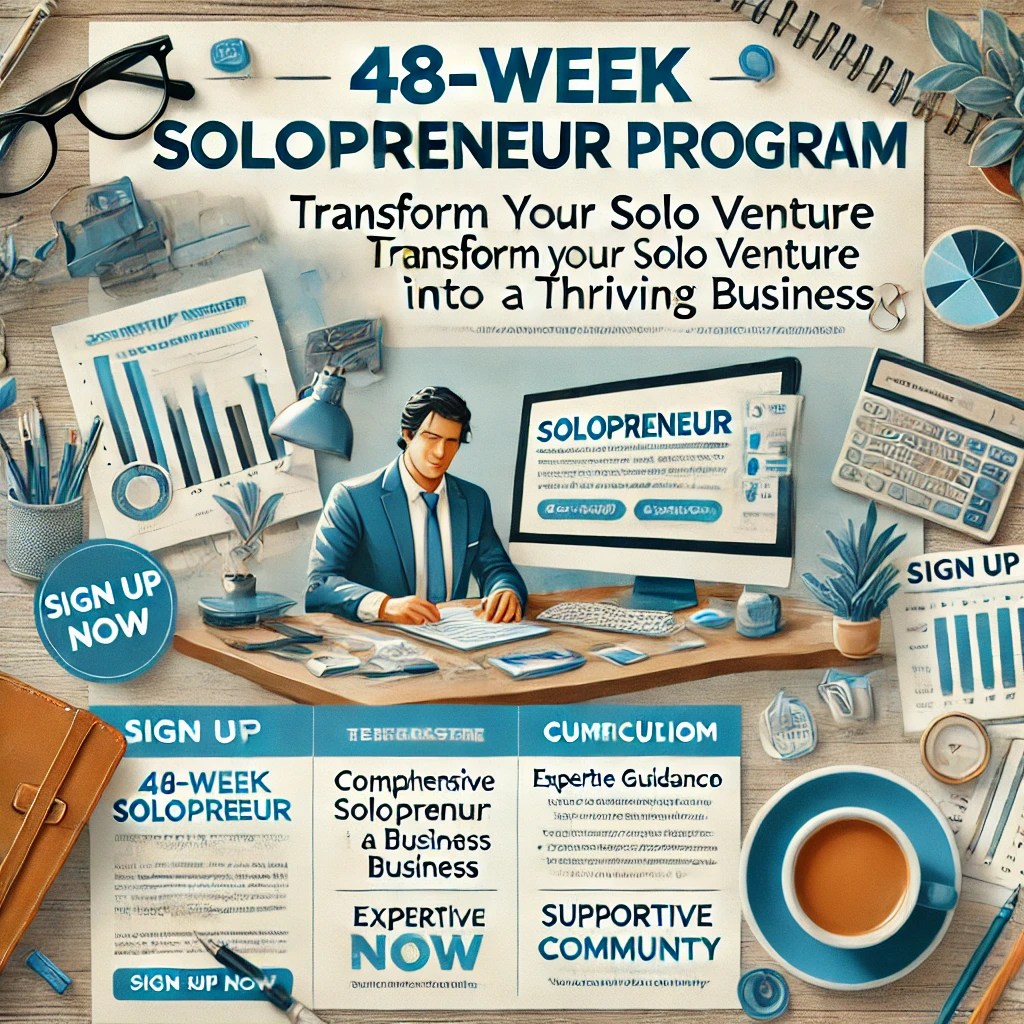
    Are you a solopreneur overwhelmed by the challenges of running a business single-handedly? We have exciting news for you!

    It is introducing our 48-week Solopreneur Program, designed to transform your solo venture into a thriving, sustainable business. This isn’t just another course – a growth, learning, and transformation journey.

    What sets our program apart?

    1. Comprehensive Curriculum: We cover every aspect of solopreneurship, from developing the right mindset to planning your exit strategy.

    2. Practical Application: Each week, you’ll learn and apply your knowledge directly to your business.

    3. Expert Guidance: Learn from seasoned entrepreneurs and industry experts who have travelled your path.

    4. Supportive Community: Connect with like-minded solopreneurs, share experiences, and build lasting professional relationships.

    5. Personalized Approach: We understand that every business is unique. Our program allows for customisation to fit your specific needs and goals.

    Here’s a glimpse of what you’ll learn:

    – Developing a solopreneur mindset

    – Business ideation and validation

    – Creating a lean business plan

    – Marketing and brand building

    – Sales strategies and customer relationship management

    – Efficient operations and systems

    – Strategies for growth and scaling

    – Advanced topics like thought leadership and exit planning

    Don’t let another year pass by feeling stuck or overwhelmed. Invest in yourself and your business. Join our 48-week Solopreneur Program and take the first step towards sustainable success.

    Limited spots are available. Enrol now to secure your place in this transformative journey!

    #SolopreneurSuccess #EntrepreneurshipJourney #BusinessGrowth #ProfessionalDevelopment

     
  • Unknown's avatar

    Nicos Paschali 1:49 pm on September 30, 2024 Permalink | Reply
    Tags: book-review, business, , , featured, , , public-speaking   

    Nicos Paschali’s Brand Image. 

    Nicos Paschali’s brand image can be characterised as follows:

     Leadership Excellence and Innovation

    Nicos Paschali is portrayed as a paragon of leadership excellence, known for driving prestige in corporate innovation. His brand is associated with empowering excellence and igniting passion through strategic vision.

     Expertise and Versatility

    With a computer science and engineering background, Nicos has established himself as an expert in cutting-edge technological innovations. His brand image reflects versatility across various roles, demonstrating adaptability and a drive for excellence.

     Communication and Relationship Building

    Nicos is known for his exceptional communication skills and his ability to understand others’ needs. His brand emphasises the mastery of building relationships and earning respect through these abilities.

     Emotional Intelligence and Empathy

    High emotional intelligence, which fosters empathy and drives his pursuit of excellence, is a crucial aspect of Nicos’s brand. This quality is central to his approach in both personal and professional settings.

     Continuous Learning and Adaptation

    Nicos’s brand image includes a commitment to continuous exploration and self-reinvention through innovation, even as he embraces maturity. This reflects an image of adaptability and staying current in an ever-evolving landscape.

     Transformative Leadership and Mentorship

    Nicos’s brand extends to his role as a mentor and transformative leader. He is known for his Transformative Actionable Learning program, designed to refine communication skills, forge stronger connections, and enhance personal and professional relationships.

     Global Influence

    His brand has a global reach, with engagements from Europe to the UAE and Australasia. He works with extraordinary talent, startups, and established corporations.

     Thought Leadership

    Nicos is positioned as a thought leader, offering insights and expertise through various platforms, including blogs and seminars on topics ranging from healthy lifestyles to business strategies.

    In summary, Nicos Paschali’s brand image is that of a visionary leader, innovator, and mentor with a global perspective. His brand emphasises excellence in communication, empathy, and adaptability, underpinned by a solid technological background and a commitment to continuous learning and transformation.

     
  • Unknown's avatar

    Nicos Paschali 4:39 pm on September 21, 2024 Permalink | Reply
    Tags: , business, , , , , training   

    Key traits and skills that contribute to a trusted and respected brand personality: 

    Traits of a Strong Brand Personality

    1. Authenticity – Being genuine, honest, and authentic to your core values is crucial for building trust.

    2. Consistency – Maintaining a cohesive brand image and message across all touchpoints helps establish reliability.

    3. Transparency – Being open about business practices and product information and addressing issues directly builds credibility.

    4. Competence—It is essential to demonstrate expertise, reliability, and the ability to deliver on promises.

    5. Empathy – Showing genuine care and understanding of customer needs fosters connection.

    6. Innovation – Being forward-thinking and offering creative solutions can set a brand apart.

    7. Social responsibility – Supporting causes aligned with brand values shows integrity.

    Skills to Develop

    1. Communication – Articulating your brand’s values, mission and unique selling points.

    2. Customer service – Providing exceptional experiences and quickly addressing issues.

    3. Adaptability – Evolving while staying true to core brand identity.

    4. Data analysis – Understanding customer needs and preferences to inform branding decisions.

    5. Storytelling – Crafting compelling narratives that resonate with target audiences.

    6. Design thinking – Creating cohesive visual branding that reflects personality.

    7. Active listening – Gathering and responding to customer feedback.

    8. Problem-solving – Addressing challenges in ways that reinforce brand values.

    Building Trust and Respect

    To be trusted and respected, brands should:

    1. Consistently deliver high-quality products/services.

    2. Provide excellent customer experiences at every touchpoint.

    3. Be transparent about business practices and product information.

    4. Actively engage with and listen to customers.

    5. Stand behind products/services with strong guarantees/warranties.

    6. Demonstrate expertise and thought leadership in their industry.

    7. Support causes aligned with brand values and customer interests.

    8. Admit and correct mistakes quickly and openly.

    9. Protect customer data and privacy.

    10. Maintain consistency across all brand communications and experiences.

    By embodying these traits, developing key skills, and following trust-building practices, brands can cultivate a personality that resonates with customers and earns their trust and respect over time. The key is to be authentic, customer-focused, and consistently deliver on brand promises.

     
  • Unknown's avatar

    Nicos Paschali 9:07 am on July 30, 2024 Permalink | Reply
    Tags: business, , , , studying,   

    Empowering the Next Generation of Entrepreneurs, Transforming Futures! 

    We inspire, guide, and mentor young people to become entrepreneurs!

    Entrepreneurship has become crucial for success in today’s rapidly evolving business landscape. Recognising this, our organisation is dedicated to inspiring, guiding, and mentoring young people to become successful entrepreneurs.

    Entrepreneurial skills are innate talents that can be cultivated through proper guidance and hands-on experience. Our programs focus on nurturing young minds’ creativity, critical thinking, and problem-solving abilities. Exposing them to real-world business challenges and opportunities, we help them develop the confidence and skills needed to turn their innovative ideas into reality.

    Our approach combines inspirational talks from successful entrepreneurs, practical workshops on business fundamentals, and personalised mentoring sessions. We cover essential topics such as identifying market needs, developing business plans, understanding financial basics, and effective marketing strategies, ensuring a comprehensive and practical learning experience.

    Beyond technical skills, we emphasise the importance of resilience, adaptability, and ethical business practices. Our mentors share their own experiences of overcoming obstacles, helping young entrepreneurs prepare for the challenges they may face.

    By fostering an entrepreneurial mindset in the younger generation, we aim to contribute to economic growth, job creation, and innovative solutions to societal problems. We’re building businesses and shaping future leaders who will drive positive change in their communities and beyond.

     
  • Unknown's avatar

    Nicos Paschali 12:29 pm on July 29, 2024 Permalink | Reply
    Tags: business, complexity, decision-making, ,   

    “The Ultimate Decision Making Matrix: Enhancing Your Decision-Making Process” 

    “Unlocking the Power of Perspective: A Guide to Mastering Complex Choices”

    In a world where decisions can make or break careers, relationships, and businesses, what if you had a secret weapon to consistently make choices you won’t regret? Imagine seeing around corners, anticipating outcomes, and confidently navigating even the most challenging dilemmas. The Ultimate Decision-Making Matrix isn’t just a tool—it’s your boardroom of expert advisors focused on guiding you to your best possible future. Ready to transform the way you approach life’s most challenging choices?

    In today’s complex world, making solid decisions is crucial for personal and professional success. The image presents two powerful frameworks to enhance decision-making: the 6 Thinking Hats Model and 6 Decision-Making Frameworks. Let’s explore how these tools can help us make more informed and effective choices.

    The 6 Thinking Hats Model, developed by Edward de Bono, is a method that encourages looking at decisions from multiple perspectives:

    1. Red Hat: This approach emphasises emotions and intuitions. It allows decision-makers to express their feelings about a situation without needing to justify them logically.

    2. Yellow Hat: This perspective is optimistic and highlights the positive aspects, benefits, and opportunities of a decision.

    3. Green Hat: This hat encourages creative thinking and the generation of new ideas, promoting innovation in problem-solving.

    4. White Hat: This approach focuses on data and facts, involves analysing information objectively, and identifies knowledge gaps.

    5. Black Hat: This perspective manages the process by organising thinking and setting objectives. It helps structure the decision-making process.

    6. Blue Hat: This hat identifies potential problems and risks, considering challenges that might arise from a decision.

    By systematically applying these different thinking modes, decision-makers can consider a problem from all angles.

    The image also presents 6 Decision-Making Frameworks, each offering a unique approach to tackling complex choices:

    1. The Pareto Analysis (80/20 Rule): This principle suggests that 80% of effects come from 20% of causes. By identifying the most significant factors contributing to a problem, decision-makers can focus their efforts more efficiently.

    2. The Cynefin Framework: This model aids decision-making by categorising problems into five domains: clear, complicated, complex, chaotic, and disordered. Understanding which domain a problem falls into helps determine the most appropriate approach.

    3. The Decision Tree: This framework guides leaders through questions to determine the most appropriate decision-making style.

    4. The OODA Loop: Standing for Observe, Orient, Decide, and Act; this model is particularly useful for rapid decision-making in dynamic and complex environments.

    5. Rational Decision-Making Model: This structured approach involves making decisions based on a logical and systematic situation analysis, promoting thorough consideration of alternatives.

    6. The Vroom-Yetton Decision Model: This framework helps leaders make decisions based on situational factors and the need for employee involvement, balancing efficiency with team engagement.

    By combining the 6 Thinking Hats Model with these diverse decision-making frameworks, individuals and organisations can significantly enhance their ability to make more vital, well-rounded decisions. The key is to select the most appropriate tools for each situation and practice using them regularly.

    In conclusion, effective decision-making is a skill that can be developed and refined. By employing these models and frameworks, decision-makers can ensure they consider multiple perspectives, analyse relevant data, and choose the most suitable approach for each unique challenge they face.

     
  • Unknown's avatar

    Nicos Paschali 2:57 pm on June 26, 2024 Permalink | Reply
    Tags: business, , , ,   

    Beyond Strategy: The True Test of LeadershipThis is how I address the beyond strategy… 

    This is how I address the beyond strategy challenge!

    Mastering the 4 Hidden Challenges That Make or Break Your Success

    You’ve crafted the perfect strategy, but here’s why: that’s the easiest part of your job. The real challenges separating visionaries from planners lie in what comes next.”

    Strategic design is often lauded as the pinnacle of leadership challenges, but this notion needs to be revised. The real test of leadership lies in the execution and human elements that follow strategy formulation. Four critical challenges surpass the complexity of strategy design itself:

    Engaging teams is a Herculean task that demands unwavering commitment. Leaders must consistently inspire and involve their workforce, transforming strategy from abstract concepts into tangible actions. This requires communication skills and the ability to ignite passion and drive in others.

    Secondly, influential leaders must master the art of listening. This goes beyond mere hearing; it involves actively seeking out diverse perspectives and using them to refine strategy. True leadership acknowledges that no single mind holds all the answers.

    Thirdly, caring about views is non-negotiable. Leaders must cultivate genuine empathy and consideration for people’s thoughts and concerns. This emotional intelligence is what separates great leaders from mere managers.

    Finally, helping others understand is crucial. Leaders must guide their teams to align individual and collective contributions with strategic objectives. This requires clarity of vision, patience, and the ability to translate complex ideas into actionable steps.

    In conclusion, while strategy design is important, these four challenges form the bedrock of effective leadership. Those who master these elements will design superior strategies and ensure successful implementation.

    Conclusive Action: “Evaluate your leadership approach today. Are you excelling in team engagement, active listening, empathetic consideration, and strategic alignment? If not, it’s time to shift your focus. Start by identifying your weakest area among these four challenges and commit to one concrete action to improve it this week. Your team’s success—and your legacy as a leader—depend on it.”

    Nnicos Paschali

    GUide | Catalyst

     
c
Compose new post
j
Next post/Next comment
k
Previous post/Previous comment
r
Reply
e
Edit
o
Show/Hide comments
t
Go to top
l
Go to login
h
Show/Hide help
shift + esc
Cancel