Recent Updates Page 10 Toggle Comment Threads | Keyboard Shortcuts

  • Unknown's avatar

    Nicos Paschali 7:56 pm on November 13, 2024 Permalink | Reply
    Tags: , , , , , ,   

    Conversational Intelligence: Key Principles and Workplace Benefits 

    Here are the fundamental principles of conversational intelligence and how they contribute to a more effective workplace.

    Conversational Intelligence (C-IQ) is connecting, engaging, and navigating conversations to foster an agile, open, collaborative, and innovative culture. It goes beyond simply talking or sharing information; it’s about understanding how conversations can shape reality, mindsets, events, and outcomes.

    The sources highlight several key principles of C-IQ that are essential for a more effective workplace:

    1. Understanding the Three Levels of Conversation

    C-IQ identifies three levels of conversation, each with different interaction dynamics, levels of trust, and outcomes:

    • Level I: Transactional Conversations: These conversations involve exchanging information and confirming facts. Trust is low as the focus is on validating individual perceptions of reality. An example would be a manager giving instructions or colleagues sharing project updates.
    • Level II: Positional Conversations: In these conversations, people advocate for their points of view and try to influence others. Trust is conditional, based on perceived fairness and reciprocity. Examples include negotiations, debates, or presentations.
    • Level III: Transformational Conversations: These are the highest level of conversations, focused on co-creating the future and achieving mutual success. They are characterized by high trust, allowing for vulnerability, deep sharing, and the emergence of new ideas. Examples include brainstorming sessions, strategic planning meetings, and coaching conversations.

    By understanding these levels, individuals can tailor their communication style to achieve specific goals and cultivate a more trusting and collaborative work environment.

    2. Building Trust and Psychological Safety

    Trust is fundamental to effective communication and collaboration. The sources emphasize that trust is not a fixed trait but a dynamic process that can be nurtured through conscious effort and the application of C-IQ principles.

    Key Strategies for Building Trust:

    • Transparency: Open and honest communication about intentions, motivations, and potential challenges.
    • Relationship Building: Prioritizing relationships over tasks and making individuals feel valued and respected.
    • Empathy and Understanding: Actively listening to and seeking to understand others’ perspectives.
    • Shared Success: Aligning on a common vision of success and working collaboratively towards its achievement.
    • Truth Telling and Testing Assumptions: Openly challenging assumptions and exploring different perspectives.

    When individuals feel safe to express themselves without fear of judgment, they are more likely to share ideas, collaborate effectively, and contribute to a positive work environment.

    3. Active Listening and Empathy

    Active listening goes beyond simply hearing words; it involves attentiveness to non-verbal cues, seeking clarification, and demonstrating a genuine interest in understanding the speaker’s message and underlying emotions. Empathy, the ability to recognise, understand, and manage one’s own emotions, as well as those of others, is crucial for creating a safe and trusting conversational environment.

    4. Asking Powerful Questions

    Effective leaders ask questions that stimulate critical thinking, provoke new perspectives, and encourage deeper exploration of ideas. Asking questions for which they genuinely don’t have the answers demonstrates humility and a commitment to learning from others.

    5. Conversational Agility

    Conversational agility is the ability to adapt communication styles to different situations and individuals. It involves:

    • Recognising the current conversational dynamics.
    • Reframing perspectives to challenge assumptions and redirect the conversation.
    • Refocusing on core issues, objectives, and goals.
    • Redirecting the conversation towards collaboration, especially during conflict.

    By mastering these elements, leaders can ensure that conversations remain focused, productive, and ultimately, transformative.

    6. Priming the Conversational Pump

    Priming involves consciously setting the stage for a conversation by considering factors like environment, body language, and initial interactions. This can create a more positive and trusting environment, down-regulating the amygdala’s threat response and activating the prefrontal cortex.

    7. Conversational Rituals

    Establishing conversational rituals can promote trust and openness. These can range from simple practices like shaking hands before a meeting to more structured exercises designed to foster empathy and understanding. Examples include:

    • Establishing Rules of Engagement: Agreeing on ground rules for communication and interaction.
    • Double-Clicking: Team members share their individual definitions of success to reveal underlying values, motivations, and aspirations.
    • LEARN Exercise: End-of-meeting reflection on what was Learned, Enjoyed, Appreciated, needs to be Reframed, and Needs moving forward.

    8. The Neuroscience of C-IQ

    C-IQ acknowledges the impact of conversations on our brains and behavior. Understanding the neurochemistry of trust and distrust, the influence of hormones and neurotransmitters, and the role of mirror neurons in empathy can help individuals shape their communication for positive outcomes.

    By embracing these principles, organisations can create a more engaged, innovative, and resilient workforce, ultimately leading to greater success.


     
  • Unknown's avatar

    Nicos Paschali 7:33 am on November 10, 2024 Permalink | Reply
    Tags: , critical thinking, design, , , , onjectives, ,   

    Advanced Problem-Solving Frameworks: A Practical Guide 

     1. Root Cause Analysis (RCA)

     Overview

    Root Cause Analysis is like being a detective for problems. Instead of treating symptoms, RCA helps you find and fix the underlying causes.

     Detailed Process

    1. Identify Problems

       – Collect data and observations

       – Document the specific issue

       – Example: “Customer support tickets have increased by 50% this month”

    2. Trace Symptoms

       – Use the “5 Whys” technique

       – Create cause-and-effect diagrams

       Example:

       – Why are support tickets increasing? → New features are confusing users

       – Why are features confusing? → Interface changed significantly

       – Why did the interface change? → New design system implementation

       – Why wasn’t it user-tested? → Rushed deadline

       – Why rushed? → Poor project planning (Root Cause)

    3. Validate Root Cause

       – Gather evidence

       – Confirm with stakeholders

       – Test hypotheses

       Example: Review project timelines, interview team members, analyze user feedback

    4. Develop Solutions

       – Create both short and long-term fixes

       – Establish prevention measures

       Example Solution Set:

       – Immediate: Create quick tutorial videos

       – Short-term: Implement user guidance tooltips

       – Long-term: Establish proper user testing protocols

     2. Design Thinking

     Overview

    Design Thinking puts users at the center of problem-solving, ensuring solutions actually meet real needs.

     Process & Examples

    1. Empathize

       – Conduct user interviews

       – Shadow users

       – Create empathy maps

       Example: Developing a banking app

       – Interview different age groups

       – Observe people using ATMs

       – Track frustration points

    2. Define

       – Create user personas

       – Write problem statements

       – Map user journeys

       Example Problem Statement:

       “Elderly users (65+) need a simpler way to transfer money because current digital solutions overwhelm them with too many options.”

    3. Ideate

       – Brainstorming sessions

       – Mind mapping

       – Crazy 8’s exercise

       Example Ideas:

       – Voice-guided transactions

       – Simplified one-tap transfers

       – Family member assistance mode

    4. Prototype & Test

       – Create mockups

       – Build MVPs

       – Get user feedback

       Example:

       – Paper prototypes for interface

       – Interactive wireframes

       – Beta testing with focus groups

     3. Six Thinking Hats

     Overview

    This framework enables structured thinking and reduces conflict in group settings by separating different thinking modes.

     Hat Colors & Application

    White Hat (Facts)

    – Focus: Data and information

    – Question: “What do we know?”

    – Example: “Our data shows 60% of users abandon the cart at payment.”

    Red Hat (Emotions)

    – Focus: Feelings and intuition

    – Question: “What’s your gut telling you?”

    – Example: “I feel users don’t trust our payment system.”

    Black Hat (Caution)

    – Focus: Critical judgment

    – Question: “What could go wrong?”

    – Example: “We might lose existing customers if we change the interface.”

    Yellow Hat (Optimism)

    – Focus: Benefits and value

    – Question: “What’s the best possible outcome?”

    – Example: “This could double our conversion rate”

    Green Hat (Creativity)

    – Focus: New ideas and alternatives

    – Question: “What else could we try?”

    – Example: “What if we gamified the checkout process?”

    Blue Hat (Process)

    – Focus: Thinking about thinking

    – Question: “What’s our next step?”

    – Example: “Let’s organize our ideas and create an action plan”

     4. SWOT Analysis

     Overview

    SWOT provides a structured way to evaluate internal and external factors affecting a project or organization.

     Practical Application

    Example: Launching an Online Course Platform

    Strengths:

    – Experienced instructors

    – Proprietary content

    – Strong tech infrastructure

    Weaknesses:

    – Limited brand recognition

    – Small marketing budget

    – No mobile app

    Opportunities:

    – Growing demand for online learning

    – Partnership possibilities

    – International markets

    Threats:

    – Established competitors

    – Changing technology

    – Economic downturn

     Action Steps:

    1. Leverage strengths to capture opportunities

       – Use instructor expertise to create unique content

    2. Address weaknesses

       – Develop mobile app MVP

    3. Mitigate threats

       – Build strategic partnerships

     5. Value Stream Mapping

     Overview

    This tool helps visualise and optimise the flow of products or services from start to finish.

     Practical Example: Coffee Shop Operation

    1. Map Current State

    “`

    Order Taking (2 min) → Coffee Making (4 min) → Payment (2 min) → Delivery (1 min)

    Wait time between steps: 2 min + 3 min + 1 min = 6 min

    Total time: 15 minutes

    “`

    2. Identify Waste

    – Unnecessary movement between stations

    – Double-handling of orders

    – Redundant order verification

    3. Design Future State

    “`

    Combined Order/Payment (3 min) → Coffee Making (4 min) → Delivery (1 min)

    Wait time between steps: 1 min + 1 min = 2 min

    Total time: 10 minutes

    “`

    4. Implementation Plan

    – Reorganize workspace

    – Train staff on new workflow

    – Monitor and adjust

     Tips for Success

    – Start Small: Begin with one framework and master it

    – Document Everything: Keep track of what works and what doesn’t

    – Involve Others: These frameworks work best with diverse perspectives

    – Iterate: Continuously refine your approach based on results

    – Combine Frameworks: Use multiple approaches for complex problems

     Common Pitfalls to Avoid

    1. Rushing through the process

    2. Not involving key stakeholders

    3. Focusing on symptoms rather than causes

    4. Implementing solutions without testing

    5. Neglecting to measure results

     When to Use Each Framework

    – RCA: Complex problems with unclear causes

    – Design Thinking: User-centered product/service development

    – Six Thinking Hats: Group decision-making and brainstorming

    – SWOT: Strategic planning and evaluation

    – Value Stream: Process optimisation and efficiency improvement

     
  • Unknown's avatar

    Nicos Paschali 8:16 am on November 6, 2024 Permalink | Reply
    Tags: , , , , , startup   

    Launchpad: Propel Your Entrepreneurial Journey Forward! 

    Transformative Journey: Empowering Teens to Become Entrepreneurs

    Unleash your potential and embark on your entrepreneurial journey. Let this launchpad inspire you as you fuel your passion and transform your ideas into reality. Start your journey today!

    Purpose and Aim:

    The core program, Fundamentals,  aims to empower high school students in eight weeks with sufficient knowledge, skills, and confidence to transform their ideas into successful businesses. We strive to nurture the next generation of entrepreneurs by providing a comprehensive, hands-on learning experience that connects classroom theory with practical, real-world applications.

    The Fundamentals program provides teenagers with essential tools and a mindset to navigate the exciting world of entrepreneurship and turn their innovative ideas into viable business ventures.

    With Launch Pad, you can turn your passion into a successful business before high school graduation. Our program helps teens turn their love for baking into a thriving online cupcake business or develop a popular eco-friendly smartphone app.

    What’s your big idea?

    8 Weeks

    Each week includes interactive workshops, mentorship sessions, reading material and learning guides.

    Every Tuesday 7.00-8.30 pm

    10, 17, 31/12 2024, 14, 21, 28/2024, 4,11/2 2025

    Fees  €750 payable with registration

    Early bird €640 by 12/11/2024 

    Registration and payment form: https://forms.gle/wVk8f8wmKJsi6UVx7

    Program Outline

     Week 1: Unleashing Your Entrepreneurial Spirit

    • Ignite Your Imagination: Dive into the possibilities as you brainstorm and unleash your unique business ideas.
    • Discover Your Market: Learn the art of market research and uncover the needs of your future customers.
    • Deep dive into Artificial Intelligence.

     Week 2: Crafting Your Vision

    • Building Your Business Blueprint: Transform your ideas into a solid business model that reflects your passions and values.
    • Financial Foundations: Understand the basics of budgeting and funding, laying the groundwork for your entrepreneurial journey.

     Week 3: Marketing Magic

    • Create Your Brand Story: Learn how to craft a compelling brand that resonates with your audience and stands out in the marketplace.
    • Engage Your Customers: Master innovative marketing strategies that captivate and connect with potential customers.

     Week 4: Mastering Operations

    • Running the Show: Explore the essentials of operations management, ensuring your business runs smoothly and efficiently.
    • Leadership Skills for Tomorrow: Develop the leadership qualities to inspire your team and drive your vision forward.

     Week 5: Ethics and Responsibility

    • Building a Business with Integrity: Understand the importance of ethical practices and social responsibility in today’s business landscape.
    • Navigating Legal Waters: Gain insights into the legal aspects of running a business, empowering you to make informed decisions.

     Week 6: Launching Your Dream

    • Preparing for Takeoff: Get ready to confidently launch your business, armed with everything you need for success.
    • Growth Mindset Strategies: Embrace a mindset that welcomes challenges and fosters continuous improvement as you scale your venture.

     Weeks 7-8: Bringing Ideas to Life (Student Presentations)

    • Real-World Application: Collaborate with peers to develop a comprehensive business plan or prototype that embodies your vision.
    • Pitch Perfect: Hone your presentation skills as you prepare to share your entrepreneurial journey with peers, mentors, and potential investors.

    Keep your age from becoming the next prominent entrepreneur. Join Launch Pad today and take the first step towards building your empire. With limited spots available, secure your place and start your journey from student to CEO. Please register online or call us to learn how to turn your passion into profit. Your future in business starts here – are you ready to launch?

    You may register here: https://forms.gle/wVk8f8wmKJsi6UVx7

    Ask Anything at nicospas@gmail.com

     
  • Unknown's avatar

    Nicos Paschali 6:56 am on November 3, 2024 Permalink | Reply
    Tags: , , , garden, gardening, , seeds, team,   

    Trust: The Seed of Success 

    Nicos Paschali, November 2024

    Imagine a tiny seed planted in the fertile ground of a workplace. This seed represents trust, which nourishes a thriving and successful organisational culture.

    • Just as a seed needs the right conditions to germinate and grow, trust requires a nurturing environment to flourish.
    • This environment is cultivated by leaders who act like skilled gardeners, tending to their teams with care and fostering the conditions necessary for trust to take root.

    Sunlight and Water: The Leader’s Role

    Leaders play a crucial role in cultivating trust, much like sunlight and water are essential for a plant’s growth [3]. They provide the essential elements that allow trust to blossom within a team.

    • Sunlight, in this analogy, represents the act of empowerment. Leaders who empower their teams are like the sun, providing the warmth and energy needed for growth.
      • They delegate responsibility, not just for tasks, but for decision-making, allowing team members to take ownership and shine brightly.
      • This act of trust demonstrates confidence in the team’s capabilities, like the sun’s rays nourishing a plant’s leaves.
    • Water symbolises the creation of a safe environment. Leaders who foster psychological safety are like water, providing security and stability for their teams to thrive.
      • They encourage open communication, allowing team members to express themselves without fear, like a steady stream of water nourishing a plant’s roots.
      • This safe space enables individuals to take risks, make mistakes, and learn from them, just as a plant can withstand occasional storms and grow stronger.

    From Seed to Mighty Oak: The Growth of Trust

    As trust takes root and grows, it transforms the workplace, much like a tiny seed develops into a mighty oak.

    • Increased motivation and productivity become the strong branches, reaching towards success.
    • Open communication and collaboration form the intricate network of roots, binding the team together.
    • Innovation and creativity bloom like vibrant flowers, adding beauty and value to the organisation.

    A Forest of Trust

    Just as a single oak can contribute to a thriving forest, trust within a team can spread throughout an organisation, creating a culture of positivity and success.

    • Leaders who trust their teams and inspire reciprocal trust create a virtuous cycle where trust fuels further success.
    • This shared trust becomes the foundation for a more positive and productive work environment where everyone feels valued, respected, and empowered to contribute their best.

    Remember, building trust is a journey, not a destination. It requires patience, consistent effort, and a genuine belief in the power of human connection. Leaders can cultivate a workplace where individuals and organisations can flourish by nurturing the seed of trust.

     
  • Unknown's avatar

    Nicos Paschali 7:20 am on November 1, 2024 Permalink | Reply
    Tags: , , , , ,   

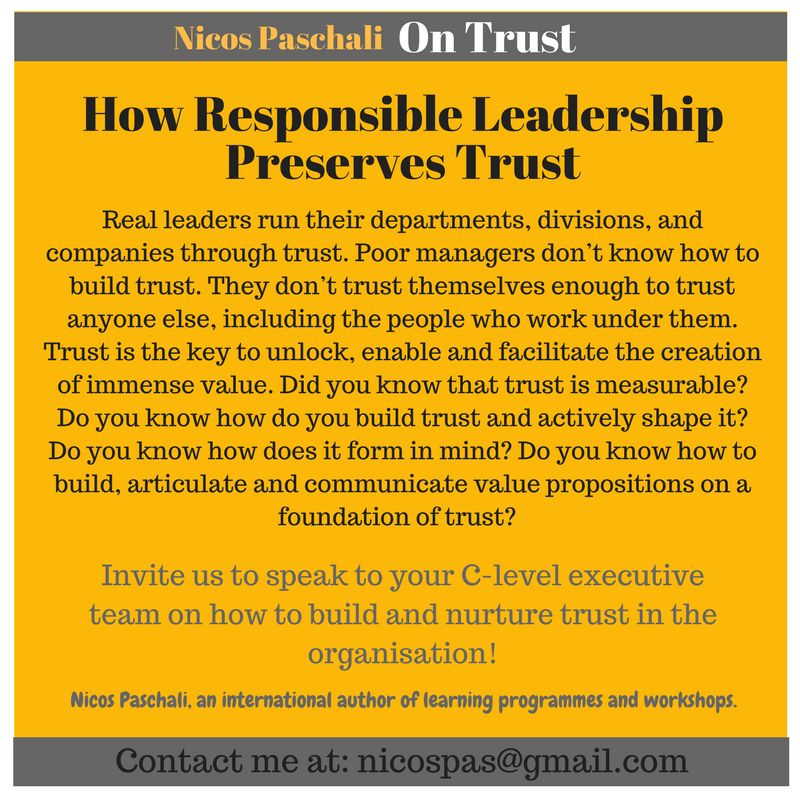
    Study Guide: Communicating and Building Trust 

    Study Guide: Communicating and Building Trust

    This study guide is based on the provided text excerpts, which focus on the importance of trust in leadership and organisational success.

    Central Questions to Review:

    1. Why is trust crucial for effective leadership? What are the specific benefits of trust in a leadership context? What are the consequences of a lack of confidence?
    2. How can leaders build trust within their organisations? What specific actions and behaviours contribute to building trust? Consider the role of self-trust, understanding trust formation, and communication.
    3. How can trust be measured within an organisation? What are some potential methods and metrics for assessing trust levels? Why is measuring trust important?
    4. How can leaders maintain and preserve trust once it has been established? What potential threats to trust, and how can they be mitigated?
    5. What is the relationship between responsible leadership and trust? How do self-awareness, communication, and continuous learning concepts relate to responsible leadership and trust-building?
    6. How can external expertise be leveraged to enhance trust-building initiatives within an organisation? What specific benefits can experts like Nicos Paschali offer?

    Glossary of Key Terms and Ideas:

    • Trust: A firm belief in the reliability, truth, ability, or strength of someone or something. In a leadership context, trust refers to employees’ confidence in their leaders and the organisation as a whole.
    • Self-Trust: Trust in one’s abilities, judgment, and instincts. The text emphasises that self-trust is a prerequisite for trusting others.
    • Value Propositions: The benefits an organisation promises its customers or stakeholders. In the context of trust, leaders must communicate their value propositions in a way that reinforces trust and integrity.
    • Transparency and Openness: Clear, honest, and accessible communication that promotes understanding and reduces uncertainty.
    • Active Listening and Empathy: Communication skills involve paying close attention to what others are saying, seeking to understand their perspectives, and responding with empathy and respect.
    • Consistency in Messaging and Actions: Aligning one’s words with one’s actions. Consistency builds credibility and reinforces trust.
    • Trust Measurement: The process of assessing and quantifying an organisation’s trust level. This can involve surveys, interviews, and analysis of organisational data.
    • Responsible Leadership: A leadership style characterised by ethical behaviour, accountability, and a commitment to the well-being of stakeholders. The text strongly links responsible leadership with the ability to build and maintain trust.
    • Nicos Paschali: An expert (as mentioned in the text) who offers learning programs and workshops on building and nurturing trust within organizations.

    Additional Notes:

    • The text emphasizes the practical and measurable aspects of trust.
    • Continuous learning and development are essential for leaders who want to cultivate trust within their organisations.
    • Consider exploring resources and methodologies for measuring trust, such as the Trust Index© developed by Great Place to Work®.
     
  • Unknown's avatar

    Nicos Paschali 5:59 am on October 27, 2024 Permalink | Reply
    Tags: , , life-coach, , , , outcome,   

    What is Coaching? 

    What is Coaching?

    Coaching is a collaborative process that helps individuals achieve their goals. It utilises a co-creative approach that encourages self-discovery, explores new possibilities, and promotes strategic actions. A vital element of coaching is the coaching conversation, which provides a safe and confidential space for individuals to discuss important matters with a neutral-thinking partner.

    At its core, coaching relies on powerful questioning techniques. These questions are designed to:

    ● Stimulate creative thinking.

    ● Inspire individuals to exceed their perceived limitations.

    ● Hold individuals accountable for their decisions, actions, and results.

    Responsibilities of a Coach

    A coach plays a crucial role in supporting individuals throughout their coaching journey. Some key responsibilities include:

    ● Goal Setting: Assisting individuals in setting rewarding and achievable goals.

    ● Clarity and Alignment: Helping individuals discover, clarify, and align with their desired outcomes.

    ● Objective Listening and Feedback: Providing objective and candid feedback based on active listening.

    ● Encouraging Self-Discovery: Fostering an environment that encourages self-discovery, creativity, and experiential learning.

    ● Solution-Oriented Approach: Guiding individuals to elicit their solutions and strategies.

    ● Accountability: Holding individuals responsible and accountable for their choices and actions.

    Benefits of Coaching

    Coaching offers numerous benefits for individuals seeking personal and professional growth. Some key advantages include:

    ● Overcoming Obstacles: Helping individuals identify and overcome barriers that hinder their progress.

    ● Maximizing Potential: Empowering individuals to leverage their strengths and abilities to their fullest potential.

    ● Enhanced Productivity: Improving productivity and efficiency by streamlining actions and focusing on priorities.

    ● Completion and Progress: Facilitating the completion of unfinished tasks, allowing individuals to move forward with clarity.

    ● Effortless Achievement: Enabling individuals to achieve more with less effort by optimising their approach.

    ● Time for Reflection: Creating space for reflection and creative pursuits by improving time management skills.

    ● Sustainable Change: Fostering sustainable change in both personal and professional life.

    ● Purposeful Living: Encouraging individuals to live with purpose, passion, and integrity.

    In addition to the benefits listed in the sources, research from the International Coaching Federation (ICF) indicates that coaching can lead to increased self-awareness, improved communication skills, and enhanced leadership capabilities.  Please note that this information is from an external source and may require independent verification.

     
  • Unknown's avatar

    Nicos Paschali 2:07 pm on October 26, 2024 Permalink | Reply
    Tags: fascination, fiction, , lifestyle, , nicos-profile, ,   

    Transformative Leadership Strategies with Nicos Paschali 

    Comprehensive Brief for Nicos Paschali: A Must-Have Solution

    Nicos Paschali is not merely a leader but a Must-Have Solution in transformative leadership, communication excellence, and talent development. His 40+ years of experience, unique personality traits and commitment to innovation make him an invaluable asset to individuals and organisations seeking to unlock their full potential.

    Key Strengths and Accomplishments:

    • Transformative Actionable Learning: Nicos’s revolutionary programme enhances communication skills, strengthens connections, and redefines learning and development strategies for sustained growth. This programme, a testament to his innovative thinking and passion for empowering others, transforms careers and lives, profoundly catalysing personal and professional development.
    • Global Reach and Impact: Nicos’s expertise transcends geographical boundaries, spanning Europe, the UAE, and Australasia. He has worked with a diverse clientele, ranging from government ministries to prominent tech companies, consistently delivering exceptional results.
    • Exceptional Communication and Emotional Intelligence: Nicos’s ability to connect with people on a deeper level is a defining characteristic. His communication is precise, passionate, and infused with empathy, commanding respect and trust in every interaction. He leverages storytelling, humour, and a vivid presentation style to engage his audience and drive impactful outcomes. His mastery of communication is further validated by his “Connoisseur” archetype, highlighting his warm, knowledgeable, and engaging personality.
    • Tech Visionary and Innovation Catalyst: Nicos possesses a deep understanding of cutting-edge technologies, including computer science, AI, and engineering. This expertise, combined with his innovative thinking, allows him to identify new opportunities, solve complex problems, and shape the future of businesses and industries. His strategic vision, grounded in a results-oriented approach and an understanding of interconnected systems, ensures sustainable solutions and long-term success.
    • Trusted Advisor and Mentor: Nicos excels at building trust and fostering genuine connections, making him a highly sought-after mentor. He empowers leaders and organisations to develop essential skills through tailored learning strategies, coaching, and workshops. He is not just a mentor but a catalyst for change, a beacon of excellence, and a guide on the pathway to transformative growth. His commitment to delivering amazing value and going the extra mile is evident in all his endeavours.

    Key Personality Traits:

    • Maximizer: Nicos is driven by a passion for excellence. He focuses on strengths as a way to stimulate personal and group excellence, constantly seeking to transform something strong into something superb. This is reflected in his belief that the greatest value one can add is to become more of oneself.
    • Achiever: Nicos possesses an unyielding work ethic and a constant need for achievement, fueled by his “Achiever” strength. This inherent drive is evident in his busy schedule, with 14 speaking engagements leading up to Christmas. He thrives in demanding situations that test his talents and endurance, constantly pushing himself to achieve new heights.
    • Learner: Nicos embodies the spirit of lifelong learning. He is passionate about continuous improvement and is energised by the process of acquiring knowledge and skills. His thirst for knowledge is evident in his wide-ranging certifications and expertise, encompassing areas like NLP, PhotoReading, and Accelerated Learning. He thrives in dynamic work environments where continuous learning is a necessity.
    • Ideation: Nicos’s mind is a wellspring of innovative ideas. He is fascinated by finding connections between seemingly disparate concepts and generating novel solutions. He thrives in environments that encourage brainstorming and out-of-the-box thinking, constantly seeking to challenge the status quo and improve existing processes.
    • Command: Nicos is a natural leader who can take charge and make difficult decisions. He is assertive, self-reliant, and comfortable expressing his views. His “Command” strength enables him to lead confidently and inspire others to act. Combined with his “Connoisseur” archetype, this trait allows him to tailor his communication style to different situations, ensuring maximum impact.

    Background and Education:

    • Extensive Experience: Nicos has over 35 years of experience in training, coaching, and presenting, having delivered over 65 seminar titles and 13,000 in-class training hours. This wealth of knowledge, accumulated over decades of hands-on learning and global engagement, forms the bedrock of his unique and insightful teaching style.
    • Solid Academic Foundation: Nicos holds a BSc in Communication & Electronic Engineering from Westminster University, UK, and studied Marketing & Management at the Caulfield Institute of Management, Australia. This strong academic foundation provides a solid base for his expertise in technology and business.
    • Continuously Expanding Skillset: Nicos possesses numerous certifications, including Microsoft Certified Engineer and Trainer, CISCO Certified Engineer, NLP Practitioner, PhotoReading Certified Instructor, and DISC Personality Assessor. This commitment to continuous learning ensures he remains at the forefront of his field, offering his clients the most up-to-date knowledge and techniques.
    • Multilingual Proficiency: Nicos is fluent in Greek (native) and English (proficient). This multilingual ability allows him to connect with a broader audience and deliver his message effectively across cultures.

    Why Nicos is a Must-Have Solution:

    • Nicos empowers businesses and individuals to succeed in a world of uncertainty and constant change. His “Must-Have Method” equips individuals with the tools and mindset needed to become indispensable in their fields, ensuring a reliable revenue stream that remains resilient against economic fluctuations.
    • He provides a tactical roadmap for improved performance, helping individuals earn compensation for their insights and results. Nicos’s approach goes beyond superficial self-improvement; it emphasises embracing your authentic self and leveraging your unique strengths for success.
    • Additionally, he offers a cost-effective solution that ensures a significant return on investment with minimal financial commitment.

    Understanding Nicos’s “Must-Have Method” is crucial for anyone looking to navigate the complexities of today’s volatile economic landscape. Here are several compelling reasons why people should care about this transformative approach:

    1. Resilience in Uncertainty: In a world where economic conditions can shift dramatically, having the tools to adapt and thrive is invaluable. Nicos’s method equips individuals with strategies to not only survive but excel, regardless of external circumstances. For example, during economic downturns, those armed with the right skills and mindset can pivot their careers, finding new opportunities where others may struggle.
    2. Value of Unique Strengths: Everyone has unique traits that can lead to success, but many people do not recognize or leverage these strengths effectively. Nicos’s approach encourages individuals to embrace their authentic selves, fostering a deeper self-awareness that can enhance personal and professional growth. For instance, someone with a knack for creative problem-solving might discover how to position themselves as a leader in innovation within their organization.
    3. Outstanding Return on Investment: The cost of self-improvement programs can often be prohibitive. Nicos offers a cost-effective solution that minimizes financial risk while maximizing potential returns. Think of it as a small investment that can lead to a substantial boost in income or career advancement—imagine a professional who, after implementing his tactics, secures a promotion or a higher-paying job.
    4. Compensation for Insights: In today’s knowledge-driven economy, those who can provide valuable insights and results are highly sought after. Nicos’s roadmap helps individuals articulate and demonstrate their value effectively, ensuring they receive the compensation they deserve. Picture an employee who successfully leverages their analytics skills to drive a significant increase in sales; that person will undoubtedly be recognized and rewarded.
    5. Long-Term Career Sustainability: The job market is continuously evolving, and the skills that are in demand today may not be relevant tomorrow. By embracing a mindset of continuous improvement and adaptability, individuals can future-proof their careers. Consider how many roles have vanished due to technological advancement; those who consistently upgrade their skills and knowledge are the ones who thrive.

    By engaging with Nicos’s insights and methodologies, individuals can unlock their full potential, ensure their relevance in an ever-evolving job market, and ultimately achieve lasting success in their personal and professional lives.

    Conclusion:

    Nicos Paschali is more than just a trainer or coach; he is a transformative force, a trusted advisor, and a beacon of excellence. His commitment to innovation, exceptional communication skills, and genuine passion for empowering others make him an essential resource in today’s ever-changing world. His programs and services provide a unique blend of practicality, insight, and inspiration, ensuring that every individual and organisation he works with experiences significant and lasting growth.

     
  • Unknown's avatar

    Nicos Paschali 5:11 am on October 25, 2024 Permalink | Reply
    Tags: , , , love, performace, , , ,   

    How to develop meaningful conversations that elevate communication from transactional to transformational and capture the essence of deeper connections, trust, and collaboration. 

    The Art of Meaningful Conversations: Elevating Your Communication from Transaction to Transformation

    Nicos Paschali, October 2024

    How to Build Trust and Create Deeper Connections in Every Interaction

    Have you ever walked away from a conversation wondering what went wrong? One moment everything seems fine, and the next, someone storms out leaving you puzzled. According to communication expert Judith Eldazer, these moments aren’t just awkward social hiccups—they’re opportunities to develop what she calls “conversational intelligence.”

    The Hidden Dimensions of Communication

    Every conversation is like an iceberg. What we see on the surface—the words we exchange—is just a small part of a much larger dynamic. Beneath lies a complex web of intentions, emotions, and unspoken signals that shape how we connect with others. These invisible forces can make or break our personal and professional relationships.

    The Brain Science Behind Better Conversations

    Our brain plays a fascinating role in how we communicate. The amygdala, our internal alarm system, can trigger fight-or-flight responses even in harmless situations like a mild disagreement. Meanwhile, our prefrontal cortex—the brain’s CEO—works to maintain rational thinking and build trust. Understanding this internal tug-of-war is crucial for improving our conversations.

    The Three Levels of Conversation

    1. Level I: Transactional
      • Basic exchanges focused on information
      • Example: Ordering coffee or scheduling meetings
      • Limited potential for building relationships

      2. Level II: Positional

        • Focus on influence and persuasion
        • Often leads to defensive behavior
        • Can create power struggles
        • Risk of amygdala hijacking rational thought

        3. Level III: Transformational

          • Built on trust and vulnerability
          • Emphasizes co-creation and exploration
          • Creates space for innovation
          • Enables genuine connection

          Tools for Reaching Level III Conversations

          1. Double-Clicking: Move beyond surface-level interactions by asking thoughtful follow-up questions. Instead of accepting simple answers, dig deeper to understand the meaning behind them.
          2. The Seven Vital Conversations:
          • Co-creating conversations: Foster collaborative solutions
          • Humanizing conversations: Build empathy and acceptance
          • Navigating conversations: Handle conflict constructively
          • Generating conversations: Spark innovation and creativity

          Creating Trust Through Mindful Communication

          The key to elevating your conversations lies in conscious awareness. Before speaking, consider:

          • Are you listening to understand or just to respond?
          • Are you creating a safe space for others to share?
          • Are you willing to be appropriately vulnerable?
          • Are you open to having your perspective changed?

          Taking Action: Your Path to Better Conversations

          1. Assess Your Current Level: Monitor your daily interactions. How often do you engage in Level I, II, or III conversations?
          2. Practice Double-Clicking: In your next conversation, ask one thoughtful follow-up question that goes beyond the surface.
          3. Build Trust Gradually: Start with small moments of vulnerability and authentic sharing in appropriate contexts.
          4. Manage Your Inner Cave Person: When you feel defensive, pause and take a breath. Allow your prefrontal cortex to stay in control.

          Remember, conversational intelligence isn’t an innate talent—it’s a skill you can develop with practice and awareness. Each interaction is an opportunity to create deeper connections and better outcomes.

          Success in both personal and professional life often comes down to the quality of our conversations. By consciously elevating your communication from transactional to transformational, you’re not just improving individual interactions—you’re building stronger relationships and creating positive change in your world.

          Nicos Paschali, October 2024

          For personal messages, nicospas@gmail.com

           
        1. Unknown's avatar

          Nicos Paschali 4:43 am on October 25, 2024 Permalink | Reply
          Tags: , , , ,   

          What critical decision-making skills are required for successful business leaders in Cyprus? 

          Some critical decision-making skills required for successful business leaders in Cyprus include:

          1. Strategic thinking and problem-solving: The ability to approach complex issues systematically, break them down, and craft comprehensive plans for the future. Leaders need to generate creative solutions while remaining practical and realistic.

          2. Data-driven decision-making: Using data analytics and decision modelling to transform data into meaningful insights that inform choices. The ability to interpret and use data to guide decisions is increasingly vital.

          3. Emotional intelligence: Understanding different communication styles, work habits, and values, especially when working with diverse teams and being attentive to stakeholders’ behaviours to build strong relationships.

          4. Adaptability and flexibility: The ability to adjust quickly to changing market conditions and remain relevant to change. This includes being open to new technologies and innovations.

          5. Stakeholder management: When making decisions, consider the needs and perspectives of all stakeholders – employees, customers, partners, etc. – and build consensus where appropriate.

          6. Risk assessment: Evaluating the pros and cons of alternatives, considering risks, uncertainties, and potential consequences of decisions and being willing to take calculated risks when needed.

          7. Ethical decision-making: Incorporating principles of conscious capitalism and considering the broader impact of decisions beyond profits.

          8. Communication skills: Conveying decisions, explaining rationales, and getting buy-in from team members and other stakeholders.

          9. Time management and prioritisation: Making timely decisions by effectively managing time, setting priorities, and balancing short-term and long-term considerations.

          10. Cultural awareness: Understanding the local business culture, including the importance of relationships, negotiation styles, and hierarchical structures in Cyprus.

          Developing these skills can help business leaders in Cyprus more effectively navigate the complexities of the local and global business environment. Making sound, strategic decisions is a hallmark of effective leadership in the Cypriot business context.

           
        2. Unknown's avatar

          Nicos Paschali 12:53 pm on October 18, 2024 Permalink | Reply
          Tags: , confidence, , , , , solopreneur   

          Are you a solopreneur overwhelmed by the challenges… 

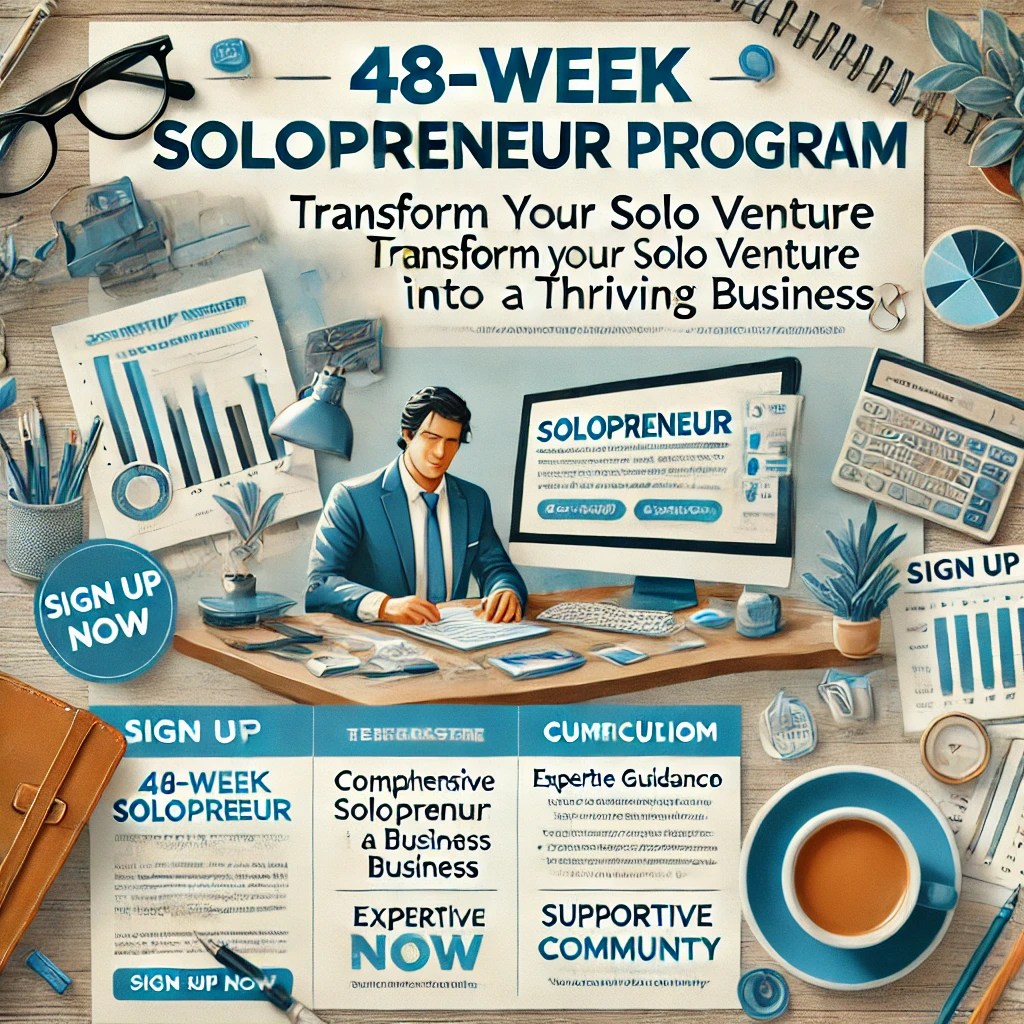
          Are you a solopreneur overwhelmed by the challenges of running a business single-handedly? We have exciting news for you!

          It is introducing our 48-week Solopreneur Program, designed to transform your solo venture into a thriving, sustainable business. This isn’t just another course – a growth, learning, and transformation journey.

          What sets our program apart?

          1. Comprehensive Curriculum: We cover every aspect of solopreneurship, from developing the right mindset to planning your exit strategy.

          2. Practical Application: Each week, you’ll learn and apply your knowledge directly to your business.

          3. Expert Guidance: Learn from seasoned entrepreneurs and industry experts who have travelled your path.

          4. Supportive Community: Connect with like-minded solopreneurs, share experiences, and build lasting professional relationships.

          5. Personalized Approach: We understand that every business is unique. Our program allows for customisation to fit your specific needs and goals.

          Here’s a glimpse of what you’ll learn:

          – Developing a solopreneur mindset

          – Business ideation and validation

          – Creating a lean business plan

          – Marketing and brand building

          – Sales strategies and customer relationship management

          – Efficient operations and systems

          – Strategies for growth and scaling

          – Advanced topics like thought leadership and exit planning

          Don’t let another year pass by feeling stuck or overwhelmed. Invest in yourself and your business. Join our 48-week Solopreneur Program and take the first step towards sustainable success.

          Limited spots are available. Enrol now to secure your place in this transformative journey!

          #SolopreneurSuccess #EntrepreneurshipJourney #BusinessGrowth #ProfessionalDevelopment

           
        c
        Compose new post
        j
        Next post/Next comment
        k
        Previous post/Previous comment
        r
        Reply
        e
        Edit
        o
        Show/Hide comments
        t
        Go to top
        l
        Go to login
        h
        Show/Hide help
        shift + esc
        Cancel