Tagged: communication Toggle Comment Threads | Keyboard Shortcuts

  • Unknown's avatar

    Nicos Paschali 5:57 am on February 9, 2025 Permalink | Reply
    Tags: , communication, , ,   

    The Art of Conversation: Your Key to Unlocking Success 

    The Art of Conversation: Your Key to Unlocking Success

    Nicos Paschali, February 2025

    Mastering Communication for Personal and Professional Triumph

    Imagine transforming every conversation into an opportunity for growth, influence, and connection. What if your words could convey your thoughts and elevate your life and career to new heights?

    Effective communication is not just a skill but a powerful tool that, when mastered, can dramatically enhance your relationships, propel your professional achievements, and open doors to endless opportunities.

    Personal Success:

    1. Relationship Building:
      • Trust and Understanding: Effective communication fosters trust and mutual understanding, which is essential for strong personal relationships.
      • Conflict Resolution: The ability to express oneself clearly and listen actively helps resolve conflicts amicably, preserving relationships.
    2. Self-Expression and Emotional Health:
      • Authenticity: Good communicators can express their thoughts, feelings, and needs more authentically, leading to greater personal satisfaction and self-esteem.
      • Emotional Intelligence: Effective communication is both a product and a builder of emotional intelligence, aiding in better emotional regulation and empathy.
    3. Personal Development:
      • Learning and Growth: Communicating effectively with mentors or peers or through self-reflection supports personal learning and growth.
      • Networking: The ability to communicate well expands one’s social network, opening doors to new opportunities, knowledge, and experiences.

    Professional Success:

    1. Leadership and Management:
      • Influence and Motivation: Leaders who communicate effectively can inspire and motivate their teams, driving productivity and innovation.
      • Decision Making: Clear communication ensures that decisions are understood, supported, and executed efficiently across an organisation.
    2. Team Collaboration:
      • Cohesion: Effective team communication leads to better collaboration, reducing misunderstandings and fostering a united work environment.
      • Efficiency: When teams communicate well, projects run smoother with fewer delays due to miscommunication.
    3. Career Advancement:
      • Visibility: Being a good communicator often means your ideas and contributions are more visible to decision-makers, potentially leading to promotions or new opportunities.
      • Client Relations: In roles that involve client interaction, effective communication can lead to stronger client relationships, repeat business, and referrals.
    4. Negotiation and Problem Solving:
      • Negotiation Skills: The art of negotiation is deeply tied to communication, where clarity, persuasion, and listening skills can lead to better outcomes.
      • Problem-Solving: Articulating problems, brainstorming solutions, and discussing them effectively with others enhance problem-solving capabilities.
    5. Cultural Competence:
      • Diverse Workplaces: In global or diverse workplaces, effective cross-cultural communication reduces friction, fosters inclusivity, and leverages diverse perspectives for better outcomes.

    Broader Impacts:

    • Reputation: How you communicate shapes your reputation, both personally and professionally. Effective communicators are often seen as more competent, reliable, and likeable.
    • Conflict Reduction: Effective communication can mitigate organisational conflicts on a larger scale, leading to a healthier work culture and higher employee satisfaction.
    • Innovation: Open and transparent communication channels encourage the sharing of ideas, which is vital for innovation and staying competitive in any field.

    In essence, effective communication acts as a multiplier of success, enhancing every interaction and relationship, whether it’s with family, friends, colleagues, or clients. It’s not just about speaking well but about listening, understanding, and responding in ways that foster mutual respect and achievement. This alignment with Nicos Paschali’s approach, which emphasises emotional intelligence alongside technical skill, underscores why communication is pivotal in his transformative learning initiatives.

    #CommunicationMastery #EffectiveCommunication #PersonalGrowth #ProfessionalSuccess #LeadershipCommunication #EmotionalIntelligence #ActiveListening #TransformativeLearning #CareerDevelopment #NetworkingSkills 
     
  • Unknown's avatar

    Nicos Paschali 5:59 am on December 26, 2024 Permalink | Reply
    Tags: , , communication, ,   

    Transparent Communication. 

    Transparent communication is essential for effective leadership because it enables leaders to build trust, foster collaboration, and make informed decisions. It creates an environment where information flows freely, and individuals feel comfortable expressing their thoughts and concerns.

    The sources highlight the importance of transparent communication in problem-solving. Source B emphasises that transparent communication is the first of the four most effective ways leaders solve problems. When leaders communicate transparently, they create a safe space for their team members to share their perspectives, identify potential issues, and contribute to finding solutions. This open dialogue helps uncover root causes, fosters trust, and ensures everyone feels heard and valued.

    A lack of transparent communication, on the other hand, can lead to misunderstandings, mistrust, and poor decision-making. For example, Source B argues that a lack of transparency can make problem-solving a “treasure hunt”, as employees may be reluctant to share information for fear of negative consequences.

    Here’s why transparent communication is so crucial in leadership:

    • Building Trust: Transparent communication is the foundation of trust between leaders and their teams. When leaders are open and honest about their intentions, decisions, and challenges, it creates a sense of security and encourages team members to be more open.
    • Fostering Collaboration: Open communication encourages collaboration by allowing everyone to share their ideas and perspectives. Teams can draw on their members’ collective wisdom and experience to create more innovative and effective solutions.
    • Improving Decision-Making: Transparent communication ensures leaders have access to all the information they need to make informed decisions. By seeking diverse perspectives and encouraging open dialogue, leaders can avoid making decisions based on incomplete or biased information.
    • Identifying and Addressing Potential Issues: Transparent communication allows potential problems to be identified and addressed early on. When team members feel comfortable raising concerns, leaders can proactively mitigate risks and prevent issues from escalating.

    In conclusion, transparent communication is not just a nice thing to have in leadership; it is a critical component of effective leadership. Leaders who communicate openly and honestly create a more positive, productive, and successful working environment.

     
  • Unknown's avatar

    Nicos Paschali 9:49 am on December 12, 2024 Permalink | Reply
    Tags: , communication, , , , speech-script   

    Bridging the Gap: A Call for Unified Communication Strategies in Leadership 🌉💼 

    Bridging the Gap: A Call for Unified Communication Strategies in Leadership 🌉💼

    In corporate communication, a divide often exists between executive communication professionals and their employee communication counterparts. But what if we could bridge that gap to foster a more connected, trusting, and effective organisation?

    🔑 Why Internal Communication Matters as Much as External

    Building trust and understanding between employees and leadership is just as crucial as crafting the perfect message for external stakeholders. Employees don’t just want to hear about business strategies—they want to understand who their leaders are, their character, and their values.

    📖 Lessons from History

    Historically, smaller businesses thrived on integrated relationships where leadership and employees worked closely. Today, we see examples of CEOs who build trust by showcasing their authentic personalities, creating stronger bonds within their organisations.

    🤝 The Way Forward

    It’s time to bring together executive and employee communication professionals. A proposed summit could foster collaboration, drive innovation, and enhance organisational effectiveness.

    Let’s focus on breaking down silos, aligning our efforts, and building organisations that are not only effective but also deeply connected.

    What do you think about bridging this communication gap? Have you seen successful examples of integrated leadership communication in your organisation? Share below! 👇

    #Leadership #InternalCommunication #EmployeeEngagement #CorporateStrategy #TrustAndTransparency

     
  • Unknown's avatar

    Nicos Paschali 7:56 pm on November 13, 2024 Permalink | Reply
    Tags: communication, , , , , ,   

    Conversational Intelligence: Key Principles and Workplace Benefits 

    Here are the fundamental principles of conversational intelligence and how they contribute to a more effective workplace.

    Conversational Intelligence (C-IQ) is connecting, engaging, and navigating conversations to foster an agile, open, collaborative, and innovative culture. It goes beyond simply talking or sharing information; it’s about understanding how conversations can shape reality, mindsets, events, and outcomes.

    The sources highlight several key principles of C-IQ that are essential for a more effective workplace:

    1. Understanding the Three Levels of Conversation

    C-IQ identifies three levels of conversation, each with different interaction dynamics, levels of trust, and outcomes:

    • Level I: Transactional Conversations: These conversations involve exchanging information and confirming facts. Trust is low as the focus is on validating individual perceptions of reality. An example would be a manager giving instructions or colleagues sharing project updates.
    • Level II: Positional Conversations: In these conversations, people advocate for their points of view and try to influence others. Trust is conditional, based on perceived fairness and reciprocity. Examples include negotiations, debates, or presentations.
    • Level III: Transformational Conversations: These are the highest level of conversations, focused on co-creating the future and achieving mutual success. They are characterized by high trust, allowing for vulnerability, deep sharing, and the emergence of new ideas. Examples include brainstorming sessions, strategic planning meetings, and coaching conversations.

    By understanding these levels, individuals can tailor their communication style to achieve specific goals and cultivate a more trusting and collaborative work environment.

    2. Building Trust and Psychological Safety

    Trust is fundamental to effective communication and collaboration. The sources emphasize that trust is not a fixed trait but a dynamic process that can be nurtured through conscious effort and the application of C-IQ principles.

    Key Strategies for Building Trust:

    • Transparency: Open and honest communication about intentions, motivations, and potential challenges.
    • Relationship Building: Prioritizing relationships over tasks and making individuals feel valued and respected.
    • Empathy and Understanding: Actively listening to and seeking to understand others’ perspectives.
    • Shared Success: Aligning on a common vision of success and working collaboratively towards its achievement.
    • Truth Telling and Testing Assumptions: Openly challenging assumptions and exploring different perspectives.

    When individuals feel safe to express themselves without fear of judgment, they are more likely to share ideas, collaborate effectively, and contribute to a positive work environment.

    3. Active Listening and Empathy

    Active listening goes beyond simply hearing words; it involves attentiveness to non-verbal cues, seeking clarification, and demonstrating a genuine interest in understanding the speaker’s message and underlying emotions. Empathy, the ability to recognise, understand, and manage one’s own emotions, as well as those of others, is crucial for creating a safe and trusting conversational environment.

    4. Asking Powerful Questions

    Effective leaders ask questions that stimulate critical thinking, provoke new perspectives, and encourage deeper exploration of ideas. Asking questions for which they genuinely don’t have the answers demonstrates humility and a commitment to learning from others.

    5. Conversational Agility

    Conversational agility is the ability to adapt communication styles to different situations and individuals. It involves:

    • Recognising the current conversational dynamics.
    • Reframing perspectives to challenge assumptions and redirect the conversation.
    • Refocusing on core issues, objectives, and goals.
    • Redirecting the conversation towards collaboration, especially during conflict.

    By mastering these elements, leaders can ensure that conversations remain focused, productive, and ultimately, transformative.

    6. Priming the Conversational Pump

    Priming involves consciously setting the stage for a conversation by considering factors like environment, body language, and initial interactions. This can create a more positive and trusting environment, down-regulating the amygdala’s threat response and activating the prefrontal cortex.

    7. Conversational Rituals

    Establishing conversational rituals can promote trust and openness. These can range from simple practices like shaking hands before a meeting to more structured exercises designed to foster empathy and understanding. Examples include:

    • Establishing Rules of Engagement: Agreeing on ground rules for communication and interaction.
    • Double-Clicking: Team members share their individual definitions of success to reveal underlying values, motivations, and aspirations.
    • LEARN Exercise: End-of-meeting reflection on what was Learned, Enjoyed, Appreciated, needs to be Reframed, and Needs moving forward.

    8. The Neuroscience of C-IQ

    C-IQ acknowledges the impact of conversations on our brains and behavior. Understanding the neurochemistry of trust and distrust, the influence of hormones and neurotransmitters, and the role of mirror neurons in empathy can help individuals shape their communication for positive outcomes.

    By embracing these principles, organisations can create a more engaged, innovative, and resilient workforce, ultimately leading to greater success.

     
  • Unknown's avatar

    Nicos Paschali 7:20 am on November 1, 2024 Permalink | Reply
    Tags: , , communication, , ,   

    Study Guide: Communicating and Building Trust 

    Study Guide: Communicating and Building Trust

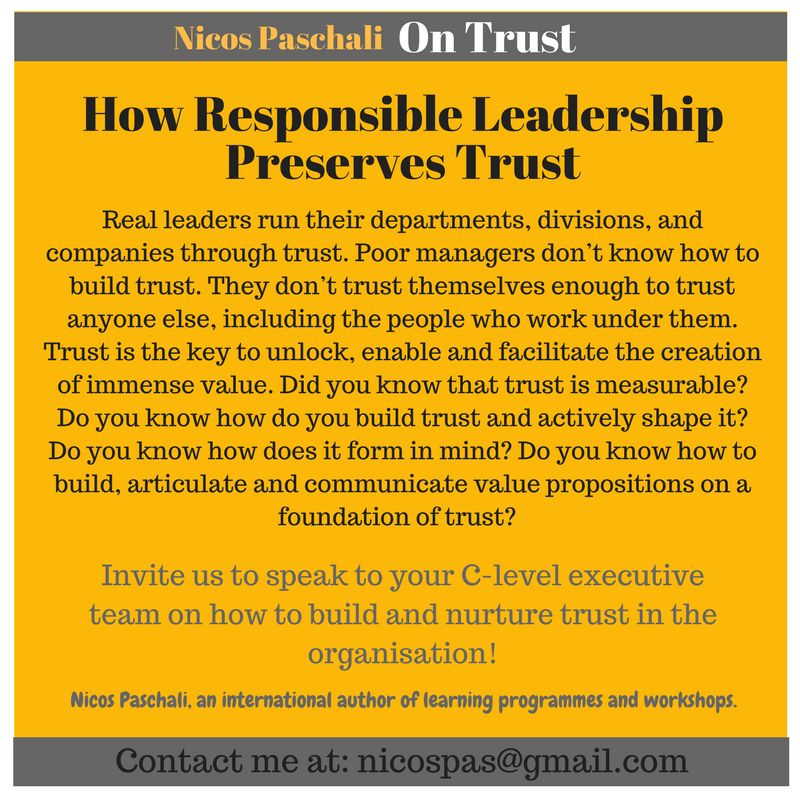
    This study guide is based on the provided text excerpts, which focus on the importance of trust in leadership and organisational success.

    Central Questions to Review:

    1. Why is trust crucial for effective leadership? What are the specific benefits of trust in a leadership context? What are the consequences of a lack of confidence?
    2. How can leaders build trust within their organisations? What specific actions and behaviours contribute to building trust? Consider the role of self-trust, understanding trust formation, and communication.
    3. How can trust be measured within an organisation? What are some potential methods and metrics for assessing trust levels? Why is measuring trust important?
    4. How can leaders maintain and preserve trust once it has been established? What potential threats to trust, and how can they be mitigated?
    5. What is the relationship between responsible leadership and trust? How do self-awareness, communication, and continuous learning concepts relate to responsible leadership and trust-building?
    6. How can external expertise be leveraged to enhance trust-building initiatives within an organisation? What specific benefits can experts like Nicos Paschali offer?

    Glossary of Key Terms and Ideas:

    • Trust: A firm belief in the reliability, truth, ability, or strength of someone or something. In a leadership context, trust refers to employees’ confidence in their leaders and the organisation as a whole.
    • Self-Trust: Trust in one’s abilities, judgment, and instincts. The text emphasises that self-trust is a prerequisite for trusting others.
    • Value Propositions: The benefits an organisation promises its customers or stakeholders. In the context of trust, leaders must communicate their value propositions in a way that reinforces trust and integrity.
    • Transparency and Openness: Clear, honest, and accessible communication that promotes understanding and reduces uncertainty.
    • Active Listening and Empathy: Communication skills involve paying close attention to what others are saying, seeking to understand their perspectives, and responding with empathy and respect.
    • Consistency in Messaging and Actions: Aligning one’s words with one’s actions. Consistency builds credibility and reinforces trust.
    • Trust Measurement: The process of assessing and quantifying an organisation’s trust level. This can involve surveys, interviews, and analysis of organisational data.
    • Responsible Leadership: A leadership style characterised by ethical behaviour, accountability, and a commitment to the well-being of stakeholders. The text strongly links responsible leadership with the ability to build and maintain trust.
    • Nicos Paschali: An expert (as mentioned in the text) who offers learning programs and workshops on building and nurturing trust within organizations.

    Additional Notes:

    • The text emphasizes the practical and measurable aspects of trust.
    • Continuous learning and development are essential for leaders who want to cultivate trust within their organisations.
    • Consider exploring resources and methodologies for measuring trust, such as the Trust Index© developed by Great Place to Work®.
     
  • Unknown's avatar

    Nicos Paschali 5:11 am on October 25, 2024 Permalink | Reply
    Tags: , communication, , love, performace, , , ,   

    How to develop meaningful conversations that elevate communication from transactional to transformational and capture the essence of deeper connections, trust, and collaboration. 

    The Art of Meaningful Conversations: Elevating Your Communication from Transaction to Transformation

    Nicos Paschali, October 2024

    How to Build Trust and Create Deeper Connections in Every Interaction

    Have you ever walked away from a conversation wondering what went wrong? One moment everything seems fine, and the next, someone storms out leaving you puzzled. According to communication expert Judith Eldazer, these moments aren’t just awkward social hiccups—they’re opportunities to develop what she calls “conversational intelligence.”

    The Hidden Dimensions of Communication

    Every conversation is like an iceberg. What we see on the surface—the words we exchange—is just a small part of a much larger dynamic. Beneath lies a complex web of intentions, emotions, and unspoken signals that shape how we connect with others. These invisible forces can make or break our personal and professional relationships.

    The Brain Science Behind Better Conversations

    Our brain plays a fascinating role in how we communicate. The amygdala, our internal alarm system, can trigger fight-or-flight responses even in harmless situations like a mild disagreement. Meanwhile, our prefrontal cortex—the brain’s CEO—works to maintain rational thinking and build trust. Understanding this internal tug-of-war is crucial for improving our conversations.

    The Three Levels of Conversation

    1. Level I: Transactional
      • Basic exchanges focused on information
      • Example: Ordering coffee or scheduling meetings
      • Limited potential for building relationships

      2. Level II: Positional

        • Focus on influence and persuasion
        • Often leads to defensive behavior
        • Can create power struggles
        • Risk of amygdala hijacking rational thought

        3. Level III: Transformational

          • Built on trust and vulnerability
          • Emphasizes co-creation and exploration
          • Creates space for innovation
          • Enables genuine connection

          Tools for Reaching Level III Conversations

          1. Double-Clicking: Move beyond surface-level interactions by asking thoughtful follow-up questions. Instead of accepting simple answers, dig deeper to understand the meaning behind them.
          2. The Seven Vital Conversations:
          • Co-creating conversations: Foster collaborative solutions
          • Humanizing conversations: Build empathy and acceptance
          • Navigating conversations: Handle conflict constructively
          • Generating conversations: Spark innovation and creativity

          Creating Trust Through Mindful Communication

          The key to elevating your conversations lies in conscious awareness. Before speaking, consider:

          • Are you listening to understand or just to respond?
          • Are you creating a safe space for others to share?
          • Are you willing to be appropriately vulnerable?
          • Are you open to having your perspective changed?

          Taking Action: Your Path to Better Conversations

          1. Assess Your Current Level: Monitor your daily interactions. How often do you engage in Level I, II, or III conversations?
          2. Practice Double-Clicking: In your next conversation, ask one thoughtful follow-up question that goes beyond the surface.
          3. Build Trust Gradually: Start with small moments of vulnerability and authentic sharing in appropriate contexts.
          4. Manage Your Inner Cave Person: When you feel defensive, pause and take a breath. Allow your prefrontal cortex to stay in control.

          Remember, conversational intelligence isn’t an innate talent—it’s a skill you can develop with practice and awareness. Each interaction is an opportunity to create deeper connections and better outcomes.

          Success in both personal and professional life often comes down to the quality of our conversations. By consciously elevating your communication from transactional to transformational, you’re not just improving individual interactions—you’re building stronger relationships and creating positive change in your world.

          Nicos Paschali, October 2024

          For personal messages, nicospas@gmail.com

           
        1. Unknown's avatar

          Nicos Paschali 1:44 pm on October 10, 2024 Permalink | Reply
          Tags: communication, , , , , ,   

          The Importance of Disagreement in Building Strong RelationshipsImage Post 

          The Importance of Disagreement in Building Strong Relationships

          Disagreement is often misunderstood as conflict, yet it serves as a crucial foundation for deep relationships to flourish. Dr. Cloud emphasizes that embracing disagreement can lead to personal and team growth, encourage authenticity, and prevent resentment. This document explores the key benefits of fostering an environment where disagreement is welcomed and respected.

          Promotes Personal and Team Growth

          When individuals feel free to express their disagreements, it cultivates an atmosphere ripe for creativity and innovation. Openly challenging and refining ideas leads to more robust decision-making and solutions. This dynamic not only enhances individual growth but also strengthens team performance, as diverse perspectives contribute to a richer pool of ideas.

          Encourages Authenticity

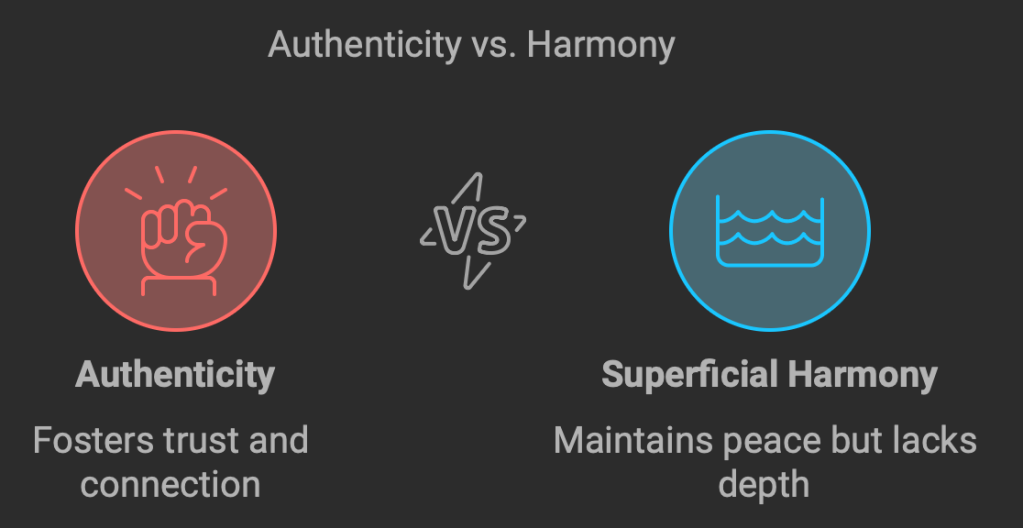
          The ability to disagree fosters authenticity in relationships. When people can express differing opinions without fear of judgment, they are more likely to show up as their true selves. This authenticity builds trust and strengthens connections, allowing relationships to thrive on genuine understanding rather than superficial harmony.

          Prevents Resentment and Conflict

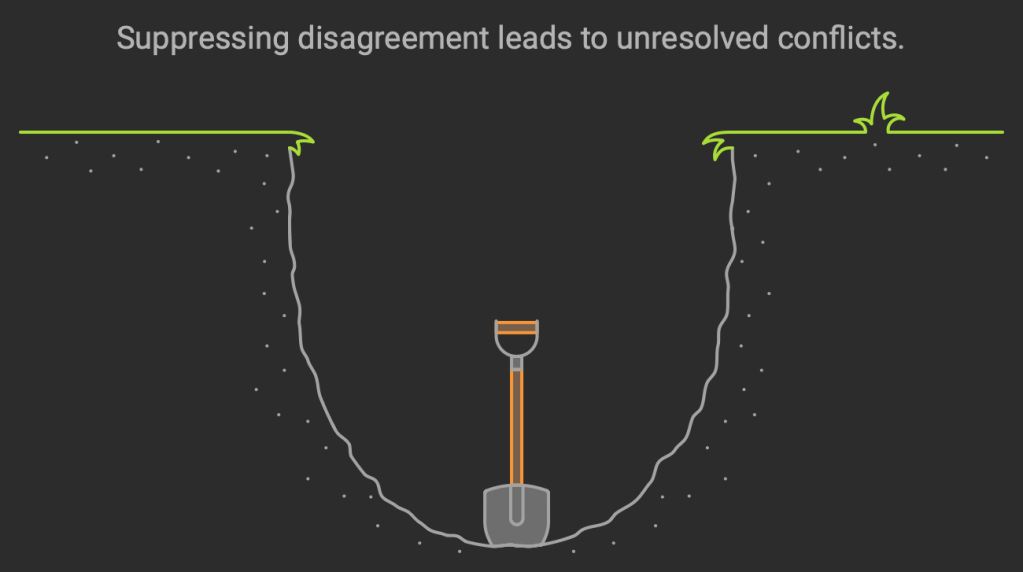
          Suppressing disagreement can lead to unresolved issues that fester over time, ultimately resulting in more significant conflicts. By allowing disagreements to be expressed openly and addressed respectfully, tension can be diffused before it escalates. This proactive approach not only prevents long-term relational damage but also promotes a healthier, more communicative environment.

          In conclusion, embracing disagreement is essential for nurturing deep, meaningful relationships. By recognizing its value in promoting growth, encouraging authenticity, and preventing conflict, individuals and teams can create a more dynamic and resilient relational landscape.

           
        2. Unknown's avatar

          Nicos Paschali 8:39 am on October 10, 2024 Permalink | Reply
          Tags: communication, , disagreement, , , ,   

          The Freedom to Disagree: Building Deeper Relationships Through Honest Dialogu 

          Nicos Paschali, October 2024

          The Freedom to Disagree: Building Deeper Relationships Through Honest Dialogue

          The freedom to disagree is a gift many take for granted, often viewing disagreement as a potential source of conflict rather than a pathway to intimacy and growth. However, according to Dr. Henry Cloud, a clinical psychologist and bestselling author, disagreement is critical in fostering deep and meaningful relationships. Dr. Cloud has spent his life helping people develop healthier connections through his psychology, coaching, and consulting work—touching over 150 million lives and selling more than 20 million books. And if there is one thing he has found essential to cultivating true intimacy, it is the freedom to disagree.

          In today’s world, where unity is often confused with uniformity, it is essential to understand that disagreement does not necessarily equate to conflict. In fact, as Dr. Cloud points out, disagreement is the foundation on which thriving relationships—whether personal, professional, or familial—must be built.

          To understand why this is so, we must explore three powerful ways disagreement fosters growth, authenticity, and emotional health.

          Disagreement Promotes Growth

          The freedom to disagree fosters creativity and innovation in the workplace and our personal lives. Ideas are born, tested, refined, and ultimately improved through the exchange of diverse viewpoints. Dr. Cloud believes that when people feel safe to voice their differing opinions, they create an environment of curiosity that allows the best ideas to emerge.

          Imagine a team where everyone is in complete agreement all the time. Such a team might avoid short-term tension but also become stagnant and predictable. True innovation requires a willingness to push against the status quo, challenge assumptions, and question how things have always been done. This, of course, is where disagreement comes into play.

          When individuals feel empowered to share their honest thoughts, even if they oppose the majority view, they create opportunities for personal and team growth. It is within this space—a space where people are not punished or judged for having an alternative perspective—that creativity can truly flourish. The outcome is a culture where decisions are more thoroughly considered, solutions are more robust, and relationships are strengthened by the trust that develops when people know their voices will be heard.

          Disagreement Encourages Authenticity

          Another key benefit of embracing disagreement is the encouragement of authenticity. Too often, people avoid expressing their true feelings or opinions out of fear that it will create tension or cause them to be disliked. However, when people are allowed to disagree openly, it creates an environment where they feel safe to show up as their authentic selves—without the need to please others or pretend to agree.

          Authenticity is the lifeblood of deep relationships. Only when we are fully known—for both our agreements and our disagreements—can we be fully loved. When we suppress our differences to avoid potential conflict, we miss the opportunity for genuine connection. Dr Cloud reminds us that it’s only by being open and honest, even when uncomfortable, that we can build trust and experience true intimacy in our relationships.

          When leaders, partners, or friends foster a culture of openness, they allow others to bring their whole selves to the table. This means acknowledging differences in opinion without judgment and striving to understand perspectives that differ from our own. When handled respectfully, disagreement becomes a pathway to understanding, allowing individuals to feel valued for who they are rather than just for their ability to conform.

          Disagreement Prevents Resentment and Conflict

          Ironically, avoiding disagreement often leads to the very thing we’re trying to prevent: conflict. When people suppress their true thoughts and feelings to maintain a façade of harmony, it usually results in unresolved issues that can plague beneath the surface. Over time, these unspoken disagreements accumulate, resulting in frustration, resentment, and often an explosive conflict that could have been avoided had those issues been addressed earlier.

          Dr. Cloud emphasizes that when expressed openly and respectfully, disagreement acts as a safety valve. It allows tension to be diffused before it can build up and create lasting damage. Rather than seeing disagreement as something to fear, we should embrace it as an opportunity to address issues, refine our perspectives, and find common ground.

          Respectful disagreement prevents life’s minor annoyances and misunderstandings from turning into major issues. When people feel heard and understood, even if their viewpoints do not prevail, they are less likely to harbour resentment. The freedom to disagree fosters an environment where complex topics can be tackled constructively, leading to stronger relationships and healthier dynamics.

          The Role of Leaders in Encouraging Disagreement

          Good leaders are responsible for finding the best answers to any challenge or problem. As Dr. Cloud explains, influential leaders understand that neither they, their team, nor their side may always have the right solution. As a result, they commit to keeping an open mind and listening to everyone, including those who oppose them or offer alternative viewpoints.

          This kind of leadership requires humility—the humility to recognize that the best ideas might come from someone else and the courage to allow space for those ideas to be expressed, even if it means inviting dissent. Leaders who encourage disagreement create a culture where every team member feels valued and empowered to contribute. They understand that the collective strength of diverse perspectives leads to the best decisions and ultimately drives success.

          Conclusion: Embracing the Freedom to Disagree

          The freedom to disagree is not about encouraging conflict for conflict’s sake. It’s about fostering an environment where individuals feel safe to express their authentic selves, where creativity and innovation flourish, and where tension is addressed before it can lead to lasting resentment.

          Dr. Henry Cloud’s work reminds us that true intimacy—in our personal relationships, workplaces, or communities—is built on openness and honesty. We can create more profound, authentic, and ultimately more fulfilling relationships by embracing the freedom to disagree. The next time you find yourself in a situation where you disagree, consider it an opportunity to grow, connect, and build something stronger together.

           
        3. Unknown's avatar

          Nicos Paschali 1:49 pm on September 30, 2024 Permalink | Reply
          Tags: book-review, , communication, , featured, , , public-speaking   

          Nicos Paschali’s Brand Image. 

          Nicos Paschali’s brand image can be characterised as follows:

           Leadership Excellence and Innovation

          Nicos Paschali is portrayed as a paragon of leadership excellence, known for driving prestige in corporate innovation. His brand is associated with empowering excellence and igniting passion through strategic vision.

           Expertise and Versatility

          With a computer science and engineering background, Nicos has established himself as an expert in cutting-edge technological innovations. His brand image reflects versatility across various roles, demonstrating adaptability and a drive for excellence.

           Communication and Relationship Building

          Nicos is known for his exceptional communication skills and his ability to understand others’ needs. His brand emphasises the mastery of building relationships and earning respect through these abilities.

           Emotional Intelligence and Empathy

          High emotional intelligence, which fosters empathy and drives his pursuit of excellence, is a crucial aspect of Nicos’s brand. This quality is central to his approach in both personal and professional settings.

           Continuous Learning and Adaptation

          Nicos’s brand image includes a commitment to continuous exploration and self-reinvention through innovation, even as he embraces maturity. This reflects an image of adaptability and staying current in an ever-evolving landscape.

           Transformative Leadership and Mentorship

          Nicos’s brand extends to his role as a mentor and transformative leader. He is known for his Transformative Actionable Learning program, designed to refine communication skills, forge stronger connections, and enhance personal and professional relationships.

           Global Influence

          His brand has a global reach, with engagements from Europe to the UAE and Australasia. He works with extraordinary talent, startups, and established corporations.

           Thought Leadership

          Nicos is positioned as a thought leader, offering insights and expertise through various platforms, including blogs and seminars on topics ranging from healthy lifestyles to business strategies.

          In summary, Nicos Paschali’s brand image is that of a visionary leader, innovator, and mentor with a global perspective. His brand emphasises excellence in communication, empathy, and adaptability, underpinned by a solid technological background and a commitment to continuous learning and transformation.

           
        4. Unknown's avatar

          Nicos Paschali 3:42 am on April 21, 2017 Permalink | Reply
          Tags: , communication, ,   

          Dealing with Client Emotions when they complaint. 

          hbdi team

          “When dealing with people, remember that you are not dealing with creatures of logic, but creatures of emotion…”

          If you remember this statement during every one of your customer service interactions, you will be half way to understanding how to deal with customer complaints. You must be prepared to first deal with a client’s emotions and then deal with the actual issue.

          Unless you can respect the client’s perspective, it will be difficult to deliver a solution that turns a negative situation into a positive one.

          It’s not always easy to get to the root of a client’s issues. You may use the why underneath the why or create and empathy map leading to your client insight.

          You must listen and understand the client before tackling the issue. However once you have identified the issue, there are a few steps that you can take to ensure the process leads to favorable results.

          Your response to customer complaints can build trust and even create customer/client loyalty or even drive innovation to deliver added value to your clients

           
        c
        Compose new post
        j
        Next post/Next comment
        k
        Previous post/Previous comment
        r
        Reply
        e
        Edit
        o
        Show/Hide comments
        t
        Go to top
        l
        Go to login
        h
        Show/Hide help
        shift + esc
        Cancel